Books Like Project Hail Mary: 11 Sci-Fi Novels
If Project Hail Mary's science-first suspense and unexpected friendship hooked you, these picks deliver the same optimistic, puzzle-driven thrill.

Andy Weir’s Project Hail Mary is a novel about a man who wakes up alone in deep space with no memory, realizes he may be the last hope for the survival of humanity, and proceeds to solve one impossible problem after another using nothing but science and stubbornness. It is also, unexpectedly, one of the warmest and most emotionally affecting science fiction novels published in years. The setup sounds bleak; the execution is anything but. Weir has always written optimistic SF — the genre of “here is a terrible problem, here is how a clever person thinks through it” — and Project Hail Mary is his most refined version of that formula. The science is rigorous enough to be genuinely educational, and the plot is structured like a series of locked-room puzzles that Ryland Grace must escape using only what he knows.
What separates Project Hail Mary from most hard SF is the companionship at its center. Roughly a third of the way through, Grace encounters something that reframes the entire story and turns a solo survival narrative into something closer to a buddy story — one of the most surprising and satisfying in modern science fiction. Saying more would be doing you a disservice. The books below have been chosen to match different facets of what makes Project Hail Mary work: the science-first problem-solving, the first-contact wonder, the optimistic tone in the face of catastrophe, and the deep pleasure of watching two minds — however different — figure things out together.
More Andy Weir: Science as the Hero
#1 — The Martian by Andy Weir
Mark Watney is accidentally left behind on Mars during an emergency evacuation and must survive alone on a planet with no breathable air, limited food, and no way to contact Earth. Weir’s debut is the purest expression of his formula: every chapter presents a new crisis, and the solution requires actual chemistry or orbital mechanics or botany, explained in Watney’s relentlessly upbeat first-person voice. The Martian is the most direct companion to Project Hail Mary — same DNA, same approach, earlier and somewhat rougher in execution. If you have not read it, read it immediately.
#2 — Artemis by Andy Weir
Jazz Bashara lives on Artemis, humanity’s only settlement on the Moon, and supplements her meager income as a porter with small-time smuggling. When a lucrative criminal scheme goes sideways, she finds herself at the center of a conspiracy that could destroy the colony. Weir’s second novel received a cooler reception than The Martian, partly because Jazz is a more difficult protagonist than either Watney or Grace, and the setting is a solar-system near-future that feels more constrained. But the science is as solid as ever and the problem-solving sequences are genuinely inventive. Fans of Project Hail Mary who want more Weir will find plenty to enjoy.
Optimistic Hard SF: Science That Delights
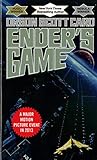
#3 — Ender’s Game by Orson Scott Card
Andrew “Ender” Wiggin is recruited as a child into a military academy designed to produce the commander who will defeat an alien species that has already attacked Earth twice. Card’s novel is structurally a series of increasingly difficult tactical and moral puzzles, and Ender’s process of working through them — using intelligence, empathy, and creative thinking rather than brute force — is the book’s great pleasure. Like Project Hail Mary, it is a novel about a person uniquely suited to an impossible problem who has to figure it out almost entirely alone. The final act reframes everything that came before.
#4 — Dark Matter by Blake Crouch
Jason Dessen is a physicist who one night is abducted, drugged, and wakes up in a life that is not his. The novel is a quantum mechanics thriller — the science is real enough to be interesting, loose enough to drive a fast-paced plot — and Crouch uses it to ask questions about identity, choice, and what we sacrifice for the paths we take. Dark Matter is more thriller than hard SF, and its pace is closer to Project Hail Mary’s accessible propulsion than to anything by Kim Stanley Robinson. It is the best gateway book on this list for readers who are not yet sure they like science fiction.
#5 — Children of Time by Adrian Tchaikovsky
A terraforming experiment gone wrong produces a planet where spiders — accelerated by a nanovirus designed for primates — have evolved intelligence and civilization over thousands of years. Alternating chapters follow their rise alongside the desperate voyage of the last remnant of humanity searching for a new home. Tchaikovsky’s novel is the hardest on this list in terms of scientific seriousness, but it shares with Project Hail Mary a profound interest in how minds that evolved differently might nonetheless find common ground. Readers who responded most strongly to the companionship at the heart of Weir’s novel will find Children of Time deeply rewarding.
First Contact: Meeting the Other
#6 — The Long Way to a Small, Angry Planet by Becky Chambers
The crew of the tunneling ship Wayfarer signs a contract to punch a wormhole through to a distant, dangerous part of the galaxy. The novel is less interested in plot than in the texture of life aboard a small ship whose crew includes humans of various backgrounds and several alien species, all of whom have to figure out how to share a confined space across profound cultural and biological differences. Chambers writes optimistic SF — the Wayfarers series is sometimes called “hopepunk” — and the sense of warmth and found family it generates is the closest match on this list to the emotional register of Project Hail Mary’s central relationship.
#7 — A Fire Upon the Deep by Vernor Vinge
The galaxy is organized into Zones of Thought: regions where the laws of physics permit different levels of intelligence, meaning that beyond the solar neighborhood, minds can become genuinely transcendent. When a human expedition accidentally releases something catastrophic near the galactic core, a rescue mission becomes entangled with a medieval alien civilization whose members think in packs. Vinge’s novel is dense and demanding in a way Weir’s are not, but its alien minds — their biology, their distributed cognition, their communication — are among the most imaginative in science fiction. Readers who want to go deeper on the first-contact fascination should start here.
#8 — Rendezvous with Rama by Arthur C. Clarke
A vast cylindrical object enters the solar system, and a small crew is sent to investigate before it passes out of reach. Clarke’s 1973 novel is the purest expression of hard SF’s central pleasure: the systematic investigation of a mysterious object using observation, reasoning, and science. The tone is cool and measured — Clarke is interested in wonder more than emotion — and the mystery of Rama is never fully resolved, which is either the novel’s greatest strength or its most frustrating quality depending on your tolerance for open endings. Project Hail Mary readers who want to trace the lineage of that sense of scientific awe should read this.
Space on a Larger Canvas
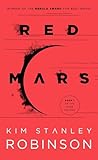
#9 — Red Mars by Kim Stanley Robinson
The first hundred colonists arrive on Mars in 2026 to begin the centuries-long project of terraforming it into a habitable world. Robinson’s trilogy opener is the most scientifically rigorous novel on this list by a significant margin: the geology, chemistry, and biology of Mars terraforming are treated with the same seriousness as a scientific paper, and the political and psychological dimensions of a small closed community living under extraordinary pressure are examined with equal depth. It is slower and more demanding than Project Hail Mary, but for readers who want hard SF taken all the way, it is essential.
#10 — Aurora by Kim Stanley Robinson
A generation ship carries two thousand colonists toward Tau Ceti, a journey that will take 170 years and test every system — mechanical, ecological, social — aboard. Robinson’s standalone novel is in many ways a direct challenge to the optimism of generational-ship science fiction, examining with clear-eyed rigor what such a journey would actually require and what it might cost. The narrator is the ship’s artificial intelligence, which develops something recognizable as consciousness over the course of the voyage. Readers who want the scientific depth of Red Mars in a more contained story should try Aurora first.
#11 — Brave New World by Aldous Huxley
Huxley’s 1932 novel imagines a future in which stability has been achieved through biological conditioning, engineered social castes, and the elimination of anything — including family, religion, and genuine emotion — that might produce conflict. Brave New World is included here not as a companion to Project Hail Mary’s adventure but as its philosophical counterweight: where Weir’s novel trusts human ingenuity and curiosity to save the world, Huxley asks what it would cost to make a world where saving it was never necessary. The contrast illuminates what makes Project Hail Mary’s optimism a genuine argument rather than mere cheerfulness.
How to Choose Your Next Read
If you want more Andy Weir, immediately: The Martian is the obvious starting point and the closest match in tone and approach.
If you want the same warmth and found-family feeling: The Long Way to a Small, Angry Planet by Becky Chambers.
If you want the alien-companion experience pushed further: Children of Time by Adrian Tchaikovsky.
If you want a fast thriller with real science: Dark Matter by Blake Crouch — the best entry point if you are newer to SF.
If you want serious hard SF, all the way down: Red Mars for Mars, Rendezvous with Rama for first contact, A Fire Upon the Deep for alien minds.
If you want the philosophical context for why Project Hail Mary’s optimism matters: Brave New World.
Andy Weir Books in Order
For every Andy Weir novel in order — The Martian, Artemis, and Project Hail Mary — see our Andy Weir Books in Order guide.
For the Best Science Fiction Books
For the definitive guide to science fiction — from Asimov and Herbert to Andy Weir and Ursula K. Le Guin — see our Best Sci-Fi Books of All Time list.
Affiliate disclosure: Links to Amazon on this page are affiliate links. We earn a small commission at no extra cost to you. This does not influence our editorial recommendations.
Frequently Asked Questions
Do I need to read The Martian before Project Hail Mary?
No. Project Hail Mary is a completely standalone novel with no connection to The Martian beyond sharing Andy Weir as author. The characters, setting, and story are entirely independent. You can read either book first without spoiling or missing anything in the other.
Is Project Hail Mary hard science fiction?
Project Hail Mary sits in an accessible middle ground. It uses real physics, chemistry, and biology and treats them seriously — Weir clearly did his research. But unlike true hard SF like Kim Stanley Robinson's Red Mars or Vernor Vinge's A Fire Upon the Deep, it never sacrifices pacing or character for scientific completeness. The science drives the plot rather than replacing it, which is why readers who do not normally enjoy hard SF often love this book.
What should I read if I loved Rocky in Project Hail Mary?
If Rocky was what made Project Hail Mary special, prioritize books that center an unusual friendship or a genuinely alien first-contact relationship. Adrian Tchaikovsky's Children of Time and Becky Chambers' The Long Way to a Small, Angry Planet both deliver that sense of connection across profound difference. A Fire Upon the Deep by Vernor Vinge is more demanding but features some of the most imaginative alien minds in science fiction.
What is Project Hail Mary about?
Project Hail Mary follows Ryland Grace, a lone astronaut who wakes up on a spacecraft with no memory of who he is or why he is there. As his memory returns in fragments, he discovers he is millions of miles from Earth on a last-chance mission to prevent the sun from dimming and ending all life on the planet. What he encounters along the way — a discovery too good to spoil — transforms the book from survival thriller into something more.