15 Books Like The Girl with the Dragon Tattoo
Finished Stieg Larsson's Millennium trilogy and need your next fix? These 15 thrillers deliver the same dark atmosphere, complex protagonists, and compulsive plotting.
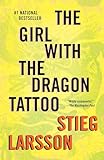
Stieg Larsson’s The Girl with the Dragon Tattoo succeeded for reasons that are hard to replicate: a protagonist (Lisbeth Salander) unlike any before her, a Swedish setting that felt genuinely foreign and claustrophobic, and a willingness to confront the darkest corners of human behaviour without flinching. The Millennium trilogy has sold over 100 million copies worldwide, and the question every reader asks at the end of The Girl Who Kicked the Hornet’s Nest is: what now?
The good news is that the elements that made Larsson’s books work — sharp plotting, morally complex heroes, dark atmospheres, and a vein of feminist fury running underneath — appear in plenty of other thrillers. Here are 15 that will scratch the same itch.
1. The Girl Who Played with Fire by Stieg Larsson
The obvious starting point: if you’ve only read Dragon Tattoo, continue the Millennium trilogy. The Girl Who Played with Fire deepens Lisbeth’s backstory while delivering a plot that escalates the stakes considerably. Larsson wrote all three novels before his death in 2004, and they hold together as a complete story — don’t stop at book one.
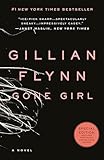
2. Gone Girl by Gillian Flynn
Flynn’s breakthrough novel introduced the “unreliable narrator” domestic thriller to mainstream audiences. When Amy Dunne disappears on her fifth wedding anniversary, her husband Nick becomes the prime suspect — but Amy’s diary paints a more complicated picture. Flynn brings the same willingness to write genuinely unpleasant characters that Larsson does, and the plot’s central twist is one of the best-executed reveals in contemporary thriller writing.
3. The Silent Patient by Alex Michaelides
A famous painter shoots her husband five times and then never speaks another word. Therapist Alicia Berenson makes it his mission to find out why. The Silent Patient sustains its central mystery across 350 pages while building to a finale that genuinely earns its reveals — a harder trick than it looks. For readers who loved the psychological depth of Larsson’s portrayal of Lisbeth, Michaelides’s exploration of trauma and silence will feel familiar.
4. The Woman in Cabin 10 by Ruth Ware
A travel journalist boards a luxury cruise ship, witnesses what she believes is a murder, and discovers that according to the passenger manifest, no one is in Cabin 10. Ware’s novel is compact, propulsive, and set in a closed environment that creates the same sense of geographical claustrophobia as Larsson’s Swedish island in Dragon Tattoo. It moves fast and doesn’t waste words.
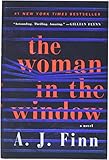
5. The Woman in the Window by A.J. Finn
An agoraphobic woman watches her neighbours through her window and sees something she shouldn’t. The setup is Hitchcock-ian in the best sense, and the execution delivers a psychological thriller that keeps you wrong-footed about what’s real and what’s paranoia. If you are drawn to Larsson’s interest in surveillance, hidden truth, and the limits of what we can know, this is a close match.
6. In the Woods by Tana French
Three children run into the woods in suburban Dublin. Two are never found. The third — Rob Ryan — is found hours later, his shoes filled with blood, with no memory of what happened. Years later, Ryan is a murder detective who catches a case at the same woods. French’s debut is one of the finest crime novels of the past twenty years — atmospheric, literary, and willing to subvert genre expectations in ways that Larsson fans will appreciate.
7. Behind Closed Doors by B.A. Paris
The perfect marriage always looks a little too perfect. When Grace and Jack Angel appear on the social circuit, friends see a handsome, successful couple. What no one sees is what happens at home. Paris builds her domestic thriller on a slow revelation of horror that makes the novel progressively harder to put down. It shares Larsson’s concern with the violence hidden inside respectable institutions — here, marriage itself.
8. The Hunting Party by Lucy Foley
A group of Oxford friends reunite at a remote Scottish hunting lodge for New Year’s Eve. By January 1st, one of them is dead. Foley works the classic closed-circle mystery structure with real skill, building nine characters with enough depth that you genuinely don’t know who to trust. The Scottish wilderness setting will appeal to readers who loved Larsson’s Scandinavian geography.
9. The Guest List by Lucy Foley
A wedding on a remote Irish island. A mix of old friends and new acquaintances. A body found before the reception ends. Foley’s second entry on this list earns its place — she is one of the best current practitioners of the slow-burn psychological thriller with a large cast of suspects. The coastal Irish setting creates the same isolated, weather-beaten atmosphere that makes Scandinavian noir compelling.
10. Verity by Colleen Hoover
A struggling author is offered a once-in-a-lifetime opportunity: finish the remaining books in a bestselling thriller series. While working at the home of the series’s author — who suffered a debilitating accident — she discovers a manuscript that reveals the darkest possible truths. Hoover crosses genre lines in Verity, combining romance and thriller in ways that Larsson himself would have recognised, and the book’s ending has divided readers in the most satisfying possible way.
11. The Seven Deaths of Evelyn Hardcastle by Stuart Turton
Structurally unlike anything else on this list: the protagonist must solve a murder while reliving the same day eight times, each time in a different guest’s body. The English country house setting and the Byzantine plotting give this novel the quality of a puzzle box — dense, rewarding, and deeply satisfying once all the pieces click into place. For readers who love the labyrinthine plotting of the Millennium trilogy, Turton’s construction is extraordinary.
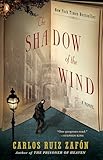
12. The Shadow of the Wind by Carlos Ruiz Zafón
Set in post-Civil War Barcelona, Zafón’s novel follows a young boy who discovers a mysterious book and becomes obsessed with tracking down its author — only to find that someone is systematically destroying every copy of the writer’s work. Part literary mystery, part gothic atmosphere piece, part meditation on storytelling itself, The Shadow of the Wind shares Larsson’s European darkness and its concern with secrets buried in the past. One of the most atmospheric novels on this list.
13. The Girl Who Kicked the Hornet’s Nest by Stieg Larsson
The conclusion of the Millennium trilogy. Lisbeth Salander is hospitalised following the events of The Girl Who Played with Fire, while Blomkvist works from the outside to expose the secret government unit that has persecuted her since childhood. The pacing slows to accommodate the legal and political machinations, but the payoff — Lisbeth in a courtroom, using her intelligence as a weapon — is immensely satisfying. This is the book that resolves everything Larsson built across the trilogy.
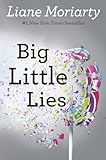
14. Big Little Lies by Liane Moriarty
A school fundraiser ends with a body on the floor. Who was it, and what happened? Moriarty’s novel works backwards from this event through alternating perspectives from three mothers in an Australian coastal town. The social satire is sharp, the characters are fully drawn, and the revelation of both the crime and its backstory lands with the force of something genuinely true. Like Larsson, Moriarty is interested in the violence hidden inside respectable communities — and in who gets believed.
15. Sharp Objects by Gillian Flynn
Flynn’s debut, and arguably her most disturbing novel. Reporter Camille Preaker returns to her small Missouri hometown to investigate the murders of two young girls, and discovers that the town — and her own family — harbour secrets more corrosive than anything she expected. Sharp Objects has the same unflinching treatment of female trauma that Larsson brings to Lisbeth’s story, and the same insistence on looking at things most fiction politely avoids.
What Makes These Books Work for Larsson Fans
The Millennium trilogy’s defining qualities come down to a few things: a protagonist who refuses to play by social rules, plots that uncover institutional corruption rather than isolated crimes, settings that feel foreign and atmospheric, and a pace that rewards long reading sessions.
The books above hit different combinations of those notes. Flynn and Michaelides deliver the psychological complexity. French and Foley match the atmospheric setting. Turton rivals Larsson for plotting ambition. Zafón comes closest to the literary density.
Work through this list and you’ll have covered the best of contemporary psychological thriller writing.
Frequently Asked Questions
Is the Stieg Larsson series finished?
Larsson wrote three complete novels before his death: The Girl with the Dragon Tattoo, The Girl Who Played with Fire, and The Girl Who Kicked the Hornet’s Nest. The series was later continued by Swedish author David Lagercrantz in three additional novels, though these are considered separate from the original trilogy.
What order should I read the Millennium books?
Read them in order: Dragon Tattoo, Played with Fire, Hornet’s Nest. The story builds directly across all three books and the ending of the third volume only lands properly if you’ve read the first two.
Is Scandinavian noir a specific genre?
It is. Nordic noir (also called Scandinavian noir) is a crime fiction genre characterised by psychological depth, dark social themes, bleak winter settings, and a focus on the corruption inside otherwise well-functioning societies. Key authors beyond Larsson include Jo Nesbø (the Harry Hole series), Henning Mankell (the Wallander series), and Camilla Läckberg.
Related Reading Guides
- Tana French Books in Order — the Dublin Murder Squad series is the most natural next step after Larsson: literary crime fiction with the same psychological intensity, but set in Ireland and written with greater prose ambition
- Best Mystery Books of All Time — the wider genre, placing Larsson alongside Christie, Highsmith, and the best crime fiction across a century
- Karin Slaughter Books in Order — the Will Trent and Grant County series; equally unflinching crime fiction, set in Georgia
Stieg Larsson / Girl with the Dragon Tattoo: Reading Order
For the complete Millennium series in order and Stieg Larsson’s biography, see our Stieg Larsson Books in Order guide.
Affiliate disclosure: Links on this site are affiliate links. We earn a small commission at no extra cost to you. This does not influence our editorial recommendations.
Frequently Asked Questions
What books are most similar to The Girl with the Dragon Tattoo?
The books most similar to The Girl with the Dragon Tattoo are the rest of the Millennium trilogy, The Snowman by Jo Nesbo, and The Keeper of Lost Causes by Jussi Adler-Olsen. All three share the Nordic noir atmosphere, morally complicated investigators, and deep dives into institutional corruption.
What other Scandinavian crime novels are worth reading?
The best Scandinavian crime novels beyond Stieg Larsson are the Harry Hole series by Jo Nesbo (start with The Bat), the Kurt Wallander series by Henning Mankell (start with Faceless Killers), and the Department Q series by Jussi Adler-Olsen. The Varg Veum series by Gunnar Staalesen and the Martin Beck series by Maj Sjowall and Per Wahloo are the most important Scandinavian crime classics.
What should I read after completing the Millennium trilogy?
After the Millennium trilogy, most readers continue with the Jo Nesbo Harry Hole series for more Nordic noir, or move to Tana French's Dublin Murder Squad for literary crime fiction with the same psychological depth. The Girl Before by J.P. Delaney and The Silent Patient by Alex Michaelides deliver a similar unreliable narrator and twist-driven structure.
What books have the same dark atmosphere as The Girl with the Dragon Tattoo?
Books with the same oppressive, dark atmosphere as The Girl with the Dragon Tattoo include The Snowman by Jo Nesbo, The Mist by Stephen King, and In the Woods by Tana French. All feature investigations into deeply disturbing crimes in isolated or institutional settings, with characters who carry significant personal damage.