Stieg Larsson Books in Order: Millennium Series Reading Guide (2026)
The complete Millennium series reading order — Stieg Larsson's original trilogy, the David Lagercrantz continuations, and how to approach the Girl with the Dragon Tattoo series.
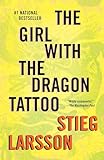
Stieg Larsson died of a heart attack in November 2004 at the age of fifty. He was a Swedish journalist and anti-fascist researcher who had spent his career documenting far-right extremism and exposing neo-Nazi networks in Sweden. He had recently delivered three manuscripts to his publisher. He never saw any of them in print.
The first book was published in Sweden in 2005. By 2008 the series had become a global phenomenon. By 2010 The Girl with the Dragon Tattoo had sold over 27 million copies worldwide and the name Lisbeth Salander had become shorthand for a particular kind of female protagonist — brilliant, damaged, uncompromising, entirely unwilling to conform to the conventions that crime fiction had established for women, either as victims or as detectives. She is the reason the Millennium series exists in the cultural imagination in the way it does.
The reading order is simple: read the three Larsson novels in publication order. Books 2 and 3 are not really separate volumes — they are one narrative published in two parts, and attempting to read one without the other is a mistake. The David Lagercrantz continuation novels, which began in 2015, can be read after the original trilogy if you want more time in Larsson’s world.
All 3 Stieg Larsson Books at a Glance
| # | Title | Year | Series/Type |
|---|---|---|---|
| 1 | The Girl with the Dragon Tattoo | 2005 | Millennium #1 |
| 2 | The Girl Who Played with Fire | 2006 | Millennium #2 |
| 3 | The Girl Who Kicked the Hornets’ Nest | 2007 | Millennium #3 |
Best starting point: The Girl with the Dragon Tattoo — note that the first 150 pages move slowly before the novel fully ignites.
The Millennium Reading Order
The complete series, in order:
- The Girl with the Dragon Tattoo (2005) — Stieg Larsson
- The Girl Who Played with Fire (2006) — Stieg Larsson
- The Girl Who Kicked the Hornets’ Nest (2007) — Stieg Larsson
- The Girl in the Spider’s Web (2015) — David Lagercrantz
- The Girl Who Takes an Eye for an Eye (2017) — David Lagercrantz
- The Girl Who Lived Twice (2019) — David Lagercrantz
Books 2 and 3 form a single continuous narrative. The Girl Who Played with Fire ends at a point that functions as a cliffhanger — not a resolution. Do not read them separately or with a significant gap between them. Everything set up in Book 1 pays off across Books 2 and 3, but Books 2 and 3 have their own internal arc that runs without interruption from the first chapter of Fire to the final chapter of Hornets’ Nest.
The Lagercrantz books are a separate matter and are discussed below. For the essential Millennium experience, the three Larsson novels are where your attention belongs.
The Girl with the Dragon Tattoo
The Girl with the Dragon Tattoo is a slow novel, and it is worth saying so plainly. The first 150 pages — covering Mikael Blomkvist’s libel conviction, his departure from the investigative magazine Millennium, and the early stages of his assignment for the Vanger family — move at the pace of a literary novel about Swedish financial journalism. Readers who are warned about this generally make it through. Readers who are not warned sometimes give up before the book becomes itself.
The Swedish title is Män som hatar kvinnor — Men Who Hate Women. That title was changed for the English-language market, almost certainly for commercial reasons, and the change is a loss. The English title makes the book sound like a thriller about a tattooed hacker. The Swedish title tells you what the book is actually about.
Mikael Blomkvist is a financial journalist hired by Henrik Vanger, the patriarch of a wealthy Swedish industrial dynasty, to investigate the decades-old disappearance of Harriet Vanger, his great-niece. The investigation takes Blomkvist to Hedeby Island, into the Vanger family’s considerable dysfunction, and eventually toward a history of violence against women that the family has concealed for generations. Lisbeth Salander enters the novel as the person the Vanger family hired to conduct a background check on Blomkvist — a state-of-the-art researcher who works for a private security firm and whose methods are not always legal. The two form an alliance.
Salander is not a conventional co-protagonist. She does not explain herself. Her backstory is withheld almost entirely in Book 1, surface details only — brilliant, antisocial, state-appointed legal guardian, some kind of extraordinary hacker. The withholding is intentional. Books 2 and 3 are built around revealing what was withheld here.
Once the investigation takes hold — roughly at the 150-page mark — the novel does not let go.
Books 2 and 3: One Story
The Girl Who Played with Fire turns almost entirely away from the Vanger investigation to Lisbeth Salander herself: who she is, what was done to her, the conspiracy behind her institutionalization as a child, and the people who put her there. Three journalists investigating sex trafficking are murdered. Salander is the prime suspect. Blomkvist is certain she is innocent and investigates from one direction while Salander — underground, hunted, unreachable — investigates from another.
The book is structured as a closing trap. By the time the trap closes, at the end of Book 2, you understand enough about Salander’s history to see exactly what is at stake. The ending of The Girl Who Played with Fire is one of the more audacious stopping points in contemporary thriller fiction — the narrative is nowhere near resolved, and the final chapter functions as a bridge rather than a conclusion.
The Girl Who Kicked the Hornets’ Nest is the resolution: the courtroom case, the political conspiracy, the reckoning. Where Book 2 is kinetic — Salander moving, evading, fighting — Book 3 is more procedural and institutional, dealing with the Swedish security apparatus, the press, and the formal mechanics of justice. It is a different kind of novel from its predecessor, and deliberately so. The same story told in the same register across two books would be exhausting. Larsson understood that a courtroom and a conspiracy require different pacing than a manhunt.
Read these two books consecutively. That is not a suggestion — it is the correct way to experience them.
Lisbeth Salander: Why She Matters
Lisbeth Salander is one of the most original creations in crime fiction. Larsson never used the word autism in connection with her, but her presentation — the photographic memory, the social disengagement, the literal thinking, the inability to process social convention as anything other than an arbitrary set of rules imposed by people she has no particular reason to respect — is recognizable and precisely drawn. She is also a survivor of extreme institutional and personal violence who did not emerge from that violence softened or seeking validation. She emerged from it precise and implacable.
Her capacity for violence is not incidental. She does not hesitate and she does not forgive, and Larsson presents this not as a character flaw to be overcome but as a rational response to what was done to her. This is unusual in crime fiction, where female characters who survive violence are typically positioned as either victims seeking healing or avengers seeking catharsis. Salander is neither. She is simply someone who has calculated the correct response to each situation and is willing to carry it out.
She is also, paradoxically, deeply loyal to the small number of people she trusts — a loyalty that reads as more meaningful precisely because it is so rarely extended. The relationship between Salander and Blomkvist is one of the more interesting central dynamics in the genre: built on mutual respect and genuine equality, with neither character subordinated to the other’s narrative.
She is the reason people return to these books. She is the reason they get read at all.
The Films: Swedish (2009) and Hollywood (2011)
Two separate film adaptations exist, and both are worth your attention.
The Swedish trilogy — Män som hatar kvinnor (2009), Flickan som lekte med elden (2009), and Luftslottet som sprängdes (2009) — was produced by Yellow Bird and directed by Niels Arden Oplev (Book 1) and Daniel Alfredson (Books 2 and 3). Noomi Rapace plays Lisbeth Salander across all three films. The Swedish adaptation is faithful to its source material and covers all three novels in full. Rapace’s performance is the reason the international rights were snapped up and a Hollywood version commissioned. She is worth watching.
David Fincher directed the Hollywood adaptation of The Girl with the Dragon Tattoo in 2011, with Rooney Mara as Lisbeth Salander and Daniel Craig as Blomkvist. The Fincher film covers only Book 1 and is considered among his best work — tighter and more visually composed than the Swedish original, with a particularly strong first act and a title sequence that remains one of the most striking in recent Hollywood film. Mara received an Academy Award nomination for her performance. The planned sequels were never made; the production company lost interest after the first film underperformed commercially relative to its budget.
Watch the Swedish trilogy if you want the complete story on screen. Watch the Fincher film if you want to see what a director of his particular skill does with the first novel.
The Lagercrantz Continuations
In 2015 the Larsson estate authorized Swedish author David Lagercrantz to continue the Millennium series. Lagercrantz wrote three novels: The Girl in the Spider’s Web (2015), The Girl Who Takes an Eye for an Eye (2017), and The Girl Who Lived Twice (2019).
These books are professionally accomplished and worth reading if you want more Lisbeth Salander. They are not the same as the Larsson originals, and it is worth understanding why before you begin.
Larsson’s prose is digressive and politically dense. He writes long, detailed passages about Swedish corporate structures, left-wing journalism, and the mechanics of financial fraud. He trusts his readers to find the material interesting for its own sake, and the books accumulate a texture and social specificity that makes their world feel real in a particular way. Lagercrantz is a more streamlined writer — his plots move faster, his chapters are shorter, and the political background that Larsson treated as subject matter becomes, in Lagercrantz’s hands, scenery.
The Girl in the Spider’s Web is the best of the three continuations. It involves artificial intelligence research, the NSA, and a plot construction that is closer to contemporary techno-thriller conventions than anything Larsson wrote. It is a good thriller. The Girl Who Takes an Eye for an Eye returns to Salander’s backstory for additional excavation. The Girl Who Lived Twice closes out the Lagercrantz trilogy with a Russia-adjacent political plot.
None of the three continuations are essential. All three are readable. If your interest in the series is primarily Salander rather than Larsson’s specific political world, the Lagercrantz novels will satisfy. If what you valued about the original trilogy was its texture and density, you will notice the difference immediately.
The correct stopping point, if you want only the essential Millennium experience, is the final page of The Girl Who Kicked the Hornets’ Nest. Larsson intended a ten-book series. He wrote three. Those three are complete in themselves.
Books Like The Girl with the Dragon Tattoo
For Scandinavian crime and psychological thriller novels that share the intensity and investigative depth of Stieg Larsson’s trilogy, see our Books Like The Girl with the Dragon Tattoo guide.
For the Best Mystery and Crime Books
For the definitive guide to mystery and crime fiction — from Agatha Christie to Tana French — see our Best Mystery Books of All Time list.
For the full Stieg Larsson bibliography, reviews, and biography, visit the Stieg Larsson author page on Editors Reads.
Affiliate disclosure: Links on this site are affiliate links. We earn a small commission at no extra cost to you. This does not influence our editorial recommendations.
Frequently Asked Questions
What order should I read the Millennium series?
Read the three Stieg Larsson novels in order: The Girl with the Dragon Tattoo, The Girl Who Played with Fire, The Girl Who Kicked the Hornets' Nest. The three books form one continuous story — particularly Books 2 and 3, which are essentially a two-part narrative. The David Lagercrantz continuations (Books 4–6) can be read after the original trilogy.
Should I read the Lagercrantz continuation books?
The Lagercrantz continuation novels (The Girl in the Spider's Web, The Girl Who Takes an Eye for an Eye, The Girl Who Lived Twice) are well-crafted but different in tone and style from Larsson's originals. They are worth reading if you want more Lisbeth Salander. If you only want the essential Millennium experience, stop after Book 3.
Who is Lisbeth Salander?
Lisbeth Salander is arguably the most iconic character in modern crime fiction. A brilliant, antisocial hacker with a brutal past and photographic memory, she is impossible to categorize by conventional protagonist standards. She operates outside social norms, is fiercely independent, and enacts her own justice. She is the reason the series exists.
Are there different film versions of The Girl with the Dragon Tattoo?
Yes. The original Swedish film trilogy (2009, with Noomi Rapace as Lisbeth) is a faithful and excellent adaptation. David Fincher directed a Hollywood remake in 2011 with Rooney Mara — it covers only the first book and is considered one of Fincher's best films. The sequel films to the Hollywood version were never made.
Did Stieg Larsson write more books before he died?
Larsson delivered the three Millennium manuscripts to his publisher and died of a heart attack in 2004, before the first book was published. There are reportedly pages from a fourth manuscript on his laptop, though these have never been officially released. He also wrote journalism and anti-fascist research throughout his career.


