Books Like Assassin's Apprentice: 11 Fantasy Novels
If Assassin's Apprentice moved you with Fitz's tragic coming-of-age, these character-driven fantasy novels deliver the same emotional devastation.

Robin Hobb’s Assassin’s Apprentice sits at the character-focused end of the fantasy spectrum — a place where the internal life of the protagonist matters more than the mechanics of the magic system or the sweep of the world-building. Fitz, the illegitimate son of a prince who abandons him, grows up at the court of Buckkeep learning what it means to serve a king who will never acknowledge him. He is trained in the assassin’s art, bonded to a wolf through the forbidden Wit magic, and drawn into the psychic link of the Skill that connects him to his king. None of this happens loudly. The novel accumulates meaning the way that a life does: through small betrayals, unexpected kindnesses, and the slow formation of loyalties that will cost more than Fitz can afford.
What distinguishes Hobb from most fantasy writers is her willingness to let her protagonist suffer without redemption on the horizon. Fitz is not rewarded for being good. The court he serves is not secretly noble. The political intrigue that surrounds him is petty and damaging in the way that real politics is petty and damaging. Readers who come to Assassin’s Apprentice from action-heavy epic fantasy sometimes find this disorienting — the battles, when they come, are not triumphant, and the magic is as much a source of grief as of power. The novel’s reputation rests on readers who respond to precisely this quality, and it inspires a particular kind of devotion.
The books below share something with that devotion: characters who feel genuinely inhabited, worlds whose political structures have real weight, and emotional stakes that the author refuses to protect you from. Some are closer to Hobb in tone than others, and the groupings below are intended to help you find the right match for what drew you to Fitz’s story.
Continue the Story: The Rest of the Farseer Trilogy
#1 — Royal Assassin by Robin Hobb
The second Farseer novel deepens everything the first established. Fitz returns to Buckkeep as the Red Ship Raiders’ threat intensifies, the king’s health deteriorates, and the court factions that were already in motion begin to collide with genuine consequences. Hobb expands Fitz’s relationships — with Molly, with the Fool, with King Shrewd — and with each expansion raises the cost of his loyalty. The emotional devastation that the trilogy is known for becomes fully apparent here. Readers who felt cautious after the first book’s slower pace will find Royal Assassin harder to put down, and harder to recover from.
#2 — Assassin’s Quest by Robin Hobb
The concluding volume of the Farseer Trilogy is the longest and the most structurally unusual — large sections follow Fitz across a wilderness journey that operates more like a road novel than a conventional fantasy conclusion. Hobb uses the length to explore what the costs of the previous two books have actually done to Fitz as a person, and the resolution is one of the most discussed endings in modern fantasy: not triumphant, not entirely tragic, but honest in a way that few fantasy series attempt. If the first two books earned your trust, the third will spend it in full.
Other Deeply Character-Driven Fantasy
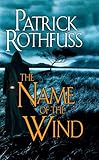
#3 — The Name of the Wind by Patrick Rothfuss
Kvothe is telling a scribe the true story of his life — how a child raised among traveling performers became the most famous (and possibly most dangerous) figure in the world. Rothfuss writes the frame story in a quiet inn where an older, diminished Kvothe lives under an assumed name, and this creates the same slow-burn melancholy that runs through Hobb’s work. The University sections, in which a young Kvothe learns magic and navigates class resentments with too much cleverness, are among the finest coming-of-age sequences in fantasy. The prose is self-consciously beautiful and earns it.
#4 — Tigana by Guy Gavriel Kay
A conquered province has been magically erased from memory — its very name stripped from the world by the sorcerer who destroyed it. The handful of people who can still remember Tigana carry that knowledge as both treasure and wound. Kay writes fantasy that could be read by someone who never reads fantasy, with a literary attention to grief, memory, and the cost of revenge that puts Tigana in the same emotional register as Hobb’s work. The political structures are rendered with the same seriousness, and the characters’ inner lives are given the same weight as the plot’s external mechanics.
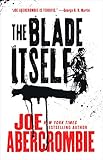
#5 — The Blade Itself by Joe Abercrombie
The first volume of the First Law trilogy introduces a set of characters who deconstruct fantasy archetypes: a war hero who is not heroic, a barbarian who is not simple, an inquisitor whose methods are monstrous and whose logic is coherent. Abercrombie’s world is darker and more sardonic than Hobb’s, and his prose carries a dark humor that she does not share, but the commitment to characters whose psychology is genuinely complex and whose decisions have real consequences is the same. Readers who value moral ambiguity in fantasy will find this one of its sharpest practitioners.
Court Intrigue and Political Fantasy
#6 — An Ember in the Ashes by Sabaa Tahir
Laia is a Scholar girl who infiltrates a brutal military academy as a spy to save her brother. Elias is the academy’s finest soldier who wants nothing more than to escape the institution that made him. Tahir’s Roman-Empire-inflected world is one of the most vividly rendered settings in recent fantasy, and the political structures — the oppression of conquered peoples, the internal politics of the ruling class, the corruption of institutions — give the book genuine weight beyond its central romance. The cost of survival in a system designed for your destruction is Hobb’s territory, handled here with more plot momentum.
#7 — Shadow and Bone by Leigh Bardugo
Alina Starkov, an orphaned soldier, discovers she has a rare magical power that could alter the balance of her nation’s war. The Grishaverse’s court politics — the Grisha hierarchy, the Darkling’s charisma and his ambitions, the way power corrupts institutions — provide the same kind of intrigue that surrounds Fitz at Buckkeep. Bardugo is more plot-forward than Hobb, but Shadow and Bone shares the sense of a young protagonist being shaped by forces that have purposes for them they cannot fully understand. The series grows considerably darker as it progresses.
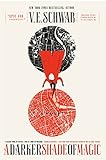
#8 — A Darker Shade of Magic by V.E. Schwab
Kell is one of the last Antari — magicians who can travel between parallel versions of London. He is also a courier for the royal families of Red London, and a smuggler on the side. Schwab’s world-building is one of the more inventive in recent fantasy, but what makes the book comparable to Hobb’s work is Kell’s position: adopted by a royal family, loyal to it, used by it, never quite belonging to it. The question of what you owe the people who shaped you, and what it costs to serve them, runs through both books. The pace here is faster, but the emotional intelligence is equivalent.
Fantasy Where the Emotional Journey Is the Point
#9 — Six of Crows by Leigh Bardugo
A crew of criminals attempts an impossible heist in the most fortified city in the world. The premise sounds like a genre exercise, and the book is certainly propulsive, but what distinguishes Six of Crows is the depth of its characters’ interior lives and the way their traumas and loyalties shape every decision they make. Bardugo constructs each character with the same seriousness that Hobb brings to Fitz, and the relationships between them carry genuine emotional weight. Readers who want something with more momentum than Hobb but the same insistence on character interiority will find this the most satisfying bridge.
#10 — City of Bones by Cassandra Clare
Clary Fray discovers that the world contains Shadowhunters — warriors who hunt demons — and that she is one of them, with a past that has been deliberately hidden from her. Clare’s Shadowhunter world is dense with mythology and political faction, and City of Bones establishes a group of young characters whose relationships and loyalties the series will spend many volumes complicating. The hidden-heritage coming-of-age structure parallels Fitz’s situation more closely than it might initially appear, and readers who respond to Fitz’s gradual understanding of who he is and what he was born into will find familiar emotional territory here.
#11 — The Lies of Locke Lamora by Scott Lynch
Locke Lamora leads a small gang of con artists in a city of canals and crime, executing elaborate schemes against the nobility until a more dangerous player disrupts their work. Lynch’s novel is one of the most purely enjoyable fantasies of the past two decades, with prose that crackles and a central friendship — between Locke and his partner Jean Tannen — that carries the emotional core of the book. It is funnier than Assassin’s Apprentice and faster-paced, but the loyalty between characters, the way the past shapes every decision, and the refusal to protect beloved characters from harm are all deeply in Hobb’s spirit.
How to Choose Your Next Read
If you want more Fitz immediately: Royal Assassin is the only answer. The trilogy rewards continuation.
If you want the closest tonal match outside Hobb: Tigana by Guy Gavriel Kay, for literary seriousness and emotional consequence.
If you want more court intrigue with darker politics: The Blade Itself by Joe Abercrombie.
If you want the same coming-of-age structure with more plot momentum: An Ember in the Ashes or Shadow and Bone.
If you want character depth with heist-level propulsion: The Lies of Locke Lamora or Six of Crows.
If you want beautiful prose and a melancholy frame: The Name of the Wind.
For the Best Fantasy Books
For the definitive guide to fantasy fiction — from Tolkien and Le Guin to Brandon Sanderson and George R.R. Martin — see our Best Fantasy Books of All Time list.
More Fantasy Series Reading Guides
- Robin Hobb Books in Order: Farseer and Realm of the Elderlings
- Patrick Rothfuss Books in Order: Kingkiller Chronicle
Affiliate disclosure: Links to Amazon on this page are affiliate links. We earn a small commission at no extra cost to you. This does not influence our editorial recommendations.
Frequently Asked Questions
Should I read all of Robin Hobb's Realm of the Elderlings series in order?
The Farseer Trilogy is the best starting point and works as a self-contained entry into the Realm of the Elderlings. After the Farseer books, most readers move to the Liveship Traders trilogy before returning to Fitz in Tawny Man. The series are loosely connected and can technically be read independently, but reading in publication order rewards you with a richer understanding of the world and characters. Hobb herself has suggested that order is not strictly mandatory, but the emotional payoffs are much greater if you follow the connections.
How dark does the Farseer Trilogy get?
The Farseer Trilogy is genuinely dark fantasy. Fitz's life involves sustained cruelty, political betrayal, psychological manipulation, and losses that Hobb does not soften or resolve neatly. The magic systems — the Skill and the Wit — both carry serious psychological costs, and the series does not trend toward comfort or catharsis in the way that more commercial fantasy does. Readers who need protagonists to be rewarded for their virtue may find the trilogy punishing. Readers who value honesty about suffering and loyalty in the face of it will find it among the most affecting fantasy ever written.
What is the best character-driven fantasy for readers who prefer literary fiction?
For literary fiction readers approaching fantasy, the best starting points are Robin Hobb's Farseer Trilogy, Guy Gavriel Kay's Tigana, and Patrick Rothfuss's The Name of the Wind. All three prioritize interiority, emotional consequence, and prose quality over action or world-building spectacle. Kay in particular is read widely outside genre fantasy circles. Joe Abercrombie's The Blade Itself is also worth considering for readers who appreciate moral complexity and dark humor, though it is more plot-driven than the others.
Is Assassin's Apprentice slow? What should I expect?
Assassin's Apprentice is deliberately paced. The first third is almost entirely about Fitz's childhood and his gradual absorption into the royal court at Buckkeep — there is very little conventional plot momentum in the early chapters. Hobb is building a person, not a plot, and readers who come to the book expecting the pace of action-oriented epic fantasy will find the opening slow. By the midpoint the political situation and Fitz's role in it have sharpened considerably, but the book never becomes fast-paced in the conventional sense. Its rewards are emotional and cumulative rather than immediate.