Patrick Rothfuss Books in Order: Kingkiller Chronicle Reading Guide (2026)
The complete Kingkiller Chronicle reading guide — The Name of the Wind and The Wise Man's Fear, what we know about Book 3, and everything in the Kingkiller world.
All Kingkiller Chronicle Books at a Glance
| # | Title | Year | Type |
|---|---|---|---|
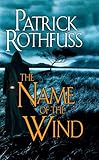
| 1 | The Name of the Wind | 2007 | Kingkiller — Day One |
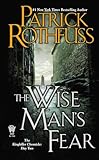
| 2 | The Wise Man’s Fear | 2011 | Kingkiller — Day Two |
| 2.5 | The Slow Regard of Silent Things | 2014 | Novella (Auri) |
| 3 | The Doors of Stone | TBA | Kingkiller — Day Three (unpublished) |
The Kingkiller Chronicle is one of the most celebrated and most frustrating fantasy series of the twenty-first century. Two published novels — The Name of the Wind and The Wise Man’s Fear — stand among the best prose fantasy has produced. Then, nothing. Patrick Rothfuss published The Wise Man’s Fear in 2011, and as of 2026, the concluding volume, The Doors of Stone, has not appeared.
The reading order itself is simple: Book 1, then Book 2. What is not simple is the question every prospective reader asks: should I start a series that has been unfinished for over fifteen years, with no publication date announced? The honest answer is yes — but with complete clarity about what you are getting into. You are reading two exceptional novels that tell a self-contained emotional story about Kvothe. You are not, in the near future and possibly ever, getting that story’s conclusion. If you can accept that, start immediately. If unfinished series are genuinely intolerable to you, wait — though the wait has already been fifteen years and counting.
The Reading Order
The Kingkiller Chronicle was designed as a trilogy. Each book covers one day of narration. Here is the correct sequence:
- The Name of the Wind (2007) — Day One
- The Wise Man’s Fear (2011) — Day Two
- The Slow Regard of Silent Things (2014, novella) — Read after Book 2; set during the same period, following the character Auri
- The Doors of Stone — Day Three; not yet published as of 2026
The Slow Regard of Silent Things is not essential reading, and Rothfuss says as much in its own foreword. It is a side-step into a minor character’s inner world rather than an advance of the main plot. Read it after The Wise Man’s Fear if you want more time in the world between whatever comes next.
The Doors of Stone is the series’ unresolved problem. It exists, in some form, in Rothfuss’s possession. He has spoken about it over the years. It has not been published, and no publication date has been set.
The Name of the Wind — Kvothe’s Story Begins
The Name of the Wind opens in the present: Kvothe, the most famous man in his world — adventurer, magician, kingkiller, legend — is living as an innkeeper under a false name in a small village. A chronicler finds him and persuades him to tell his true story. What follows is Kvothe’s narration of his own life, delivered over three days.
Day One covers his childhood with the Edema Ruh, a travelling troupe of performers. His father Arliden was working on a song about the Chandrian — ancient, feared beings associated with death and disaster — when the troupe is slaughtered. The young Kvothe survives because he was away in the woods. He spends three years homeless on the streets of Tarbean, surviving by theft and desperation, before making his way to the University — a place of learning and magic — where the main action of the series begins.
What makes the novel extraordinary is not the plot, which is a fairly classical coming-of-age structure, but two things: the prose and the narrative architecture. Rothfuss writes with more care for language than almost any other commercial fantasy writer. Sentences are constructed rather than assembled. Descriptions earn their place. The world feels inhabited rather than designed.
The architecture matters more. Kvothe is both the narrator and the subject of his own legend, and the gap between the two is the engine of the book. He is telling us his story with full knowledge of how it ends — we can see him, in the present-day frame, hollow and hidden. The young Kvothe of the inner story is brilliant, reckless, and magnetic. The innkeeper Kote is none of those things. The reader spends the entire novel trying to understand how one became the other, and Rothfuss never answers that question cheaply.
The Wise Man’s Fear — Day Two
The Wise Man’s Fear is longer and more ambitious than its predecessor — approximately twice the length — and its scope expands considerably. Where The Name of the Wind largely confines itself to the University and Tarbean, Book 2 takes Kvothe across multiple continents and through several distinct narrative registers.
The novel’s major threads: Kvothe’s complicated relationship with Denna, the woman he loves but cannot quite reach; his continued studies in sympathy (the series’ system of magic) and his pursuit of the more elusive art of naming; an extended period in the court of the Maer Alveron; and two episodes that pull the book far from its academic origins — his time with Felurian, a fairy of almost supernatural danger, and his months of training with the Adem, a warrior culture with a completely alien set of values.
The Felurian section is deliberately jarring, and some readers find it the most difficult part of the series to inhabit. Kvothe moves out of his natural register — the clever, verbal, University-trained student — into something closer to myth. This is intentional. Rothfuss is showing us Kvothe operating in territories where his usual tools do not apply, where his legend is being built in ways that will later seem impossible. The Adem chapters work similarly: they force Kvothe to confront the limits of what he knows, and they carry significant weight for the eventual confrontation with the Chandrian.
The Wise Man’s Fear ends on a note of controlled anticipation. The Chandrian are not resolved. Kvothe is closer to the legend he will become and further from understanding what destroyed his family. Book 3, whatever it turns out to be, has a great deal to answer.
The Chandrian and the Frame Story
One of the Kingkiller Chronicle’s most sophisticated elements is its two-level narrative structure, and understanding it changes how you read both books.
The inner story is Kvothe’s narration: three days of telling his history, moving from childhood through the University and beyond. This is the story of how a legend was made. It is, by Kvothe’s own admission, told from memory, shaped by his understanding, and possibly unreliable. Kvothe is not an untrustworthy narrator in the traditional sense — he does not obviously lie — but he is a man telling the story of himself, and that framing matters.
The outer story is everything happening in the present, in the Waystone Inn. This frame is darker than the inner story in ways that accumulate quietly. The world outside the inn is in crisis. Strange things are happening. Kvothe’s two companions — Bast, his student, and Chronicler, the man writing down his story — both clearly know things they are not saying. Kvothe himself is diminished: flat, careful, going through motions. Something has gone badly wrong between the end of the inner story and the present, and Rothfuss never explains it directly.
The Chandrian, the beings who killed Kvothe’s family when he was a child, operate as the series’ central mystery. They are ancient, feared, and apparently capable of suppressing their own myths — people who speak of them too directly seem to attract danger. Kvothe’s quest to understand who they are and why they destroyed his family runs as a thread through both novels without resolution. The outer frame suggests the resolution, when it comes, was not triumphant. Kvothe did something. Or failed to do something. The legend and the hollow innkeeper are the same person, and the distance between them is where the series lives.
The Wait for Book 3
Patrick Rothfuss published The Wise Man’s Fear in March 2011. As of 2026, more than fifteen years have passed without a publication date for The Doors of Stone.
This is not a new situation, and the fantasy readership has lived through it before. George R.R. Martin has not published a new volume in the A Song of Ice and Fire series since A Dance with Dragons in 2011 — the same year as The Wise Man’s Fear. Both authors have become, fairly or unfairly, symbols of the risks of beginning an unfinished epic fantasy series. The comparison is unavoidable and not entirely useful, since the causes appear to be different in each case, but the reader’s situation is structurally identical: exceptional books, indefinite wait, no clear end in sight.
Rothfuss’s public communications about The Doors of Stone have been sparse. He has indicated that the book exists in some form, that the structural challenge of concluding a story this complex is genuine, and that he is aware of the frustration. He has not provided a timeline. Some segments of the fanbase are actively hostile about the delay; others have adopted a position of resigned patience. Neither response changes the publication situation.
The honest recommendation is this: the two published books stand as complete emotional experiences regardless of whether The Doors of Stone ever arrives. The Name of the Wind and The Wise Man’s Fear tell a coherent story about Kvothe’s formation — his losses, his brilliance, his failures, his growing legend. That story is not incomplete in the way a thriller is incomplete without its final chapter. It is incomplete in the way that knowing how someone became who they are doesn’t explain what they did with it. The gap is meaningful, and the two books are worth reading for what they are, not only for what they might eventually become.
The TV Adaptation
A television adaptation of the Kingkiller Chronicle was announced through Lionsgate. Lin-Manuel Miranda was attached to the project in an early stage — as a producer and reportedly in a creative capacity — which drew significant attention. The project went through development changes, cast and creative team discussions, and has not entered production as of 2026.
The adaptation has not been formally cancelled. It exists in the category of announced projects that have moved through development without progressing to a confirmed production greenlight. Given the source material’s complexity and the ongoing absence of Book 3 — which would give any adaptation an unresolved ending — the development difficulties are not surprising. Whether the project moves forward remains an open question.
The Kingkiller Chronicle asks something unusual of its readers: full investment in a story that may not be concluded, narrated by a character whose unreliability is never fully resolved, set against a world whose largest questions are still unanswered. The two books that exist are worth that investment. The Name of the Wind is one of the finest debut fantasy novels published this century. The Wise Man’s Fear deepens and complicates everything the first book established. Together, they represent something genuinely rare: a fantasy series where the prose itself is a reason to read.
Start with Book 1. Know what you are getting into. That is the complete guidance available.
For the Best Fantasy Books
For the definitive guide to fantasy fiction — from Tolkien and Le Guin to Brandon Sanderson and George R.R. Martin — see our Best Fantasy Books of All Time list.
More Fantasy Series Reading Guides
- Robin Hobb Books in Order: Farseer and Realm of the Elderlings
- Joe Abercrombie Books in Order: First Law Guide
Also Recommended
For the full Patrick Rothfuss bibliography, reviews, and biography, visit the Patrick Rothfuss author page on Editors Reads.
Affiliate disclosure: Links on this site are affiliate links. We earn a small commission at no extra cost to you. This does not influence our editorial recommendations.
Frequently Asked Questions
What order should I read the Kingkiller Chronicle?
Start with The Name of the Wind (Day One) then read The Wise Man's Fear (Day Two). A novella, The Slow Regard of Silent Things, is set between the two books and can be read after Book 2. The Doors of Stone (Book 3, Day Three) is not yet published as of 2026.
When is The Doors of Stone coming out?
As of 2026, The Doors of Stone has not been published. Rothfuss has stated it is written in a structural sense but has not provided a publication timeline. The wait since The Wise Man's Fear (2011) is now over 15 years. Some fans have given up waiting; others remain committed.
Should I read Kingkiller Chronicle if Book 3 isn't out?
Yes — with the understanding that you will not get a conclusion in the near future, possibly ever. The two published books are exceptional and tell a complete emotional story about Kvothe even without their conclusion. If open-ended series frustrate you, wait. If you can read for the journey, start now.
What is The Slow Regard of Silent Things?
The Slow Regard of Silent Things is a novella set at the University during a week when Kvothe is away, following Auri — a recurring character from the main series. It is deeply unusual: very quiet, almost no dialogue, focused entirely on Auri's inner world. Read it after The Wise Man's Fear. Rothfuss himself warns in the foreword that it is not a typical fantasy novella.
What is the Kingkiller Chronicle about?
Kvothe — the most legendary figure in his world's history — is hiding as an innkeeper and tells a chronicler the true story of his life over three days. The Name of the Wind is Day One: his childhood, his parents' murder by the Chandrian, and his years of street survival. The Wise Man's Fear is Day Two: his time at the University and his travels abroad.