Books Like The Name of the Wind: 11 Lyrical Fantasies
If Kvothe's voice and Rothfuss's lyrical prose hooked you, these fantasy novels match that same literary quality and depth.
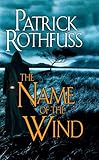
Patrick Rothfuss’s The Name of the Wind is one of the rare fantasy novels where readers will stop mid-page to reread a paragraph — not because it is confusing, but because it is beautiful. Kvothe’s story is told in an inn over the course of a single night, a legendary figure dictating his own myth to a Chronicler who has hunted him down. That frame — oral history, the hero narrating his own legend — immediately introduces the novel’s central tension: Kvothe is telling you about Kvothe, and everything he tells you passes through his considerable ego and his need to be understood. The prose is lyrical in the way that very few genre novels attempt, and the Sympathy magic system, rooted in understanding relationships between things, is one of the most intellectually satisfying in modern fantasy.
What draws readers back is the voice above all else. Rothfuss writes with the kind of sentence-level control that is usually associated with literary fiction rather than epic fantasy, and Kvothe as a narrator — brilliant, self-mythologizing, occasionally unbearable, and always compelling — feels genuinely original. The books below share at least one of the qualities that make The Name of the Wind exceptional: prose that earns attention, protagonists whose intelligence is demonstrated rather than stated, magic systems that feel internally coherent, and worlds that reward curiosity. It is worth noting honestly that Book 3 of the Kingkiller Chronicle, Doors of Stone, has been unfinished for more than fifteen years with no confirmed release date. Readers starting the series today should go in aware of that reality.
Literary Fantasy with Beautiful Prose
#1 — The Lies of Locke Lamora by Scott Lynch
Locke Lamora is an orphan trained as a thief in a city of canals and elaborate class stratifications, running increasingly dangerous cons against the nobility of Camorr while something far more dangerous closes in around his guild. Lynch’s prose has the same delight in language that Rothfuss’s does — sentences that feel crafted rather than typed — and Locke shares with Kvothe the quality of being the cleverest person in any room while also being, frequently, in over his head. The heist plotting is intricate, the world-building is embedded rather than explained, and the friendship at the center of the book is among the most convincing in fantasy. If The Name of the Wind left you wanting more literary fantasy with a roguish genius at the center, this is the closest match on this list.
#2 — Assassin’s Apprentice by Robin Hobb
Fitz is the bastard son of a prince, raised in the stables of Buckkeep and quietly trained as a royal assassin. Hobb’s prose is not showy in the way Rothfuss’s is, but it is precise in a way that earns deep attachment to characters — the emotional devastation her novels inflict is entirely the result of how well she renders inner life. The Farseer Trilogy has the same coming-of-age structure as The Name of the Wind, the same sense of a gifted young person navigating institutions that are indifferent to their potential, and the same first-person intimacy. Hobb is also one of the few fantasy writers who matches Rothfuss’s willingness to let her protagonist make genuinely costly mistakes.
#3 — The Blade Itself by Joe Abercrombie
The First Law trilogy opens with three protagonists: Logen Ninefingers, a barbarian warrior with a violent past he cannot seem to escape; Captain Jezal dan Luthar, an aristocratic soldier of profound shallowness who is about to have his comfortable assumptions destroyed; and Inquisitor Glokta, a crippled torturer who was once the most celebrated fencer in the land. Abercrombie writes with wit sharp enough to leave marks, and the series is a sustained, merciless examination of fantasy tropes — the chosen one, the wise wizard, the heroic quest — that never loses sight of character. Where Rothfuss writes lyrical sincerity, Abercrombie writes cold irony, but both writers refuse to let their worlds be simple.
Magic Schools and Coming of Age
#4 — The Magicians by Lev Grossman
Quentin Coldwater is a depressed, brilliant teenager who discovers that Brakebills, a secret college for magicians, is real — and that it is nothing like the fantasy novels he has loved his whole life. Grossman’s novel is in explicit conversation with Narnia and Harry Potter, and uses the magic-school setting to examine what it actually means to have extraordinary ability in a world that does not become meaningful just because magic is real. Kvothe and Quentin share a structural DNA: prodigiously talented young men whose intelligence does not protect them from their own emotional failures. The prose is literate and the examination of escapism is sharper than any other magic-school novel on this list.
#5 — The Way of Kings by Brandon Sanderson
The opening volume of the Stormlight Archive follows Kaladin, a surgeon’s son turned slave turned soldier, across a world shaped by enormous recurring storms and strange, armor-clad knights called Radiants. Sanderson is the anti-Rothfuss in terms of prose style — functional rather than lyrical, efficient rather than beautiful — but no one alive builds magic systems with greater rigor or world-structures with greater ambition. The series is also, like the Kingkiller Chronicle, ongoing and incomplete, which readers should weigh. What Sanderson reliably delivers is scale, internal consistency, and the satisfaction of a magic system that feels like physics rather than handwaving.
#6 — An Ember in the Ashes by Sabaa Tahir
Laia is a Scholar living under brutal Martial occupation who agrees to spy on the Empire’s most elite military academy to save her brother. Elias is the academy’s finest student who wants nothing more than to escape it. Tahir alternates these two perspectives across a world drawing on ancient Rome and South Asian mythology, and the result is propulsive and emotionally devastating in roughly equal measure. The academic institution as a site of both opportunity and violence mirrors Kvothe’s experience at the University, and the magic system — linked to spirits and memory and sacrifice — has the same sense of rules that matter and cost something.
Anti-Heroes and Morally Complex Worlds
#7 — A Darker Shade of Magic by V.E. Schwab
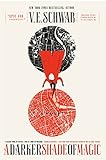
Kell is one of the last Antari, magicians who can travel between parallel Londons — Red London, full of magic; Grey London, where magic has nearly vanished; and the forbidden ruins of Black London. He has been smuggling contraband between worlds when a dangerous object falls into his possession and a thief named Lila Bard falls into his life. Schwab writes with velocity and wit, and the world of multiple Londons is constructed with the kind of layered detail that rewards rereading. The magic system has the same sense of internal rules and personal cost that makes Sympathy compelling.
#8 — Vicious by V.E. Schwab
Victor and Eli were college roommates who discovered that near-death experiences could create people with extraordinary abilities. Ten years after their experiment went catastrophically wrong, Victor escapes prison with a specific purpose. Schwab’s novel is not technically epic fantasy — it is closer to dark superhero fiction — but it belongs on this list because of the quality of its anti-hero construction and the intelligence of its examination of what separates a villain from a hero. Readers who love Kvothe’s moral complexity and self-serving narration will find Victor Vale a compelling counterpart.
#9 — Six of Crows by Leigh Bardugo
Criminal prodigy Kaz Brekker assembles a team of six to pull off an impossible heist in an impenetrable prison. Bardugo’s ensemble fantasy operates with the narrative efficiency of the best heist fiction and the world-building density of the best epic fantasy, and the six characters are drawn with enough specificity that every reader will have a different favorite. The magic system (Grisha abilities, drawn from her Grishaverse) is used sparingly and intelligently, and the plotting is precise in a way that earns the emotional payoff at the end. Readers who want the clever-protagonist pleasure of Kvothe without the languorous pace will find this a satisfying answer.
For Readers Who Want Literary Depth
#10 — The Name of the Rose by Umberto Eco
A Franciscan monk and his novice arrive at an Italian abbey in 1327 to attend a theological debate, and find themselves investigating a series of murders connected to the library’s forbidden texts. Eco’s novel is not fantasy but belongs here for readers who responded most strongly to the intellectual texture of Rothfuss’s writing — the sense of a narrator who has read everything and is using that knowledge as both tool and lens. The mystery plotting is dense and allusive, the exploration of knowledge and its suppression is genuinely philosophical, and the prose, even in translation, has the weight of a mind fully committed to every sentence.
#11 — Gardens of the Moon by Steven Erikson
The first volume of the Malazan Book of the Fallen begins in the middle of a decades-long imperial campaign, with gods and ascendants manipulating armies and individuals on a world of staggering scope. Erikson does not explain himself — the novel demands patience and rewards rereading — and the magic system (the Warrens, paths of power connected to specific forces) is one of the most genuinely strange and vast in fantasy literature. This is not a book for readers who want Rothfuss’s warmth or intimacy. It is for readers who want a world so large and so rigorously constructed that they will still be finding new layers after the tenth novel in the series.
How to Choose Your Next Read
If you want the closest match to Kvothe’s voice and verbal brilliance: The Lies of Locke Lamora.
If you want the same emotional intimacy and coming-of-age devastation: Assassin’s Apprentice by Robin Hobb.
If you want a magic school with literary ambitions: The Magicians by Lev Grossman.
If you want the most ambitious world-building: The Way of Kings by Brandon Sanderson.
If you want a faster, more plot-driven read with the same clever protagonist energy: Six of Crows by Leigh Bardugo.
If you want the sharpest wit and the most ruthless deconstruction of fantasy tropes: The Blade Itself by Joe Abercrombie.
For the Best Fantasy Books
For the definitive guide to fantasy fiction — from Tolkien and Le Guin to Brandon Sanderson and George R.R. Martin — see our Best Fantasy Books of All Time list.
Affiliate disclosure: Links to Amazon on this page are affiliate links. We earn a small commission at no extra cost to you. This does not influence our editorial recommendations.
Frequently Asked Questions
Will Doors of Stone ever be published?
No one outside Patrick Rothfuss's immediate circle knows. Book 3 of the Kingkiller Chronicle has been in progress for well over fifteen years with no confirmed release date, and Rothfuss has said little publicly that offers reassurance. Readers beginning the series today should go in knowing the story may remain unfinished for a long time, or possibly indefinitely. The first two books are complete and satisfying enough on their own terms — but closure on Kvothe's full arc is not guaranteed.
What are the best books to read while waiting for Rothfuss to finish the series?
The best books to read while waiting are The Lies of Locke Lamora by Scott Lynch for the same roguish brilliance and literary prose, The Way of Kings by Brandon Sanderson for immersive world-building and a deep magic system, and Assassin's Apprentice by Robin Hobb for an equally intimate coming-of-age fantasy told in a similarly confessional first-person voice. A Darker Shade of Magic by V.E. Schwab is a faster read that shares the same sense of a richly layered world.
Is The Name of the Wind worth starting given the unfinished series?
Yes, with clear expectations. The Name of the Wind and its sequel The Wise Man's Fear are two of the most beautifully written fantasy novels of the past thirty years. The prose alone justifies reading them. The unfinished third book is a real frustration for readers who want resolution, but the journey through the first two volumes is exceptional regardless of whether the series is ever completed. Many readers treat the two published books as a self-contained experience rather than waiting for a conclusion.
What fantasy series have the same literary prose quality as Rothfuss?
The fantasy writers closest to Rothfuss in terms of prose quality are Robin Hobb, whose Farseer Trilogy has the same intimate voice and emotional devastation, and Scott Lynch, whose Lies of Locke Lamora has similar verbal dexterity and a protagonist who is brilliant in ways that feel earned. Joe Abercrombie writes with less lyricism but far more wit, and his First Law trilogy is essential reading for anyone who wants fantasy that takes its own conventions seriously.