Joe Abercrombie Books in Order: First Law and Complete Reading Guide (2026)
The complete Joe Abercrombie reading order — the First Law trilogy, standalone novels set in the same world, the Age of Madness trilogy, and where to start.
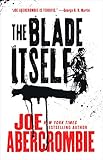
Joe Abercrombie published The Blade Itself in 2006 and, in doing so, helped define a new mode of epic fantasy. The term grimdark — fantasy that strips away the genre’s traditional consolations, replacing noble heroes with morally compromised survivors and replacing triumphal endings with something much harder to stomach — has multiple origins, but Abercrombie is the author most associated with making it work at the level of character and prose. Logen Ninefingers, Sand dan Glokta, and Bayaz the Magus are among the most discussed characters in twenty-first-century fantasy fiction. The First Law world, across two decades and ten books, has developed from a single trilogy into one of the most densely realised settings in the genre.
The reading order matters more here than in most fantasy series. The First Law trilogy needs to come first — it establishes the world, the characters, and the thematic ground that everything else stands on. The three standalone novels (Best Served Cold, The Heroes, Red Country) can be read in any order after the trilogy, though publication order works fine. The Age of Madness trilogy should be read last: it is set thirty years after the original trilogy, in a world that has changed, and it rewards readers who know what came before. Skip ahead and you will miss the weight of what Abercrombie is doing.
Start with The Blade Itself and read in publication order. That is the right answer, and the rest of this guide explains why.
Quick answer: Read the First Law world in this order: The Blade Itself → Before They Are Hanged → Last Argument of Kings (original trilogy) → Best Served Cold → The Heroes → Red Country (standalones, any order) → A Little Hatred → The Trouble with Peace → The Wisdom of Crowds (Age of Madness). Do not skip ahead to Age of Madness — it requires the full original trilogy and standalones to land.
All Joe Abercrombie First Law Books at a Glance
| # | Title | Year | Series/Type |
|---|---|---|---|
| 1 | The Blade Itself | 2006 | First Law #1 — start here |
| 2 | Before They Are Hanged | 2007 | First Law #2 |
| 3 | Last Argument of Kings | 2008 | First Law #3 |
| 4 | Best Served Cold | 2009 | Standalone |
| 5 | The Heroes | 2011 | Standalone — battle novel |
| 6 | Red Country | 2012 | Standalone — western |
| 7 | A Little Hatred | 2019 | Age of Madness #1 |
| 8 | The Trouble with Peace | 2020 | Age of Madness #2 |
| 9 | The Wisdom of Crowds | 2021 | Age of Madness #3 |
| — | Half a King | 2014 | Shattered Sea #1 (YA, separate world) |
Best starting point: The Blade Itself — read the trilogy first, then the standalones, then Age of Madness.
The First Law Trilogy — Start Here
The original trilogy introduces the Union, the kingdom at the centre of the First Law world, and three protagonists whose stories begin separately and gradually converge. It should be read in order; the second and third books do not work without the first.
-
The Blade Itself (2006) — Logen Ninefingers, a barbarian from the frozen North with a reputation for atrocity, is trying to survive. Jezal dan Luthar, a vain and cowardly Union officer, is trying to win a prestigious fencing competition. Sand dan Glokta, a crippled Inquisitor who was himself once tortured, is trying to extract confessions from enemies of the state. The novel introduces all three and begins drawing them toward a common purpose, under the direction of Bayaz, the First of the Magi. The Blade Itself is a slow-burn novel — the world-building and character establishment take precedence over plot momentum. Some readers find this frustrating on a first reading. They are usually glad they persisted.
-
Before They Are Hanged (2007) — The trilogy’s middle volume and the point at which the series finds its full stride. Three separate storylines unfold simultaneously: Bayaz leads his group on a journey west; the Union fights a disastrous war in the North; Glokta investigates a siege from the inside. Before They Are Hanged is where Abercrombie’s control of large-scale plotting becomes apparent. The characters sharpen under pressure, and the novel ends in a way that reframes everything that seemed to be going well.
-
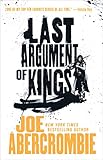
Last Argument of Kings (2008) — The conclusion, and one of the most devastating endings in modern fantasy. Abercrombie delivers on every setup the trilogy constructed, and he does so by refusing the resolution readers expect. The ending is not a twist in the conventional sense; it is a systematic dismantling of the heroic narrative the books appeared to be building. Readers who found the first two novels engaging but not exceptional often report that Last Argument of Kings changed their assessment entirely.
The trilogy should be read as a single work. The three books are not interchangeable in tone or function; they build on each other deliberately.
The Standalone Novels
After the trilogy, Abercrombie published three novels set in the First Law world but following new protagonists. Each is self-contained as a story. All three are set after the events of the original trilogy, and each revisits a different part of the world and genre tradition.
Best Served Cold (2009) is the most straightforward of the three — a revenge novel set in the Styrian city-states south of the Union. Monza Murcatto, a mercenary general, is betrayed and left for dead by the duke she serves. She assembles a crew and works her way through his list of collaborators, one by one. Best Served Cold is the closest the First Law world comes to a conventional adventure narrative, and it is propulsive and readable as a result. It is also the book that demonstrates most clearly what Abercrombie does with the revenge-story form: the satisfaction the genre promises is systematically interrogated.
The Heroes (2011) takes place over three days, covering a single battle in the North between Union forces and the Northmen. Multiple POV characters, on both sides, move through the same ground as the fighting shifts and the tactical situation changes hour by hour. The Heroes is Abercrombie’s most formally disciplined book and, by many readers’ assessment, his best. The compression forces the character work to become very precise — there is no room for sprawl — and the battle itself is among the most rigorously imagined in fantasy fiction. It functions as a meditation on what war looks like from inside it rather than above it.
Red Country (2012) moves the First Law world into western territory, in the sense that it is genuinely a western: wagon trains, frontier towns, a journey into hostile land to recover kidnapped family members. Shy South, the protagonist, is a farmer’s daughter who is harder than she looks. Red Country is partly an explicit homage to Cormac McCarthy’s frontier novels and is the most tonally distinctive of the three standalones. Several characters from the original trilogy reappear in significant roles.
Recommended order: publication order works perfectly. Any order works adequately.
The Age of Madness Trilogy
Thirty years after the events of the First Law trilogy, the world has changed. The Union is industrialising — factories, steam power, organised labour — and political instability is accelerating toward revolution. The Age of Madness is Abercrombie’s most politically engaged work, and it is substantially darker in tone than even the original trilogy.
-
A Little Hatred (2019) — The trilogy opens with a new generation of protagonists: Savine dan Glokta, daughter of Sand dan Glokta and now a ruthless venture capitalist; Leo dan Brock, a young lord with heroic instincts and limited self-awareness; and Orso, the Crown Prince, who is intelligent enough to see how bad things are and too lazy to do anything about it. A Little Hatred establishes the new world efficiently and demonstrates that Abercrombie has lost none of his ability to make morally compromised characters compelling.
-
The Trouble with Peace (2020) — The second volume is where the political machinery begins to break down in earnest. A rebellion takes shape, alliances fracture, and several characters make decisions that cannot be undone. The Trouble with Peace is the trilogy’s most complex structural achievement: it manages a large cast across multiple storylines while tightening the plot toward a crisis. Readers who know the original trilogy will recognise, with varying degrees of dread, what certain returning characters are capable of.
-
The Wisdom of Crowds (2021) — The conclusion. Revolution arrives, and Abercrombie examines what revolutions actually do rather than what they promise. The Wisdom of Crowds is the trilogy’s best and most ambitious volume. It is also the book most dependent on accumulated context — from the Age of Madness books, from the standalones, and from the original trilogy. Reading it in sequence, after eight previous novels in the world, produces an effect that is not available to readers who skip ahead.
The Age of Madness is not a sequel series in the conventional sense — the new protagonists carry the weight, and the returning characters occupy different roles than readers might expect. It functions as a comment on the original trilogy rather than an extension of it.
Glokta, Logen, and Why the First Law Works
The most common praise for the First Law is structural: Abercrombie subverts fantasy tropes, undercuts heroic conventions, refuses consolation. This is accurate but insufficient as an explanation for why the series works. Plenty of fantasy is dark without being particularly good. What distinguishes the First Law is its character writing.
Sand dan Glokta is, by general consensus, one of the finest POV characters in contemporary fantasy. He was once the Union’s finest swordsman — young, handsome, celebrated. He was then captured by the Gurkish and subjected to years of torture that left him barely able to walk, in constant pain, dependent on assistants to get through each day. He became an Inquisitor: a torturer. His interior monologue — sardonic, self-aware, genuinely funny, genuinely tragic — makes him the most compelling character in the series. He knows exactly what he is and why, and he does it anyway. Abercrombie does not excuse him or redeem him in the usual sense. That refusal is part of what makes him unforgettable.
Logen Ninefingers is the trilogy’s other structural centre and its most carefully constructed piece of subversion. He is a large, violent man from the North with a fearsome reputation, accompanied by a band of named companions, questing under the guidance of a wizard — which is to say, he is the protagonist of approximately half of all fantasy novels ever published. What Abercrombie does with this template is the trilogy’s central project. Logen is not secretly good. His past is not misrepresented. The archetype is not being rehabilitated; it is being examined.
Bayaz, First of the Magi, completes the trilogy’s main argument. He is, by conventional fantasy standards, the wise old wizard guiding events toward a good outcome. By the end of the trilogy, the reader’s understanding of Bayaz will have changed fundamentally. He is the most subversive character Abercrombie created, and his role in the story’s conclusion is what separates the First Law from the grimdark fantasy that followed it — most of which adopted the aesthetic without the structural intelligence.
Half a King and the Shattered Sea Trilogy
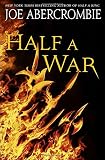
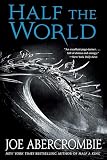
Half a King (2014) opens Abercrombie’s Shattered Sea trilogy, which has no connection to the First Law world. It is set in a Norse-inspired archipelago and follows Yarvi, a prince with a withered hand who is betrayed, enslaved, and sets out to reclaim his throne. The Shattered Sea books were published as YA fantasy, and they are notably less brutal than the First Law work — tighter in scope, faster in pace, and more accessible to readers who find the First Law’s relentlessness difficult.
Half a King is an excellent entry point for younger readers, or for readers who want to sample Abercrombie’s character work and plotting without the full grimdark intensity of the First Law. The trilogy continues with Half the World (2015) and Half a War (2015). All three books follow different protagonists, though the world and its history connect them.
If you are coming to Abercrombie through the First Law, you do not need the Shattered Sea books — they are genuinely separate. If you finish the First Law world and want more, or if you want something to recommend to a reader who is younger or less interested in extreme violence, the Shattered Sea trilogy is the right answer.
What to Read After the First Law
If the First Law has converted you to grimdark fantasy, the natural progressions are well-established. Robin Hobb’s Realm of the Elderlings sequence — beginning with Assassin’s Apprentice — offers the same moral complexity and long-form character investment at a slower pace and with more emotional warmth. Steven Erikson’s Malazan Book of the Fallen is the other major landmark of post-heroic epic fantasy, substantially denser and more demanding than the First Law, with a scope that dwarfs almost everything else in the genre. Mark Lawrence’s Prince of Thorns, the first volume of the Broken Empire trilogy, takes the morally compromised protagonist to a more extreme position than Abercrombie typically does.
Each book in the First Law world has a full review on this site. The review pages linked throughout this guide cover plot, themes, and what to expect from each novel in more detail. If you are deciding where to start, the answer remains The Blade Itself — read it, and the question of what to read next will answer itself.
Frequently Asked Questions
What is the best Joe Abercrombie book?
The Heroes (2011) is the most frequently cited favourite by readers who have completed the First Law world — a three-day battle novel that is formally disciplined and devastatingly precise about what war looks like from inside it. Among the trilogy books, Last Argument of Kings consistently tops rankings for its refusal to deliver the ending readers expect. For first-time readers, The Blade Itself is the correct starting point; the series’ qualities only fully emerge when the trilogy is read as a complete unit.
How does First Law compare to A Game of Thrones?
Both are adult epic fantasy with morally complex characters, a willingness to kill important characters, and a subversion of genre conventions. The First Law is more focused — fewer POV characters, smaller cast, tighter thematic argument. Martin’s world is larger in scope and more interested in political worldbuilding. Abercrombie’s prose is sharper and funnier. The First Law is the more philosophical of the two — its central concern is with the mythology of heroism itself, which Martin examines through a different lens. Most readers who love one will enjoy the other; many regard The Heroes as a better battle novel than anything in Martin.
Is there a First Law TV show?
As of 2026, no First Law television or film adaptation had been confirmed. Adaptation rights have been discussed in the industry for years — the series’ large cast, grimdark tone, and extended world make it a natural candidate for a prestige television treatment. No production company has officially announced a project. Readers hoping for an adaptation are aware that the Age of Madness trilogy’s conclusion in 2021 would give any future production a complete story arc to work with.
How many books are in the First Law world?
Nine books as of 2026: the original trilogy (3 books), three standalone novels, and the Age of Madness trilogy (3 books). Abercrombie has not announced a fourth trilogy or additional standalones, but has indicated that the First Law world may continue in some form. He has published a short story collection, Sharp Ends (2016), containing stories set in the world, which can be read alongside the standalones.
What makes Joe Abercrombie’s writing style distinctive?
Abercrombie writes in close third-person from multiple POV characters, alternating between chapters in a pattern similar to George R.R. Martin. His most distinctive quality is the quality of the interior voice — each character thinks and perceives differently, and the gap between what a character believes about themselves and what the reader understands to be true is where most of his moral work happens. His prose is economical and often darkly funny. He writes action sequences with tactical clarity and physical consequence. His dialogue, particularly for Glokta, is among the best in genre fiction. The combination of dark subject matter with genuine wit is unusual and is central to why the First Law has a devoted readership rather than just an admiring one.
For the Best Fantasy Books
For the definitive guide to fantasy fiction — from Tolkien and Le Guin to Brandon Sanderson and George R.R. Martin — see our Best Fantasy Books of All Time list.
More Fantasy Series Reading Guides
- Robin Hobb Books in Order: Farseer and Realm of the Elderlings
- Patrick Rothfuss Books in Order: Kingkiller Chronicle
Also Recommended
For the full Joe Abercrombie bibliography, reviews, and biography, visit the Joe Abercrombie author page on Editors Reads.
Affiliate disclosure: Links on this site are affiliate links. We earn a small commission at no extra cost to you. This does not influence our editorial recommendations.
Frequently Asked Questions
What order should I read Joe Abercrombie's books?
Start with the First Law trilogy in order: The Blade Itself, Before They Are Hanged, Last Argument of Kings. After the trilogy, the standalone novels (Best Served Cold, The Heroes, Red Country) can be read in any order. The Age of Madness trilogy (A Little Hatred, The Trouble with Peace, The Wisdom of Crowds) should be read after both the original trilogy and the standalones.
Can I read the First Law standalones without reading the trilogy first?
Technically yes — Best Served Cold, The Heroes, and Red Country each work as standalone stories. But they reward readers who know the trilogy: familiar characters appear, old plot threads resurface, and the world's dark history carries more weight. Read the trilogy first for the full experience.
Is the First Law world connected to Half a King?
No. Half a King and the Shattered Sea trilogy are set in a completely different world with Norse-inspired mythology. They share Abercrombie's dark, character-focused style but have no connection to the First Law world. Shattered Sea is his YA series.
What is grimdark fantasy?
Grimdark is a subgenre of epic fantasy that subverts traditional tropes — heroes are morally compromised, wars are brutal and pointless, and happy endings are rare. Abercrombie is considered one of the founding authors of the genre. The First Law trilogy is the classic starting point for readers new to grimdark.
Do I need to read the First Law trilogy before the Age of Madness?
Yes. The Age of Madness is set 30 years after the First Law trilogy in the same world. It references events from the original trilogy and the standalones extensively. Reading it without the original trilogy means missing major character connections and world-history context.