Dune vs A Game of Thrones: Which Epic to Read First?
Dune and A Game of Thrones are the two most discussed epic genre novels of the modern era. Here's how they differ in scope, method, and difficulty — and which to read first.
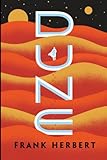
Dune (1965) and A Game of Thrones (1996) are the two most cited epic genre novels of the modern era — the first a foundational science fiction text, the second the novel that redefined what epic fantasy could do. Both have generated film and television adaptations of enormous reach. Both are considered, within their respective genres, among the most important works ever written.
They are also, in fundamental ways, doing different things. Understanding those differences is the most useful preparation for reading either.
At a Glance
| Dune | A Game of Thrones | |
|---|---|---|
| Author | Frank Herbert | George R.R. Martin |
| Published | 1965 | 1996 |
| Genre | Science fiction | Epic fantasy |
| Length | ~412 pages | ~694 pages |
| Setting | Galactic feudal civilisation | Westeros (secondary world) |
| Protagonist | Paul Atreides | Ensemble (rotating POV) |
| Central concerns | Ecology, religion, power, messianism | Political power, honour, survival |
| Difficulty | Higher — dense ideas and glossary | Moderate — character-driven momentum |
What Dune Is About
Paul Atreides is the teenage heir to a noble house that has been given stewardship of Arrakis — the only planet in the galaxy where the spice mélange is found. Spice extends life, enables space travel, and is therefore the most valuable substance in the known universe. Arrakis is also a desert planet whose indigenous people, the Fremen, have developed a culture around survival in extreme scarcity. The planet, and Paul’s relationship with it, is what the novel is actually about.
Herbert’s primary concerns are ecological and philosophical: how a society is shaped by its environment, how religion functions as a tool of social control and genuine spiritual experience simultaneously, and what happens when a leader is genuinely exceptional — when the messianic figure is real and not constructed. Paul’s “hero journey” is a trap: Herbert was writing a critique of heroic leadership, not a celebration of it. The novel’s political intelligence is what distinguishes it from the sword-and-sorcery epic it superficially resembles.
Dune is hard to read in its first hundred pages. The vocabulary is dense (Herbert provides a glossary), the political backstory is complex, and the novel withholds momentum while it builds world. Readers who get through the first quarter are typically absorbed; the difficulty is in getting there.
What A Game of Thrones Is About
Seven noble houses vie for control of the Iron Throne of Westeros, a secondary world of medieval-style political structures and a winters-that-last-decades climate. Eddard Stark, the honourable Lord of Winterfell, is asked by his old friend King Robert Baratheon to serve as Hand of the King in the capital, King’s Landing. What follows is a systematic demonstration that honour is a lethal disadvantage in a world where power is the only currency.
Martin’s central innovation is the subversion of fantasy convention: the characters who should survive (by the rules of genre) frequently don’t, and the characters who do survive are often those willing to do things the reader hoped they wouldn’t. A Game of Thrones teaches its reader to distrust the narrative expectations of epic fantasy, and that teaching is part of what makes the series so compelling for readers who have grown up in the genre.
The rotating point-of-view structure — each chapter named for a different character — allows Martin to show the same events from contradictory perspectives and to develop the political complexity that the story requires. It is a technically sophisticated approach to epic narrative, and the execution is remarkable.
Key Differences
Philosophy versus narrative. Dune is more interested in ideas — ecology, religion, political theory — than in plot momentum. A Game of Thrones is more interested in character and story than in abstract argument. This is not a ranking: different books for different reading moods and different readers.
The hero’s journey. Both novels follow young protagonists thrust into complex political situations they did not choose. But Herbert uses Paul’s apparent hero journey to critique the concept; Martin uses the ensemble structure to distribute identification across multiple viewpoints, preventing any single hero narrative from dominating. Both are more sophisticated than the epic fantasy that preceded them.
Completion. Dune is a complete novel with a resolved ending. A Song of Ice and Fire — the series of which A Game of Thrones is the first book — remains unfinished after nearly thirty years and six books. This is a practical consideration for new readers: there is a reasonable possibility that the series will not be concluded.
Which to Read First
Read A Game of Thrones first.
The novel is more immediately accessible, its narrative pulls harder from the opening, and the engagement it generates will make the density of Dune more manageable when you reach it. Reading Dune after A Game of Thrones also allows you to see how Herbert was working against the conventions that Martin later dismantled — the two books are in dialogue, across thirty years, about what epic narrative is supposed to do with power and heroism.
What to Read After Both
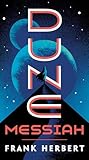
More Dune: Dune Messiah continues directly where Dune ends and is essential to understanding Herbert’s full argument about messianism. Children of Dune completes the original trilogy. The later novels are increasingly specialised.
More A Song of Ice and Fire: A Clash of Kings and A Storm of Swords maintain and exceed the first novel’s quality. A Storm of Swords is widely considered the series’ peak.
Adjacent reads: Foundation by Isaac Asimov (galactic empire, political philosophy, similar sweep to Dune), Hyperion by Dan Simmons (the most ambitious science fiction novel of its generation), The Way of Kings by Brandon Sanderson (the most fully realised contemporary epic fantasy).
Complete Reading Guides: Dune and A Song of Ice and Fire
For the complete Dune sequence beyond Part Two, see our Dune Books Reading Order guide. For George R.R. Martin’s full bibliography and series order, see our George R.R. Martin Books in Order guide.
For the Best Fantasy Books
For the definitive guide to fantasy fiction — from Tolkien and Le Guin to Brandon Sanderson and George R.R. Martin — see our Best Fantasy Books of All Time list.
More Epic Fantasy and Sci-Fi Reading Guides
- Robin Hobb Books in Order: Farseer and Realm of the Elderlings
- Joe Abercrombie Books in Order: First Law Guide
Affiliate disclosure: Links on this site are affiliate links. We earn a small commission at no extra cost to you. This does not influence our editorial recommendations.
Frequently Asked Questions
Should I read Dune or A Game of Thrones first?
Read A Game of Thrones first. Martin's novel is more immediately accessible — its characters are clearly drawn from the opening, its world-building is intuitive, and its narrative momentum is stronger from the first pages. Dune rewards the patience that A Game of Thrones builds.
Which is harder to read, Dune or A Game of Thrones?
Dune is significantly harder. Herbert's novel has a dense glossary, a complex political and ecological system that requires sustained attention, and a narrative style that is more philosophical than dramatic. A Game of Thrones is written for momentum — the plot pulls you through even when the world is complex.
Is Dune better than Game of Thrones?
They are great in different ways and resist direct comparison. Dune is more philosophically ambitious — its ideas about religion, ecology, power, and messianic figures are sustained and serious. A Game of Thrones is a superior narrative achievement — its plotting, character work, and subversion of genre conventions are more technically accomplished within the novel form. Most readers enjoy A Game of Thrones more; most critics consider Dune the more important work.
Is Dune science fiction or fantasy?
Dune is science fiction set in a far-future galactic civilisation, but it reads more like fantasy: there are no computers (banned by religious decree after the Butlerian Jihad), the political structures are feudal, and the spiritual elements are central rather than peripheral. The distinction matters less for readers than for librarians. Herbert was writing about ecology, imperialism, and the dangers of charismatic leaders — the science fiction frame is a vehicle for these ideas.
Are the Dune and Game of Thrones sequels worth reading?
The A Song of Ice and Fire sequels (A Clash of Kings, A Storm of Swords) maintain quality through the third book, with A Storm of Swords widely considered the series' peak. A Feast for Crows and A Dance with Dragons are more difficult, and the series remains unfinished. The Dune sequels are more uneven: Dune Messiah is essential, Children of Dune is worthwhile, and the later Herbert novels (God Emperor, Heretics, Chapter House) are increasingly specialised.