Books Like Anna Karenina: Passion & Society Novels
Tolstoy's portrait of a married woman who destroys herself for love — and the society that destroys her for it — is the definitive novel of passion and social constraint. These books explore the same terrain.

Leo Tolstoy began writing Anna Karenina in 1873 and published it serially through 1877, and in those four years he produced what is, by many accounts, the greatest novel ever written. The claim is not easily dismissed. Tolstoy covers everything: marriage and desire, the social machinery of imperial Russian aristocracy, the spiritual searching of a man named Levin who is clearly a version of Tolstoy himself, and at the center of it all, Anna Karenina — beautiful, intelligent, a devoted mother, and a woman who makes the catastrophic mistake of falling genuinely in love with someone who is not her husband.
The double plot is one of the novel’s structural masterstrokes. Anna’s story and Levin’s run parallel throughout, and the contrast is Tolstoy’s argument: Levin, who struggles honestly with work, faith, marriage, and death, arrives at something like peace; Anna, who pursues passion above all, arrives at the train station. This is not a simple moral judgment — Tolstoy makes Anna too vivid, too sympathetic, too clearly right about the hypocrisy of the society condemning her for her choices to be read as a simple warning against adultery. It is something more complicated: a picture of a world in which the rules are unjust, and yet the consequences of breaking them are real.
The books below were chosen for readers who responded to that combination — the panoramic social world, the individual destroyed by forces both internal and external, the love story that carries the weight of a civilization’s contradictions. They range from Tolstoy’s own other masterwork to the European tradition of the fallen woman to novels of love tested by history and impossible circumstance.
More Tolstoy and Russian Literature
#1 — War and Peace
If Anna Karenina is Tolstoy’s most perfectly constructed novel, War and Peace is his most ambitious — and possibly the most ambitious novel ever written. Five aristocratic families navigate the Napoleonic invasion of Russia between 1805 and 1815; love affairs are conducted against the backdrop of battles; characters grow from children to adults while history transforms everything around them. Natasha Rostova’s romantic trajectory is Anna Karenina in miniature, complete with an almost catastrophic mistake; Pierre Bezukhov’s spiritual journey parallels Levin’s. The philosophical epilogue — Tolstoy’s argument that historical causation is not the product of great men but of millions of individual acts — is demanding, but the novel itself is, against all probability, compulsively readable. Begin here if you want more Tolstoy, more Russia, more everything.
#2 — Crime and Punishment
Dostoevsky and Tolstoy were contemporaries who never met, and the difference between them is one of the great contrasts in literary history. Where Tolstoy is panoramic, daylit, and concerned with the social world, Dostoevsky is underground, feverish, and obsessed with the interior life. But Crime and Punishment shares with Anna Karenina a belief in the moral law as something that operates in the world regardless of individual will — and a portrait of a character who believes they can think their way past it and discovers they cannot. Reading them together reveals two entirely different temperaments arriving at a similar conviction about the relationship between conscience and consequence.
#3 — Doctor Zhivago
Boris Pasternak’s Nobel Prize-winning novel follows Yuri Zhivago — poet, physician, romantic — through the Russian Revolution and its aftermath, with a great love affair at the center. Lara is Anna Karenina’s descendant: a woman of extraordinary presence caught between men and between historical forces, whose love for Zhivago is both the most real thing in his life and utterly impossible to sustain. Pasternak uses the Revolution the way Tolstoy uses society: as a force that will not accommodate private life, that demands conformity and punishes those who insist on living according to their own hearts. The novel was suppressed in the Soviet Union; its smuggled publication in the West resulted in Pasternak being forced to refuse the Nobel Prize.
Passion and Social Constraint
#4 — Madame Bovary by Gustave Flaubert
Flaubert’s 1857 novel is the direct ancestor of Anna Karenina — the book Tolstoy knew and was partly arguing with. Emma Bovary is a doctor’s wife in provincial Normandy who has read too many romantic novels and cannot reconcile the life she has with the life she imagined. Her affairs are not driven by genuine passion so much as by an insatiable appetite for a romantic ideal that doesn’t exist. Where Anna is destroyed by a love that is real, Emma is destroyed by a love that was always a fantasy. The two novels together constitute the definitive nineteenth-century examination of female desire and the worlds that punish it — and the difference between their heroines says something important about the difference between French and Russian literary temperaments.
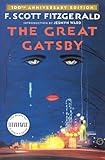
#5 — The Great Gatsby
Fitzgerald’s novel is shorter and more stylized than Tolstoy, but it occupies the same moral territory: a man destroys himself pursuing an ideal that doesn’t quite correspond to reality, in a society whose glittering surface conceals a brutal indifference to the casualties it creates. Daisy Buchanan is not Anna Karenina — she has fewer dimensions and less interiority — but Gatsby’s pursuit of her carries the same logic as Anna’s pursuit of Vronsky: the belief that the right love, achieved completely enough, could redeem everything. The green light at the end of the dock is the American equivalent of Anna’s impossible happiness. The society that watches indifferently is the same in both books, only the accents have changed.
#6 — The House of Mirth by Edith Wharton
Lily Bart is the most intelligent woman in New York’s Gilded Age social world, and she understands its rules perfectly — understands that her beauty is a capital asset with a limited appreciation window, that she must marry well and quickly, that the social machinery around her will crush anyone who cannot pay for their seat at the table. She knows all this, and she cannot quite bring herself to do what is necessary. Wharton’s 1905 novel is the closest American equivalent to Anna Karenina in its portrait of a woman destroyed not by ignorance but by a refusal — half conscious, never fully articulated — to become what her world requires. The social observation is as precise as Tolstoy’s; the sympathy for the heroine equally clear-eyed.
#7 — Tess of the d’Urbervilles by Thomas Hardy
Hardy’s 1891 novel is the angriest of the fallen-woman narratives: Tess is raped, bears a child who dies, finds genuine love with Angel Clare, tells him the truth on their wedding night, and is abandoned — by the man who claims to love her — for a past she did not choose. The society that condemns Tess while condoning Alec d’Urberville is Hardy’s real target, and his fury at the double standard applied to female sexuality makes Tess feel, in some respects, more contemporary than Anna Karenina. If Tolstoy’s novel asks what happens when a woman follows her heart, Hardy’s asks what happens when a woman has no choice at all, and society blames her anyway.
Love Tested by History and Circumstance
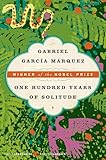
#8 — Love in the Time of Cholera
Gabriel García Márquez’s novel begins where most love stories end: Florentino Ariza waits fifty-one years, nine months, and four days for the woman he loves to become available. Fermina Daza married another man — a distinguished doctor — and Florentino spent half a century loving her from a distance while conducting hundreds of other affairs, storing each one in a journal, waiting. Love in the Time of Cholera asks the same question as Anna Karenina — what does a person owe to love? — and arrives at a completely different answer. Where Tolstoy suggests that the pursuit of passion above all obligations leads to destruction, García Márquez entertains the possibility that love deferred and sustained across a lifetime might be its own kind of fulfillment.
#9 — Atonement by Ian McEwan
A thirteen-year-old girl in 1935 England misreads a scene between her sister Cecilia and a young man named Robbie Turner, makes an accusation, and destroys their love before it has fully begun. McEwan traces the consequences of that false accusation across decades, through Dunkirk and the London Blitz and into old age, in a novel that is simultaneously a war story, a love story, and a meditation on whether writing can atone for the harm it causes. The love between Cecilia and Robbie has something of Anna and Vronsky about it — interrupted before it can become ordinary, preserved in amber by the catastrophe that ends it — and the social forces that make Robbie vulnerable to Briony’s accusation (class, the hierarchy of a country house weekend) are Tolstoyan in their precision.
#10 — The Kite Runner
Amir, the son of a Kabul merchant, betrays his childhood friend Hassan in a moment of cowardice and spends twenty years in California not being able to forget it. The betrayal is not romantic — it is a failure of loyalty and courage rather than a failure of fidelity — but The Kite Runner shares with Anna Karenina the structure of a life organized around an act that cannot be undone, and the question of whether any amount of subsequent action can settle the debt. Hosseini’s Afghanistan provides the social machinery: a world of class, ethnicity, and gender that distributes the consequences of individual choices with the same brutal indifference as Tolstoy’s imperial Russia.
How to Choose Your Next Read
If you want Tolstoy at full scale: War and Peace — bigger, more ambitious, equally essential.
If you want the direct nineteenth-century precursor: Madame Bovary — the fallen woman before Tolstoy, the source he was arguing with.
If you want the closest American equivalent: The House of Mirth — Lily Bart is Edith Wharton’s Anna Karenina.
If you want love story as the most emotionally direct option: Love in the Time of Cholera — fifty years of waiting as answer to Anna’s fatal urgency.
If you want the most contemporary feel: Atonement — love destroyed by a child’s mistake, haunted across a lifetime.
Crime and Punishment vs Anna Karenina
For a direct comparison of Dostoevsky and Tolstoy’s masterworks — where to start with Russian literature and how they differ — see our Crime and Punishment vs Anna Karenina guide.
For the Best Fiction Books
For the definitive guide to fiction — the greatest novels across literary fiction, classics, and contemporary writing — see our Best Fiction Books of All Time list.
Affiliate disclosure: Links to Amazon on this page are affiliate links. We earn a small commission at no extra cost to you. This does not influence our editorial recommendations.
Frequently Asked Questions
Why does Anna Karenina end the way it does?
Tolstoy believed that moral law operates in the world regardless of individual desire — that Anna's decision to leave her husband and son for Vronsky sets forces in motion that cannot be reversed. The epigraph he chose, 'Vengeance is mine; I will repay,' is often read as a statement of divine judgment, though Tolstoy was more interested in showing how Anna herself internalizes society's condemnation until it becomes self-destruction. By the end of the novel, Anna's jealousy, paranoia, and despair are not imposed from outside but have grown from within. The ending is not a punishment inflicted by society so much as the logic of the situation playing out.
Is Anna Karenina or War and Peace the better starting point for Tolstoy?
Anna Karenina is the better starting point for most readers. It is more focused — one protagonist, one central question, a more recognizable novelistic structure — and its subject matter (love, marriage, social judgment) is more immediately legible than War and Peace's panoramic sweep through the Napoleonic wars. War and Peace is longer, more ambitious, and ultimately more profound, but Anna Karenina is the novel that most reliably converts readers into Tolstoy devotees. Read Anna Karenina first, then let it pull you toward War and Peace.
What books like Anna Karenina feature women who defy social expectations?
The House of Mirth by Edith Wharton is the closest American equivalent: Lily Bart is destroyed by a society whose rules she understands perfectly but cannot quite bring herself to obey. Madame Bovary by Flaubert is the direct precursor — a woman who mistakes romantic novels for a guide to life and destroys her family pursuing an ideal. Tess of the d'Urbervilles by Thomas Hardy shows a woman condemned by the same society that condones the man who wronged her. All three share with Anna Karenina the sense of a world whose written and unwritten rules are specifically designed to manage and punish female desire.