Books Like A Man Called Ove: 11 Heartwarming Reads
If Fredrik Backman's gruff, heartbroken Swede made you laugh and then cry, these novels deliver the same warmth hiding beneath a difficult exterior.

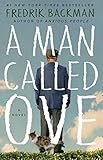
Fredrik Backman’s A Man Called Ove is, on its surface, a novel about a grumpy old Swedish man who cannot stop himself from correcting people who park in the wrong place. Ove has rules, and the world keeps breaking them. He is also, the novel gradually reveals, a man who has lost the only thing that ever made sense to him — his wife Sonja — and who has been trying, with decreasing commitment, to find a reason to keep going. The neighbors who keep showing up at his door uninvited are, for a long time, an obstacle to his plans. Then they become something else entirely.
What Backman does with that material is genuinely difficult: he makes you laugh at Ove before he makes you love him, and the laughter does not feel like a betrayal when the grief arrives. The novel is funny and devastating in exactly equal measure, often on the same page, and the found family it assembles — a pregnant Iranian woman, an overweight teenager, a gay man who needs help coming out to his father — is one of the most convincing in contemporary fiction. The books below share some combination of those qualities: the gruff exterior, the hidden grief, the community that forms around a difficult person, and the conviction that it is not too late.
More Fredrik Backman
#1 — Anxious People by Fredrik Backman
Eight strangers are taken hostage during a botched bank robbery — inside an apartment open house that the robber stumbled into by accident. The hostages are all, in various ways, falling apart. The robber is too. Anxious People is the Backman novel that most directly replicates Ove’s emotional structure: a comic premise that keeps opening onto something much darker and more honest, with the humor and the grief feeding each other rather than competing. The ensemble format lets Backman build a portrait of people at their lowest, holding each other up without acknowledging that they are doing it. If you want more Backman, start here.
#2 — My Grandmother Asked Me to Tell You She’s Sorry by Fredrik Backman
Elsa is seven, and her grandmother — who told her fairy tales her whole life — has just died, leaving her a series of letters to deliver to people from her past. The novel works as a children’s book, a fairy tale, and a story about grief and community in a Stockholm apartment building that will feel immediately familiar to Ove readers. Backman is drawing on the same neighbourhood, the same conviction that people are mostly trying and mostly failing to understand each other, and the same insistence that loss and love are inseparable. It is the warmest thing he has written.
Novels About Unlikely Community and What Gruff People Are Hiding
#3 — Eleanor Oliphant is Completely Fine by Gail Honeyman
Eleanor Oliphant has a rigid routine, no friends, and a way of speaking to people that ensures they keep their distance. She is, she keeps insisting, completely fine. Gail Honeyman’s novel follows the same structural logic as A Man Called Ove: an abrasive, rule-bound exterior that the reader comes to understand as the architecture of survival, built around a loss that Eleanor has not been able to look at directly. The friendship that eventually forms between Eleanor and a co-worker named Raymond is as carefully and genuinely earned as anything in Backman. The novel is funny in the same register — behavioral comedy that suddenly catches in the throat.
#4 — The Rosie Project by Graeme Simsion
Don Tillman is a genetics professor who approaches finding a wife with the same rigorous methodology he applies to his research. He designs a survey that will eliminate unsuitable candidates efficiently. The first candidate to arrive is Rosie — entirely unsuitable according to every criterion. Simsion’s novel is lighter than Ove and less interested in grief, but it shares the same use of a socially atypical protagonist as both a comic lens and a genuine emotional investment. Don’s difficulty understanding other people is also the thing that makes him see them more clearly in certain moments, and the novel knows that.
#5 — The 100-Year-Old Man Who Climbed Out of a Window and Disappeared by Jonas Jonasson
On his hundredth birthday, Allan Karlsson climbs out the window of his nursing home rather than attend his own party, and the picaresque adventure that follows sweeps him through the twentieth century in flashback while the present-day plot accumulates characters, a suitcase full of money, and several accidental deaths. Jonasson is a Swedish author working in a similar register to Backman — dark humor, an elderly protagonist who baffles everyone around him, a warmth that operates beneath the comedy. Less emotionally devastating, but the same willingness to use an old man’s stubborn eccentricity as a way of saying something about survival.
Gentle Literary Fiction About Grief and Reasons to Live
#6 — The Midnight Library by Matt Haig
Nora Seed stands at the point of deciding whether to continue living, and finds herself in a library that exists between life and death, containing all the books of the lives she could have lived. Each book corresponds to a choice she made differently. The Midnight Library is more explicit about depression and the question of what makes a life worth living than A Man Called Ove, and less concerned with community than with the individual act of choosing to stay. But the emotional territory is the same, the refusal to look away from suicidal thinking is the same, and the arrival at hope is earned rather than assumed.
#7 — A Gentleman in Moscow by Amor Towles
Count Alexander Rostov is sentenced to house arrest in a Moscow luxury hotel in 1922 — condemned to live indefinitely within a few hundred meters while the Soviet century unfolds around him. Towles’s novel is about making a life within radical constraint, about the small rituals that sustain a person when the larger world has been taken away, and about the relationships — with a young girl, a chef, a seamstress, an actress — that accumulate into something like a family. The warmth and the precision of the prose are different from Backman’s, but the emotional project is recognizably the same: a man who has lost his world finding, slowly, a new one.
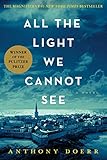
#8 — All the Light We Cannot See by Anthony Doerr
A blind French girl and a German boy whose talent for radio has been conscripted by the Reich move toward each other across the years of the Second World War. Doerr’s novel is larger and more historical than anything on this list, and its emotional register is more elegiac than comic. But it belongs here because of what it does with grief, survival, and the question of how a person keeps going when they have lost almost everything — and because the relationship it builds between its two central characters has the same quality of two people who have no reason to trust each other slowly and irrevocably becoming each other’s reason.
European and Scandinavian Literary Fiction with Warmth
#9 — The Kite Runner by Khaled Hosseini
Amir grows up in Kabul in the 1970s with Hassan, the son of his family’s servant and his closest companion. His failure to protect Hassan at a critical moment defines the rest of his life — the guilt, the flight to America, the eventual return to a Taliban-controlled Afghanistan to try to make right what he did wrong. The Kite Runner is more geographically and historically expansive than Ove, and its register is more sustained and tragic. But the emotional core — a man carrying a specific grief for decades, and the question of whether redemption is possible — is deeply familiar.
#10 — Normal People by Sally Rooney
Connell and Marianne grow up in the same small Irish town, move through the same years at Trinity College Dublin, and keep coming back to each other in ways neither of them fully understands or controls. Rooney’s novel is about two young people rather than an old man, and its emotional tone is cooler and more removed. But it belongs in this company because of its precision about how people carry damage, how they build relationships that are partly expressions of that damage, and how — with difficulty and no guarantee of success — they sometimes manage to need each other in ways that help rather than harm.
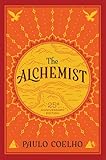
#11 — The Alchemist by Paulo Coelho
Santiago is a shepherd in Andalusia who dreams of treasure buried near the Egyptian pyramids and sets off to find it. Coelho’s fable is the most different book on this list in tone — allegorical, spare, more interested in universal truth than in specific character — but it shares Ove’s conviction that a person must find their own reason to keep going, and that the world has ways of putting exactly the right people in your path at exactly the right moment. Readers who respond to Ove’s quiet insistence that meaning is possible often find The Alchemist unexpectedly moving for the same reason.
How to Choose Your Next Read
If you want more Fredrik Backman, immediately: Anxious People first, then My Grandmother Asked Me to Tell You She’s Sorry.
If you want the same structure — difficult protagonist, social isolation, earned warmth: Eleanor Oliphant is Completely Fine.
If you want European comic fiction with a similarly unstoppable old man: The 100-Year-Old Man Who Climbed Out of a Window and Disappeared.
If you want literary fiction about grief and the choice to stay: The Midnight Library or A Gentleman in Moscow.
If you want the most emotionally sustained read on the list: The Kite Runner or All the Light We Cannot See.
For the Best Fiction Books
For the definitive guide to fiction — the greatest novels across literary fiction, classics, and contemporary writing — see our Best Fiction Books of All Time list.
Affiliate disclosure: Links to Amazon on this page are affiliate links. We earn a small commission at no extra cost to you. This does not influence our editorial recommendations.
Frequently Asked Questions
What other Fredrik Backman books should I read after A Man Called Ove?
The best Fredrik Backman book to read after A Man Called Ove is Anxious People, which shares the same structural trick of a difficult, funny exterior concealing deep emotional devastation, but applies it to an entire ensemble cast. Beartown is darker and more sustained, following a small hockey town through a crisis that splits it in two. My Grandmother Asked Me to Tell You She's Sorry is closest in tone to Ove — a fairy tale with grief at its center — and will satisfy readers who want the same blend of whimsy and real feeling.
Is A Man Called Ove a sad book?
A Man Called Ove is sad in the way that the best books about grief are sad: honestly, without softening the loss, but also without leaving you stranded in it. Ove has lost his wife Sonja, and the novel does not pretend that loss is anything other than devastating. But it is also genuinely funny, and the sadness and the humor operate on the same frequency — both are expressions of how much Ove loved and how poorly the world has prepared him to live without that love. Most readers cry, and most readers also find themselves laughing on the same page.
What is the best uplifting literary fiction about loss and starting over?
The best uplifting literary fiction about loss and starting over includes The Midnight Library by Matt Haig, which is explicit about depression and regret but arrives at genuine hope; A Gentleman in Moscow by Amor Towles, which finds richness in radical constraint; and Eleanor Oliphant is Completely Fine by Gail Honeyman, which handles trauma and social isolation with both honesty and warmth. All three, like A Man Called Ove, refuse to choose between emotional honesty and the possibility of a livable life.
What books have the same funny-then-devastating emotional tone as A Man Called Ove?
Books that replicate A Man Called Ove's particular register — humor that suddenly, without warning, becomes grief — include Anxious People by Fredrik Backman, The Rosie Project by Graeme Simsion, and The 100-Year-Old Man Who Climbed Out of a Window and Disappeared by Jonas Jonasson. All three use an eccentric or socially misaligned protagonist as a comic lens, and all three eventually reveal the emotional weight that eccentricity is carrying.