Books About Japan: Essential Reading for Visitors and Dreamers
The best books set in Japan — from Murakami's Tokyo to medieval Kyoto, from geisha culture to modern fiction. Fiction, memoir, and history for every kind of reader.
By Natalie Osei

Japan rewards preparation more than most destinations. Its cultural codes, its relationship to silence and indirectness, its particular relationship between ancient tradition and hyper-modern technology — these are not immediately legible to Western visitors, and fiction does more to convey them than any guidebook. The books on this list are those that best illuminate what Japan actually is, through the eyes of writers who understood it from the inside.
Japan is not one place. Murakami’s Tokyo is a city of urban solitude and subterranean meaning; Kawabata’s Snow Country is a world of traditional aesthetics and seasonal transience; the Japan of Arthur Golden’s Kyoto is a city of rigorous performance and hidden economics. This list represents that range — the Japan of past and present, rural and urban, realistic and surreal.
Murakami’s Japan
1. Norwegian Wood — Haruki Murakami ⭐⭐⭐⭐⭐
Murakami’s most accessible novel and the best single introduction to his work — a coming-of-age story set in late-1960s Tokyo that follows Toru Watanabe’s grief for his dead best friend and his relationships with two very different women. Unlike Murakami’s magical-realist work, this is a realistic novel with a clear emotional centre, and the Tokyo it renders — its dormitories, its coffee shops, its record stores, its specific urban loneliness — is completely convincing. The novel became the best-selling book in Japanese publishing history on first release.
Best for: First-time Murakami readers; anyone visiting Tokyo; readers interested in Japanese youth culture of the 1960s.
➡ Full review → | Buy on Amazon →
2. Kafka on the Shore — Haruki Murakami ⭐⭐⭐⭐
The full Murakami experience: two interwoven narratives — a runaway teenager in Takamatsu and an elderly man who can communicate with cats in Tokyo — building a dreamlike logic rooted in Japanese cultural geography. Where Norwegian Wood is realistic, Kafka on the Shore deploys Murakami’s full range of magical realism, classical music, and Shikoku island mythology. The Japan it renders is specific: real cities, real landscapes, real cultural references — but filtered through a sensibility that makes the real feel genuinely strange.
Best for: Readers ready for full Murakami; anyone visiting Takamatsu and Shikoku island.
➡ Full review → | Buy on Amazon →
Kyoto and Traditional Japan
3. Memoirs of a Geisha — Arthur Golden ⭐⭐⭐⭐⭐
The fictional autobiography of a geisha in Kyoto’s Gion district — from her childhood purchase into the system in the 1920s through post-war Japan — is the most detailed portrait of traditional geisha culture available to Western readers. Golden spent years researching and interviewing retired geisha, and the result is a novel so immersed in its world that reading it feels like inhabiting a lost way of life. For anyone visiting Kyoto’s Gion district, this is essential preparation.
Best for: Kyoto and the Gion district; Japanese pre-war and wartime history; readers who want richly detailed historical fiction.
➡ Full review → | Buy on Amazon →
Historical Japan
4. Shōgun — James Clavell ⭐⭐⭐⭐⭐
The most immersive Western novel about historical Japan: an English navigator shipwrecked in feudal Japan in 1600 enters a world of samurai, daimyo, and political intrigue he can barely comprehend. Clavell renders the Japan of the Sengoku period — its social codes, its martial culture, its relationship between honour and power — with the detail of a scholar and the pace of a thriller. One of the great adventure novels of the 20th century and an extraordinary portrait of a culture at a moment of transformation.
Best for: Historical Japan; the samurai era; readers who want total cultural immersion.
➡ Full review → | Buy on Amazon →
Literary Japan
5. Snow Country — Yasunari Kawabata ⭐⭐⭐⭐⭐
The first Japanese author to win the Nobel Prize wrote Snow Country in sections published over fifteen years, finally completing it in 1948. It is a short novel — more a sequence of impressions — about a Tokyo dilettante’s relationship with a mountain hot-spring geisha in Niigata prefecture. Kawabata’s prose is among the most beautiful in any language: spare, precise, entirely without sentimentality, capturing the Japanese aesthetic of mono no aware — the pathos of transience — in every paragraph. The Japan of this novel is traditional, seasonal, and irreplaceably specific.
Best for: Onsen culture; Japanese aesthetics and the haiku tradition; readers who want literary Japan at its most concentrated.
➡ Full review → | Buy on Amazon →
Japanese Philosophy and Lifestyle
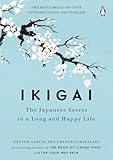
6. Ikigai: The Japanese Secret to a Long and Happy Life — Héctor García & Francesc Miralles ⭐⭐⭐⭐
The most widely read introduction to Japanese concepts of purpose, longevity, and wellbeing. Ikigai — the Okinawan concept of having a reason to get up in the morning, combining what you love, what you’re good at, what the world needs, and what you can be paid for — has become one of the most searched lifestyle concepts in the world. The book draws on interviews with centenarians in Okinawa and makes Japanese culture’s relationship with work, purpose, and community immediately accessible.
Best for: Anyone interested in Japanese approaches to wellbeing; visitors who want to understand the cultural values beneath the surface.
➡ Full review → | Buy on Amazon →
Murakami’s Masterpiece
7. The Wind-Up Bird Chronicle — Haruki Murakami ⭐⭐⭐⭐⭐
The most sustained and architecturally ambitious of Murakami’s novels — and by many measures his masterpiece. Toru Okada searches for his missing cat, then his missing wife, descending through layers of Tokyo’s suburban geography into visions of WWII Manchuria and the darkest recesses of Japanese political history. Where Norwegian Wood is accessible and realistic, The Wind-Up Bird Chronicle is Murakami at full power: surreal, historically charged, and completely immersive across its 600 pages.
Best for: Readers ready for full Murakami; anyone interested in Japan’s WWII legacy in Manchuria; the suburban Tokyo of quiet streets and hidden passages.
➡ Full review → | Buy on Amazon →
Japan’s Korean Community
8. Pachinko — Min Jin Lee ⭐⭐⭐⭐⭐
Set across four generations of a Korean family in Japan — from a fishing village in colonial Korea to the pachinko halls of Osaka — Lee’s epic novel is the most important recent work about Japan’s Korean minority: a history of discrimination, resilience, and the complex identity of people who are Japanese in every practical sense but denied that identity by law and culture. Essential context for understanding a dimension of Japanese society that most visitors never encounter.
Best for: Osaka; understanding Japan’s relationship with its Korean population; readers who want Japan from a non-Western outsider perspective.
➡ Full review → | Buy on Amazon →
The Murakami Rat Trilogy
9. A Wild Sheep Chase — Haruki Murakami ⭐⭐⭐⭐
A Tokyo copywriter is blackmailed into finding a sheep with a star-shaped mark on its back — a sheep that has been possessing powerful men. The trail leads north to Hokkaido and into territory that is no longer entirely real. The first of Murakami’s mature novels and the start of the Rat trilogy (Wind/Pinball → A Wild Sheep Chase → Dance Dance Dance). Where Norwegian Wood is realist and The Wind-Up Bird Chronicle is epic, A Wild Sheep Chase is the purest blend of noir detective fiction and Murakami’s characteristic uncanny.
Best for: Hokkaido; readers who want Murakami’s detective-story mode; the starting point for his longest character arc.
➡ Full review → | Buy on Amazon →
The Most Structurally Ambitious Murakami
10. Hard-Boiled Wonderland and the End of the World — Haruki Murakami ⭐⭐⭐⭐⭐
Two completely separate narratives alternate chapters throughout the entire novel. In ‘Hard-Boiled Wonderland’, a data-processor in near-future Tokyo is hired by a subterranean scientist. In ‘The End of the World’, a nameless man enters a walled town surrounded by a golden forest where he must read dreams from unicorn skulls. They converge — quietly, devastatingly — on a question about what it costs to have a consciousness at all. Considered by many readers to be Murakami’s greatest achievement.
Best for: Readers who want Murakami’s most structurally ambitious work; philosophical fiction; those ready for his deepest novel.
➡ Full review → | Buy on Amazon →
Murakami’s Epic
11. 1Q84 — Haruki Murakami ⭐⭐⭐⭐
Tokyo, 1984. A fitness instructor named Aomame and a maths teacher and novelist named Tengo are on converging tracks — her through an assignment to assassinate an abusive cult leader, him through ghost-writing a novel that disturbs the fabric of reality. Both enter a world with two moons, a world Aomame calls ‘1Q84’. At nearly a thousand pages and across three books, this is Murakami’s most ambitious novel — and the love story at its centre is the warmest thing he has written.
Best for: Committed Murakami readers; fans of epic literary fiction; those who want his most emotionally satisfying resolution.
➡ Full review → | Buy on Amazon →
Murakami on Running and Writing
12. What I Talk About When I Talk About Running — Haruki Murakami ⭐⭐⭐⭐
Murakami has run at least one marathon a year for over twenty-five years. This memoir — written during training for the New York City Marathon — is about running, but also about writing, ageing, and the discipline that makes both possible. The most personal and direct book he has published: a self-portrait through the solitary effort that shaped his working life.
Best for: Runners; anyone curious about Murakami’s psychology and working method; the most accessible non-fiction entry point.
➡ Full review → | Buy on Amazon →
Books About Japan by Interest
| Interest | Best Book |
|---|---|
| Modern Tokyo (realistic) | Norwegian Wood — Haruki Murakami |
| Modern Tokyo (surreal) | The Wind-Up Bird Chronicle — Murakami |
| Surreal / Literary Japan | Kafka on the Shore — Haruki Murakami |
| Kyoto / Geisha Culture | Memoirs of a Geisha — Arthur Golden |
| Historical / Samurai Japan | Shōgun — James Clavell |
| Traditional Aesthetics | Snow Country — Yasunari Kawabata |
| Philosophy / Lifestyle | Ikigai — García & Miralles |
| Korea-Japan history | Pachinko — Min Jin Lee |
The Complete Murakami: All Novels in Order
| Book | Year | Best for |
|---|---|---|
| Wind/Pinball | 1979/80 | His literary origins; early voice |
| A Wild Sheep Chase | 1982 | The Rat trilogy; detective-fantasy fiction |
| Hard-Boiled Wonderland and the End of the World | 1985 | His most structurally daring novel |
| Norwegian Wood | 1987 | Best starting point; realistic Tokyo |
| Dance Dance Dance | 1988 | Wild Sheep Chase sequel; bubble-era Japan |
| South of the Border, West of the Sun | 1992 | Emotional realism; jazz bars; longing |
| The Elephant Vanishes | 1993 | Best introduction to his short fiction |
| The Wind-Up Bird Chronicle | 1994 | His masterpiece; WWII history; epic scope |
| Sputnik Sweetheart | 1999 | Unrequited love; Greek island setting |
| After the Quake | 2000 | Kobe earthquake; six concentrated stories |
| Kafka on the Shore | 2002 | Full magical realism; Shikoku; two narratives |
| After Dark | 2004 | One Tokyo night; cinematic form |
| Blind Willow, Sleeping Woman | 2006 | 24 stories; the widest range |
| What I Talk About When I Talk About Running | 2007 | Running; writing; his most personal book |
| 1Q84 | 2009 | Epic; two moons; warmest love story |
| Colorless Tsukuru Tazaki | 2013 | Friendship; rejection; psychological realism |
| Men Without Women | 2014 | Seven stories; loss; emotional directness |
| Killing Commendatore | 2017 | Painting; mountains; Don Giovanni mythology |
| The City and Its Uncertain Walls | 2023 | Latest novel; return to the walled city |
Affiliate disclosure: Links to Amazon on this page are affiliate links. We earn a small commission at no extra cost to you.
Frequently Asked Questions
What is the best book to read before visiting Japan?
Norwegian Wood by Haruki Murakami is the most accessible introduction to Japanese urban life and sensibility. For historical Japan and the samurai era, Shogun by James Clavell is the most immersive novel. For Kyoto and geisha culture specifically, Memoirs of a Geisha by Arthur Golden is unmatched in detail and atmosphere.
Which Murakami novel should I start with?
Norwegian Wood is the best starting point — his most realistic and emotionally direct novel. After that, Kafka on the Shore gives the full magical-realist experience. The Wind-Up Bird Chronicle is his masterpiece. For his most ambitious epic, 1Q84; for his most structurally daring, Hard-Boiled Wonderland and the End of the World.
What are the best books about Tokyo?
Norwegian Wood by Murakami captures the specific quality of Tokyo solitude and urban life better than any other novel. For historical Tokyo (Edo), James Clavell's Shogun and Snow Country by Kawabata render different periods of Japanese urban and rural life with conviction.
What non-fiction books about Japan are worth reading?
Ikigai by Hector Garcia and Francesc Miralles is the most widely read introduction to Japanese concepts of purpose and meaning. For deeper cultural analysis, Alex Kerr's Lost Japan (an insider's account of traditional Japan's disappearance) is highly recommended by repeat visitors.