Best Startup Books: Essential Reading for Founders and Builders
The best startup books — from Zero to One and The Lean Startup to Shoe Dog and The Hard Thing About Hard Things. What founders actually need to read to build something.
By Marcus Webb
Startup books divide into two categories: those that tell you how to think about building a company (the conceptual books) and those that tell you what it actually feels like to do it (the memoirs and case studies). Both are useful; neither is sufficient without the other. The list below includes both.
The Conceptual Books
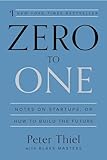
Zero to One — Peter Thiel with Blake Masters (2014)
The most intellectually original startup book. Thiel’s argument: the most valuable companies don’t compete in existing markets — they create new ones. Competition is for losers; the goal is to build a monopoly in a new space. The framework — looking for ‘secrets’ (things you believe that most people don’t), building a small initial monopoly and expanding from it, focusing on technology that makes ten times the improvement rather than incremental better — is the most counterintuitive and most useful strategic thinking available in one book.
The book originated as notes from a Stanford course on startups and retains the directness of lectures delivered to students who needed to know what to do, not just what to think.
The Lean Startup — Eric Ries (2011)
The most practically influential startup methodology book. Ries’s framework — the minimum viable product, the build-measure-learn feedback loop, the pivot — has reshaped how an entire generation of founders approaches product development. The central insight: validated learning (testing your assumptions with real customers as quickly and cheaply as possible) is the only kind of learning that matters for a startup. The book is now widely used outside the tech startup world, in large companies and government organisations trying to be more iterative.
The Memoirs
Shoe Dog — Phil Knight (2016)
The best startup memoir and one of the best business books of the last decade. Knight’s account of Nike’s founding and early years is written with unusual candour about the near-failures, the improvisation, the luck, and the human relationships that made the company — including the near-bankruptcy that nearly ended it several times. Knight writes about his Japanese suppliers, his first employees, his wife Penny, and his own character with a honesty that most business memoirists avoid. Essential for anyone who wants to understand what building a company actually feels like from the inside.
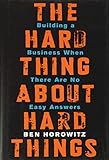
The Hard Thing About Hard Things — Ben Horowitz (2014)
The most honest book about the experience of being a CEO. Horowitz (cofounder of the venture firm Andreessen Horowitz) draws on his experience running Opsware through the dot-com collapse to address the decisions that no business school covers: how to manage a struggling company, how to conduct layoffs with integrity, how to tell the truth to employees without destroying them, how to deal with executives who can no longer do their jobs. The advice is specific, experience-based, and devoid of the false confidence of most business writing.
The Cautionary Stories
Bad Blood — John Carreyrou (2018)
The definitive account of Theranos and Elizabeth Holmes — how a startup that claimed to revolutionise blood testing raised $700 million and reached a $9 billion valuation while its technology didn’t work, its culture was defined by fear and fraud, and its leader deceived investors, partners, and most importantly patients. Carreyrou’s reporting, which eventually brought down the company, is a masterclass in investigative business journalism and an essential warning about the startup ecosystem’s vulnerability to compelling founders with revolutionary stories.
Hatching Twitter — Nick Bilton (2013)
The story of Twitter’s founding — which involved four founders, bitter disputes over credit and control, multiple CEO changes, and backstabbing that would be implausible in fiction. Bilton’s account of Ev Williams, Jack Dorsey, Biz Stone, and Noah Glass building, stealing, and defending Twitter is the most gripping of the platform startup stories and the most useful for understanding how founding team dynamics can make or break a company.
Theory Versus the Trenches
The literature of startups divides usefully into two kinds of book, and recognizing the distinction is the first step toward reading the genre well: there are the conceptual works that propose frameworks and theories for how to build a company, and there are the memoirs and narratives that record what actually happened in the messy reality of doing so. Both kinds have value, but they offer different things and carry different risks. The conceptual books — the methodologies, the principles, the systematic approaches to building and scaling — provide structure and vocabulary, distilling hard-won lessons into transferable frameworks that can guide a founder’s thinking and help them avoid known mistakes. Their strength is generalizable insight; their danger is that the real world rarely conforms as neatly to a framework as the framework implies, and that a theory abstracted from a few cases may not hold across the chaotic variety of actual ventures. The memoirs and narratives, by contrast, offer the texture of reality — the contingency, the luck, the emotional toll, the specific decisions made under uncertainty — that the conceptual books necessarily smooth away. Their strength is vividness and honesty about how things actually unfold; their danger is that a single story, however gripping, may not generalize at all. The thoughtful reader uses each to correct the other, drawing structure from the frameworks while remembering, from the narratives, how unpredictable and particular real company-building is. To read only the theory is to acquire a false sense of control; to read only the stories is to mistake anecdote for instruction. The genre is most useful when its two halves are held together, the frameworks supplying the map and the memoirs supplying the reminder that the territory is always rougher than any map.
What the Success Stories Don’t Tell You
The single most important critical caution to bring to startup literature is an awareness of survivorship bias — the systematic distortion that arises because we hear overwhelmingly from the winners and almost never from the far more numerous failures. The startup genre is dominated by the stories of companies that succeeded, the founders who became famous, the ventures that beat the odds, and this selection effect quietly warps the lessons the genre teaches. When we study only the survivors, we are prone to attribute their success to whatever choices they happened to make, without recognizing that many failed companies made the very same choices and simply did not survive to write books about it. The qualities and decisions that the success stories celebrate — boldness, persistence, unconventional bets, refusal to compromise — may be present in equal measure among the failures, in which case they explain nothing about why some won and others lost. Much of what looks like the wisdom of the successful is, on closer inspection, indistinguishable from recklessness that happened to pay off, and a great deal of startup success is owed to luck, timing, and circumstances that no framework can reproduce. This does not make the genre worthless, but it demands that the reader approach it with skepticism, constantly asking whether a celebrated principle would look so wise had the company failed, and remembering the silent multitude of vanished ventures whose stories are never told. The most valuable lesson the startup literature can teach may be this very humility — the recognition that the line between triumph and disaster is often thinner and more arbitrary than the success stories admit, and that the confident lessons drawn from winners should always be weighed against the unheard testimony of the many who did everything similarly and still lost.
Reading Startups Critically
Beyond survivorship bias, the startup genre rewards a generally critical and active mode of reading, because it is a literature unusually prone to hype, mythmaking, and the conflation of self-promotion with insight. Much startup writing is produced within an ecosystem that has strong incentives to glamorize entrepreneurship, to construct heroic narratives around founders, and to present what is often a brutal, failure-strewn, and frequently exploitative reality in flattering terms. The wise reader learns to distinguish genuine, hard-won insight from the inspirational platitude, the marketing of a personal brand, and the after-the-fact rationalization that dresses up luck as strategy. This means reading the memoirs with attention to what they omit as well as what they include — the contributions of co-founders and employees that a heroic narrative minimizes, the ethical compromises and human costs that celebratory accounts skip over, the role of privilege and connection in opening doors. It means approaching the frameworks not as gospel but as hypotheses, useful for organizing thought but not to be mistaken for laws. And it means keeping in view the wider context that the genre’s relentless focus on the individual venture tends to obscure: the social and economic conditions that make some succeed and others fail, and the question of what kinds of value the celebrated companies actually create. Read this way — critically, contextually, with an eye to what is being sold along with the advice — the startup literature remains genuinely valuable, full of real lessons about building, leading, and persevering. But its value is unlocked only by a reader who refuses to be swept up in its mythology and insists on separating the durable insight from the seductive but hollow inspiration that so often surrounds it.
Reading Order
Strategic thinking: Zero to One → The Lean Startup → The Hard Thing About Hard Things.
Inspiration + reality: Shoe Dog (inspiration) → The Hard Thing About Hard Things (reality) → Bad Blood (warning).
Complete foundation: Zero to One → The Lean Startup → Shoe Dog → The Hard Thing About Hard Things.
Frequently Asked Questions
What is the best startup book?
Zero to One by Peter Thiel is the most intellectually original book about startups — its argument for monopoly over competition and for secrets (things you believe that most people don't) as the basis of competitive advantage is the most counterintuitive and most useful framework available. The Lean Startup by Eric Ries is the most practically influential — its methodology (build, measure, learn) has shaped how an entire generation of founders approaches product development. Shoe Dog by Phil Knight is the best startup memoir — the most honest account of what building a company from scratch actually feels like.
What is Zero to One about?
Zero to One by Peter Thiel (2014) argues that the most valuable companies don't compete in existing markets but create new ones — going from zero to one (creating something new) rather than from one to n (copying what already exists). Thiel argues for monopoly power (businesses should try to be the only player in their market, not the best player in a competitive one), for the importance of founding teams and culture, and for the need for 'secrets' — things you believe that aren't widely accepted yet — as the basis of competitive advantage. The book is the most intellectually stimulating of the standard startup reading list.
What is The Lean Startup about?
The Lean Startup by Eric Ries (2011) proposes a methodology for building startups and new products: the build-measure-learn feedback loop, in which you build a minimum viable product, measure how customers respond, and learn what to change — iterating quickly rather than building in secret for months before releasing. The central concept of 'validated learning' (only knowledge that can be tested counts as learning) has changed how product development teams across industries approach building new things. It is the most practically influential startup book of the last twenty years.
What is The Hard Thing About Hard Things about?
The Hard Thing About Hard Things by Ben Horowitz (2014) is the most honest book about the experience of being a CEO — specifically about the decisions that no one can prepare you for and that no business school curriculum covers. Horowitz (cofounder of Andreessen Horowitz) draws on his experience running Opsware through the dot-com collapse to describe what it actually feels like to manage a struggling company: how to conduct layoffs, how to tell the truth to employees without destroying morale, how to deal with executives who are no longer able to do their jobs. It is the most psychologically honest startup book.