10 Best Productivity Books in 2026 (Reviewed & Ranked)
The 10 best productivity books to read in 2026, reviewed and ranked by our editors — from Atomic Habits to Deep Work, find the one that fits how you work.
By Lena Fischer

Finding the right productivity book can transform how you work, think, and live — but with thousands of options, knowing where to start is overwhelming. Our editorial team reviewed dozens of titles to bring you the definitive list of 2026’s best productivity books.
Our Evaluation Criteria
We rated each book on four dimensions:
- Practicality — Can you apply the ideas today?
- Depth — Is the advice backed by research or just anecdote?
- Durability — Will this advice still apply in 10 years?
- Readability — Is it a pleasure to read, not a chore?
The Top 10 Productivity Books for 2026
1. Atomic Habits — James Clear ⭐⭐⭐⭐⭐
Still the gold standard four years after publication. Clear’s 4-Law framework (make it obvious, attractive, easy, satisfying) is the most practical system for building and breaking habits ever put to paper. If you read one productivity book this year, make it this one. Already devoured it? See our roundup of books like Atomic Habits for where to take the momentum next.
Best for: Anyone who struggles with consistency Key insight: You don’t rise to the level of your goals; you fall to the level of your systems.
2. Deep Work — Cal Newport ⭐⭐⭐⭐⭐
Newport’s argument that focused, distraction-free work is both rare and extraordinarily valuable has only become more true since 2016. The four philosophies for structuring deep work into your schedule are genuinely life-changing for knowledge workers.
Best for: Knowledge workers, writers, developers Key insight: The ability to perform deep work is becoming increasingly rare at exactly the same time it’s becoming increasingly valuable.
3. Four Thousand Weeks — Oliver Burkeman ⭐⭐⭐⭐½
The productivity book that challenges productivity culture itself. Burkeman argues that the average human lifespan is about four thousand weeks — and the anxiety we feel about “getting everything done” is fundamentally misplaced. A liberating read.
Best for: Productivity optimisers who feel exhausted Key insight: You will never clear your to-do list. The goal is to choose what not to do wisely.
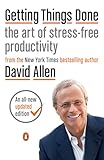
4. Getting Things Done — David Allen ⭐⭐⭐⭐
The original productivity classic. Allen’s GTD system — capture everything, decide on actions, organise by context, review regularly — remains the most complete system for managing complex workloads ever devised.
Best for: Professionals managing complex, multi-project workloads Key insight: Your mind is for having ideas, not storing them.
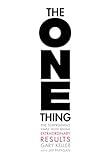
5. The One Thing — Gary Keller & Jay Papasan ⭐⭐⭐⭐
The antidote to multitasking. Keller’s message is ruthlessly simple: identify the single thing that will make everything else easier or unnecessary, and do that first. The “focusing question” is one of the most useful mental tools in any productivity toolkit.
Best for: Entrepreneurs and managers who feel pulled in too many directions Key insight: Success is sequential, not simultaneous.
Frequently Asked Questions
What is the #1 best productivity book?
Based on our evaluation criteria, Atomic Habits by James Clear is the single best productivity book available. It’s scientifically grounded, immediately applicable, and works regardless of your specific goals.
Which productivity book is best for beginners?
For beginners, we recommend starting with Atomic Habits or The Psychology of Money (for financial productivity). Both are highly readable and don’t assume prior knowledge.
Do productivity books actually work?
Productivity books work if you apply their principles — they provide frameworks, but the work of implementation is yours. The best approach: read one book at a time, implement one idea before moving on.
How many productivity books should I read?
Quality over quantity. Reading 3-5 excellent books and implementing their ideas thoroughly will outperform reading 50 books without application.
Final Recommendations by Profile
| Profile | Top Pick | Runner-Up |
|---|---|---|
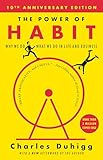
| Building habits | Atomic Habits | The Power of Habit |
| Knowledge worker | Deep Work | A World Without Email |
| Overwhelmed manager | Getting Things Done | The One Thing |
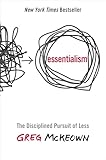
| Feeling burned out | Four Thousand Weeks | Essentialism |
| Entrepreneur | The One Thing | Deep Work |
For the Best Self-Help Books
For the definitive guide to self-help and personal development — from Atomic Habits to The Power of Now — see our Best Self-Help Books list.
More Business and Self-Help Guides
- Best Books on Leadership: Essential Reads for Managers
- Best Books for Entrepreneurs: Ranked by Founders
What Separates Productivity Wisdom from Productivity Noise
The productivity genre is enormous, lucrative, and badly overcrowded, which makes the first task of any reader a discriminating one: learning to separate the books that offer durable insight from the far larger number that merely repackage the same shallow tips in new wrapping. The market is flooded with productivity advice, much of it superficial, contradictory, or built on little more than the author’s untested personal habits, and a great deal of it promises transformation while delivering only a temporary jolt of motivation that fades within days. The genuinely valuable productivity books, by contrast, share certain qualities that distinguish them from the noise. They tend to be grounded in something more solid than anecdote — in psychology, in the actual mechanics of attention and motivation, or in systems that have been tested across many people and circumstances rather than asserted from a single success story. They tend to address root causes rather than surface symptoms, recognizing that chronic unproductiveness usually stems from deeper issues of priorities, energy, environment, or unclear thinking rather than from a simple lack of the right app or technique. And they tend to be honest about trade-offs and limits, refusing the fantasy that the right system will let you do everything effortlessly. The discerning reader learns to ask of any productivity book whether it offers a genuine principle or merely a trick, whether its advice would survive contact with a real and chaotic life, and whether it addresses the actual causes of the reader’s struggles. Applying this filter is itself the first productive act, sparing one the wasted hours of consuming advice that sounds compelling but changes nothing.
Systems Over Willpower
If there is a single insight that unites the best modern productivity thinking and separates it from the naive self-help of an earlier era, it is the recognition that lasting effectiveness comes from systems rather than from willpower. The older, folk understanding of productivity treated it as fundamentally a matter of discipline and motivation: if you simply tried harder, wanted it more, and summoned the willpower to overcome distraction and procrastination, you would succeed. The best contemporary books reject this framing as both inaccurate and counterproductive. Willpower, the research consistently shows, is a finite and unreliable resource, easily depleted and impossible to sustain through sheer force of effort over the long term, and a productivity strategy that depends on it is a strategy built on sand. The superior approach is to design systems — habits, routines, environments, and processes — that make the desired behavior the path of least resistance, so that productivity flows from structure rather than from a daily act of heroic self-control. This means shaping one’s environment to reduce friction and temptation, building automatic routines that no longer require decision or motivation, and establishing reliable processes for capturing tasks, prioritizing them, and moving them forward. The shift from willpower to systems is liberating because it removes the moral burden and the exhausting struggle from productivity, replacing the doomed effort to be perpetually disciplined with the achievable project of designing one’s life so that good work happens more or less automatically. The best books on this list teach the reader to stop relying on the unreliable fuel of motivation and to become instead an architect of systems that produce results regardless of how they feel on any given day.
Productivity in Service of a Life
The deepest and most necessary corrective in the contemporary productivity conversation is the insistence that productivity is a means, not an end — that the entire enterprise is worthless, even harmful, unless it serves a life that is actually worth living. There is a real danger in the productivity obsession, one that the best books on the subject explicitly confront: the danger of becoming so consumed by the optimization of one’s time and output that productivity ceases to be a tool and becomes a trap, an endless treadmill on which one runs ever faster toward no destination that matters. To get more done is meaningless, even destructive, if the things being done are not worth doing, or if the relentless pursuit of efficiency crowds out the rest, relationships, and unstructured experience that give life its value. The most thoughtful productivity writers therefore insist that the prior question — what is worth doing, and what kind of life do I actually want — must precede and govern all the techniques and systems, because productivity in service of the wrong ends is merely a more efficient way of wasting one’s life. This reframing rescues the genre from its own worst tendency, the tendency to treat busyness as a virtue and output as an end in itself, and returns it to its proper purpose: helping people accomplish what genuinely matters to them so that they can spend their limited time on what they most value. The reader is well served by holding this perspective throughout, treating the productivity techniques not as a goal but as a means of clearing space and creating capacity for the things that make a life meaningful. Productivity that does not ultimately serve a fuller, freer, more intentional life is not worth having, and the best books never let the reader forget it.
Also Recommended
All books in this article are available on Amazon. As an Amazon Associate, we earn from qualifying purchases at no extra cost to you.
Frequently Asked Questions
What is the best productivity book of all time?
Atomic Habits by James Clear is the most widely read productivity book of the past decade and provides the clearest framework for building lasting habits. Deep Work by Cal Newport is considered the most practically transformative for knowledge workers. Getting Things Done by David Allen remains the most comprehensive productivity system ever documented.
What should I read after Atomic Habits?
After Atomic Habits, most readers move to Deep Work by Cal Newport for focus and concentration strategies, or Essentialism by Greg McKeown for prioritisation. Indistractable by Nir Eyal addresses specifically how to resist digital distractions, which complements the habit-building framework in Atomic Habits.
What productivity books actually change behaviour rather than just being interesting?
The productivity books most consistently cited as actually changing behaviour are Atomic Habits by James Clear, Deep Work by Cal Newport, and Getting Things Done by David Allen. These three provide specific, repeatable systems rather than just concepts. The key is implementation, as most readers benefit from picking one system and applying it fully rather than reading widely.
What is the difference between Deep Work and Atomic Habits?
Atomic Habits focuses on how to build and sustain any behaviour over time through small consistent actions. Deep Work focuses specifically on the practice of sustained concentration on cognitively demanding tasks. They are complementary: Atomic Habits helps you build the deep work habit; Deep Work tells you what to do with it.