Best Books About Adventure and Survival: Essential Outdoor and Wilderness Reading
The best books about adventure and survival — from Into the Wild and Into Thin Air to Life of Pi and Wild. Essential outdoor and wilderness reading.
By Natalie Osei

Adventure and survival literature — fiction and nonfiction about human beings in extreme natural environments — reveals something essential about human psychology: what people are capable of when stripped of ordinary social structures, what values endure when survival is the only priority, and what relationships with the natural world can sustain even the most desperate circumstances.
The best books in this tradition are not escapism but are among the most honest writing available about human nature, because the stakes of the situations they describe force both their subjects and their authors toward truth.
The Essential List
Into Thin Air — Jon Krakauer (1997)
The definitive narrative of mountaineering disaster. Krakauer was on Everest as a journalist when a storm killed eight climbers on May 10, 1996; his account of the disaster is both a gripping adventure narrative and a rigorous self-examination. The book raises questions without resolving them — about responsibility, about the ethics of guided climbing, and about Krakauer’s own possible contribution to a fellow climber’s death — that have generated debate among survivors and mountaineers ever since. The most compulsive narrative nonfiction about extreme environments available.
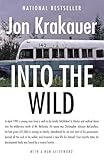
Into the Wild — Jon Krakauer (1996)
Christopher McCandless walked into the Alaskan wilderness in 1992 and died there; Krakauer reconstructed his journey from journals, letters, and interviews. The book is partly a mystery (what drove McCandless into the wilderness?), partly a character study (Krakauer identifies with McCandless’s desire to escape and uses his own early mountaineering adventures as a counterpoint), and partly a meditation on the American tradition of wilderness as a space where the self can be tested and reborn. The most discussed wilderness memoir of the past three decades.
Life of Pi — Yann Martel (2001)
Martel’s novel is simultaneously a survival story (Pi and Richard Parker the Bengal tiger on a lifeboat in the Pacific for 227 days) and a philosophical investigation of storytelling and faith. The survival sequences are extraordinarily vivid — Martel researched the zoology of tiger behaviour and the practicalities of Pacific Ocean survival in detail — but the novel’s lasting significance lies in its ending, which invites the reader to choose between two versions of Pi’s experience and reflect on why one version is more bearable than the other.
Wild — Cheryl Strayed (2012)
Strayed’s account of hiking 1,100 miles of the Pacific Crest Trail alone, unprepared, in 1995, is the most intimate and emotionally direct of the books listed here. The trail is not the subject; Strayed’s grief over her mother’s death, her failed marriage, and her heroin use are. The wilderness functions as the space in which she confronts what she cannot escape — not by providing answers but by making avoidance impossible. The memoir that defined the literary outdoor genre for the 2010s.
The Perfect Storm — Sebastian Junger (1997)
Junger’s account of the loss of the fishing boat Andrea Gail in the Halloween storm of 1991 — a ‘perfect storm’ created by the convergence of three separate weather systems — uses the documentary material of the investigation to reconstruct the final days of the crew’s voyage. Unable to interview the six men who died, Junger draws on the experiences of other fishermen and meteorologists to create as complete an account of the storm and the sinking as the evidence allows. The best book about the specific dangers of commercial deep-sea fishing.
A Walk in the Woods — Bill Bryson (1997)
Bryson’s account of his attempt to hike the Appalachian Trail — with his overweight, ill-prepared friend Stephen Katz — is the funniest of the books listed here and the most accessible starting point for readers who want outdoor adventure without the risk of existential dread. The book is simultaneously a comic memoir, a natural history of the Appalachian Trail, and a study of America’s relationship to its wilderness. Bryson’s self-deprecating humour does not disguise his genuine awe at the trail’s length, beauty, and wildness.
The Pull of the Extreme
There is a deep and abiding human fascination with stories of adventure and survival — with tales of people pushed to the absolute limits of human endurance, facing death in the wilderness, at sea, on the mountain, or in the frozen wastes — and understanding this fascination illuminates why these books exert such a powerful hold on readers who may never face anything resembling the ordeals they describe. Part of the appeal is simple vicarious thrill, the safe enjoyment of danger and excitement from the comfort of an armchair, the chance to experience the adrenaline of extreme peril without any of its actual risk. But the deeper pull of these stories lies in what extremity reveals about human nature, for in the crucible of survival, stripped of all the comforts and conventions of ordinary life, human beings are revealed in their essential nature, tested to their limits and forced to discover what they are truly made of. These books fascinate because they answer a question that haunts us in the safety of modern life: what would I do, what am I capable of, who would I become if everything were stripped away and survival itself were at stake? The extreme situations they depict function as a kind of revelation, exposing the depths of human strength, weakness, courage, and will that ordinary circumstances never call forth. In an age of unprecedented comfort and safety, when most people will never face genuine physical peril or test their endurance against the raw forces of nature, these stories satisfy a longing to know the extremes of human experience, to witness what people are capable of at the very edge of survival, and to glimpse, through the ordeals of others, the answer to the question of what we ourselves might be capable of if pushed to the limit.
What Survival Reveals About the Human Spirit
The greatest survival narratives transcend mere adventure to become profound studies of the human spirit, revealing through the extremity of physical ordeal the depths of psychological resilience, the will to live, and the qualities of character that enable some to endure what destroys others. What these books ultimately explore is not merely physical survival but the inner resources that make survival possible — the mental and emotional strength, the refusal to surrender, the capacity to endure suffering and maintain hope in hopeless circumstances, that separate those who survive from those who perish. The lesson that emerges repeatedly from the literature of survival is that the decisive factor is often not physical strength or even circumstance but the spirit — the determination to live, the mental discipline to keep functioning under unbearable stress, the ability to maintain purpose and hope when everything seems lost. These narratives become, in their deepest dimension, explorations of human resilience, testaments to the extraordinary capacity of the human spirit to endure, adapt, and persevere in the face of conditions that ought to be unsurvivable. They reveal the astonishing strength that ordinary people can summon when survival demands it, the reserves of will and courage that lie hidden until extremity calls them forth, and the indomitable quality that allows human beings to cling to life and hope against overwhelming odds. This focus on the spirit gives the best survival literature a significance that extends far beyond the specific ordeals it describes, offering insight into the nature of human resilience itself and into the inner qualities that enable people to survive not only physical peril but all the trials that life can impose. In witnessing how others endure the extremes of survival, readers learn something about the depths of strength available to the human spirit, and perhaps about the reserves they might discover in themselves.
Nature as Adversary and Teacher
Central to the literature of adventure and survival is the encounter with nature in its rawest and most powerful form — the wilderness, the ocean, the mountain, the polar wastes — and these books explore a relationship with the natural world that is largely lost to modern life, in which nature appears not as scenery or resource but as a force of overwhelming power, at once deadly adversary and profound teacher. For most of human history, nature was a power to be reckoned with, capable at any moment of destroying those who failed to respect or understand it, and the survival narrative restores this elemental relationship, depicting human beings pitted against natural forces vastly greater than themselves and forced to contend with a wilderness indifferent to their survival. In these stories nature is the great adversary, the implacable force that the protagonists must struggle against to survive — the storm, the cold, the wilderness, the sea — possessing a power and an indifference that dwarfs human strength and that will destroy anyone who underestimates it. Yet nature in these narratives is also a teacher, for the encounter with its raw power strips away illusion and forces a hard wisdom, teaching humility before forces greater than oneself, respect for the natural world’s power, and a clearer understanding of the human place within a natural order that modern comfort has obscured. The confrontation with wild nature becomes a source of profound learning, revealing truths about the world and the self that the insulated comfort of civilization conceals. This dimension gives survival literature a particular resonance in an age increasingly disconnected from the natural world, reminding readers of the elemental power that still underlies the tamed and comfortable surface of modern life, and of the humility, respect, and hard-won wisdom that the encounter with raw nature can teach. In depicting the human struggle against and within wild nature, these books restore a lost relationship and recover a truth that comfortable modern life has nearly erased: that nature remains a force of immense power, and that to encounter it directly is to be both endangered and instructed.
Why These Books
The best adventure and survival literature is not about the wilderness — it is about the human beings who enter it and are changed by what they find there. The wilderness is the agent of change: it strips away the social roles and comfortable evasions that ordinary life provides and forces its occupants toward whatever is most essential in their characters. The books listed here are all, at their core, about the experience of discovering what is most essential — not always comforting, often surprising, and invariably clarifying.
Frequently Asked Questions
What is the best adventure book to start with?
Into Thin Air (1997) by Jon Krakauer is the best starting point — his first-person account of the 1996 Everest disaster in which he was present, combining extraordinary narrative momentum with rigorous self-examination. Life of Pi (2001) by Yann Martel is the best literary starting point — a boy stranded on a lifeboat with a Bengal tiger, which is simultaneously an adventure story and a philosophical meditation on storytelling and faith. Wild (2012) by Cheryl Strayed — hiking the Pacific Crest Trail alone after the dissolution of her marriage and the death of her mother — is the most intimate and emotionally accessible starting point.
What is Into the Wild about?
Into the Wild (1996) by Jon Krakauer reconstructs the journey of Christopher McCandless, a twenty-two-year-old who gave away his savings, abandoned his car, and walked into the Alaskan wilderness in 1992 with little food or equipment. He died of starvation four months later, his body found in an abandoned bus near Denali. Krakauer draws on McCandless's journals, his letters, and interviews with people who encountered him to reconstruct both the external journey and its psychological sources — McCandless's flight from his family and background and his search for authentic experience. The most discussed wilderness memoir of the past thirty years.
What is Life of Pi about?
Life of Pi (2001) by Yann Martel follows Pi Patel, the son of a zookeeper in Pondicherry, who is the sole human survivor of a ship sinking in the Pacific Ocean. He survives 227 days on a lifeboat with a Bengal tiger named Richard Parker. The novel is simultaneously a survival story and a meditation on faith, storytelling, and the relationship between the stories we tell about our experiences and the experiences themselves. The ending's alternative version of events challenges the reader to decide which story they prefer and why.
What is Wild about?
Wild (2012) by Cheryl Strayed is the memoir of Strayed's 1,100-mile hike along the Pacific Crest Trail in 1995, undertaken after the death of her mother, the dissolution of her marriage, and a descent into heroin use. The book alternates between the physical challenges of the trail (she was an inexperienced hiker with an enormous pack) and the emotional reckoning she undergoes along the way. Strayed's prose is candid about her own failures and self-deceptions; the book is less about the wilderness than about what she was walking away from and toward.