Best Popular Science Books: Essential Reading List
The best popular science books — from A Brief History of Time and The Selfish Gene to The Emperor of All Maladies and Astrophysics for People in a Hurry. Science explained beautifully.
By Elena Marsh
Popular science at its best does something unusual: it makes the strangeness of the actual universe as felt as the strangeness of fiction. The best popular science books are not simplifications of scientific ideas but genuine encounters with the ideas themselves — rendered in language a non-specialist can follow without the ideas being diminished.
The books below are the ones that have achieved this most fully: the science is real, the writing is good, and the experience of reading them changes how you understand the world you inhabit.
Physics and Cosmology
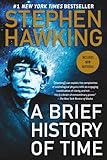
A Brief History of Time — Stephen Hawking (1988)
The bestselling popular science book of all time — 25 million copies sold — and the one that created the market for popular physics. Hawking covers the big bang, black holes, quantum mechanics, and the search for a unified theory of everything in language that does not require mathematical background. It is harder than its reputation suggests, and many readers have claimed to have finished it who have not understood it; but the ambition is correct, and the essential ideas — the origin of the universe, the nature of space and time, what happened before the big bang — are handled with genuine authority.
The Order of Time — Carlo Rovelli (2018)
The most beautiful popular science book of the last decade. Rovelli — an Italian theoretical physicist — takes the central mystery of time (why does it only go in one direction? does it exist at all?) and examines it through both physics and philosophy, quoting Aristotle and Borges alongside Einstein and Boltzmann. The result is unlike any other popular science book: rigorous and poetic simultaneously, making the reader feel the strangeness of the universe rather than merely understanding it conceptually.
Astrophysics for People in a Hurry — Neil deGrasse Tyson (2017)
The most accessible starting point for anyone who wants to understand what the universe is made of and how it works. Under 200 pages, written with Tyson’s characteristic energy and humour, covering dark matter, dark energy, the cosmic microwave background, and the Big Bang in language anyone can follow. The best introductory popular science book available.
The Elegant Universe — Brian Greene (1999)
The most comprehensive and most successful account of string theory — the attempt to unify quantum mechanics and general relativity into a single theory of everything. Greene writes with exceptional clarity about ideas that resist even mathematical description, and the book is remarkable for making readers feel they understand what superstrings are, even knowing they do not fully. The best science-communication achievement in physics of the last three decades.
Biology and Evolution
The Selfish Gene — Richard Dawkins (1976)
The most important popular science book in evolutionary biology — it introduced the gene-centred view of natural selection (genes, not organisms, are the unit of selection), coined the term “meme,” and changed how biologists and non-biologists alike think about evolution. Dawkins is a superb writer, and his capacity to make abstract genetic logic feel viscerally true is unmatched in the field.
More demanding than its reputation suggests, but essential. The third edition (2006) includes reflections on the book’s impact and corrections to specific claims.
The Gene — Siddhartha Mukherjee (2016)
Mukherjee’s follow-up to The Emperor of All Maladies is a biography of the gene — its discovery, its mechanism, its medical implications, and the ethical questions that genetic technology now poses. At 600 pages it is comprehensive rather than selective, but Mukherjee is one of the most gifted science writers working, and the book never feels long.
Medicine and Disease
The Emperor of All Maladies — Siddhartha Mukherjee (2010)
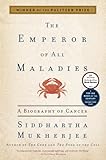
The definitive popular account of cancer — its history, its biology, its treatment, and the human experience of both having it and fighting it. Mukherjee won the Pulitzer Prize for this book, and it deserves the prize: it combines scientific rigour with biographical depth (patients, researchers, physicians) in a way that makes cancer comprehensible without making it less frightening.
The subtitle — “A Biography of Cancer” — is accurate: Mukherjee treats cancer as a protagonist with its own history and motivations, and the effect is to make the disease feel more rather than less comprehensible.
History and Philosophy of Science
Gödel, Escher, Bach: An Eternal Golden Braid — Douglas Hofstadter (1979)
The most unusual entry on this list. Hofstadter’s Pulitzer Prize-winning book explores self-reference and strange loops through the mathematics of Kurt Gödel’s incompleteness theorems, the visual art of M.C. Escher, and the music of Johann Sebastian Bach. It is not a conventional popular science book and it is not for everyone — it requires patience and a tolerance for playfulness — but it is the most intellectually ambitious popular science book ever written, and readers who engage with it find their understanding of consciousness, mathematics, and meaning permanently changed.
Surely You’re Joking, Mr. Feynman! — Richard Feynman (1985)
The most entertaining popular science book ever written. Feynman’s collection of autobiographical anecdotes — the safecracking at Los Alamos, the bongo drums, the strip bars, the Nobel Prize — captures a particular kind of scientific mind: relentlessly curious, constitutionally unwilling to accept an explanation it hasn’t worked out for itself, and utterly indifferent to institutional propriety. It also conveys, better than any other book, what it actually feels like to think like a physicist.
Reading by Discipline
Physics: The Order of Time → A Brief History of Time → The Elegant Universe.
Biology: The Selfish Gene → The Gene → The Emperor of All Maladies.
General science and thinking: Surely You’re Joking, Mr. Feynman! → Gödel, Escher, Bach → Astrophysics for People in a Hurry.
Frequently Asked Questions
What is the best popular science book for beginners?
Astrophysics for People in a Hurry by Neil deGrasse Tyson is the most accessible starting point — under 200 pages, conversational in tone, covering the universe from the Big Bang to dark energy without requiring any scientific background. A Brief History of Time by Stephen Hawking is the more famous book, but it is more demanding despite its reputation as accessible. For biology and evolution, The Selfish Gene by Richard Dawkins remains the most important popular science book in the field.
Is Sapiens a science book?
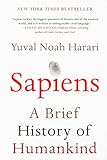
Sapiens by Yuval Noah Harari is more accurately described as a work of popular history and anthropology — it uses scientific research (evolutionary biology, archaeology, cognitive science) but its subject is human history and social organisation rather than science itself. It is an excellent book that reads like popular science, but readers who want rigorous popular science should be aware that Harari's broad claims are contested by specialists in each field he covers.
What popular science books are most important to read?
The foundational popular science books — those that introduced scientific ideas to the widest audiences and that remain read and influential — are: A Brief History of Time (Hawking), The Selfish Gene (Dawkins), The Double Helix (Watson), Surely You're Joking, Mr. Feynman! (Feynman), and The Structure of Scientific Revolutions (Kuhn). These are the books that changed how non-scientists think about science.
What is the best book about evolution for non-scientists?
The Selfish Gene by Richard Dawkins (1976) remains the most important popular account of evolutionary biology — it introduced the gene-centred view of evolution to a general readership and coined the term 'meme.' It is more demanding than its reputation suggests. For a more recent and more accessible account, Your Inner Fish by Neil Shubin or Why Evolution Is True by Jerry Coyne are excellent alternatives.
What is the best book about physics for non-scientists?
The Order of Time by Carlo Rovelli (2018) is the most beautifully written popular physics book currently available — a meditation on what time actually is, from a physicist who thinks clearly and writes like a poet. The Elegant Universe by Brian Greene covers string theory and the search for a theory of everything with exceptional clarity. For classical cosmology, A Brief History of Time by Hawking is essential despite its difficulty.