Best Management Books: Essential Reading for Managers and Leaders
The best management books — from High Output Management and Good to Great to Radical Candor and The Hard Thing About Hard Things. Essential reading for managers.
By Marcus Webb
Management books divide into two categories: those that address specific management mechanics (how to run meetings, give feedback, structure one-on-ones) and those that address organisational strategy and culture (what makes companies great, how to build high-performing cultures). Both are useful; the former are immediately applicable, the latter shape how you think about organisations over time.
The Mechanics of Management
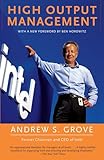
High Output Management — Andy Grove (1983)
The most practically useful management book — Andy Grove, the legendary Intel CEO, explains what managers actually do and how to do it better. The central insight: a manager’s output is the output of their team plus the output of the teams they influence. Everything else follows from this — the choice of which activities to prioritise (those with the highest leverage), how to structure one-on-ones (as information exchanges, not status reports), how to think about performance reviews (as a tool for future improvement, not just a verdict on the past).
Grove’s directness, his operational specificity, and his refusal to mystify management into leadership philosophy make this the most actionable book on the list.
Radical Candor — Kim Scott (2017)
The best contemporary book on giving feedback and building the relationships that make teams effective. Scott’s two-by-two matrix — care personally vs. challenge directly — identifies the four modes managers operate in (radical candor, ruinous empathy, obnoxious aggression, manipulative insincerity) and explains why most managers default to ruinous empathy (feedback so vague it helps no one) because it feels kinder in the moment. The practical guidance on how to actually deliver candid feedback — the specifics of when and how — is the book’s most useful section.
Organisational Strategy
Good to Great — Jim Collins (2001)
The most widely cited management research book — Collins’s study of eleven companies that sustained exceptional performance for at least fifteen years and what distinguished them from comparable companies that didn’t. The key concepts: Level 5 Leadership (leaders with personal humility and professional will), the Hedgehog Concept (the intersection of what you can be best at, what drives your economic engine, and what you are passionate about), and the Flywheel (momentum builds gradually, without dramatic single moments). The research methodology is contested, but the concepts remain widely useful.
The Reality of Leadership
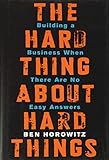
The Hard Thing About Hard Things — Ben Horowitz (2014)
The most honest book about what it is actually like to be a CEO. Horowitz draws on his experience running Opsware through the dot-com collapse to address the decisions that no business school covers: how to manage a struggling company when there are no good options, how to conduct layoffs with integrity, how to tell the truth to employees without destroying them, how to deal with executives who are no longer able to do their jobs. The advice is experience-based and specific, and the honest account of how hard it is distinguishes it from most business writing.
Mechanics Versus Philosophy
The most useful way to navigate the vast and uneven world of management books is to recognize the distinction this list is built on: between books that teach the concrete mechanics of the job and books that shape how you think about organizations over time. Both matter, but they serve different needs and should be read at different moments. The mechanics books — Grove’s High Output Management above all, and Scott’s Radical Candor — answer the questions a new or struggling manager actually faces on a Tuesday morning: How do I run a one-on-one? How do I give feedback that helps rather than wounds? Where should I spend my limited time for maximum effect? These books are immediately applicable, and their value is testable within a week of reading them. The strategy-and-culture books — Collins’s Good to Great, and in its own way Horowitz’s The Hard Thing About Hard Things — operate at a different altitude, shaping your long-term mental models of what makes organizations succeed, how leadership works, and what culture really is. Their payoff is slower and more diffuse but ultimately deeper. The common mistake is to read only the inspirational strategy books, which are more pleasurable, while neglecting the unglamorous mechanics that actually determine whether you are a good manager. The reverse — pure tactics with no strategic framework — leaves you efficient but directionless. The strongest foundation combines both.
Why Grove Remains the Standard
Among the dozens of management books published every year, Andy Grove’s High Output Management has a strong claim to being the single most valuable, and understanding why illuminates what separates genuinely useful management writing from the motivational filler that dominates the category. Grove was not a consultant or a guru theorizing from the outside; he was the engineer-CEO who built Intel into one of the most important companies in history, and his book carries the authority of someone explaining a craft he actually mastered. Its enduring power comes from a few rigorous, almost mathematical insights that cut through the sentimentality of most leadership writing. The central one — that a manager’s output is not their own work but the combined output of their team plus everyone they influence — reframes the entire job around leverage rather than personal busyness, and everything practical in the book follows from it. Grove treats management as a discipline with measurable inputs and outputs, refuses to mystify it into vague “leadership,” and offers operational specifics on meetings, decisions, training, and performance that remain startlingly relevant decades later, even as the technology industry it emerged from transformed beyond recognition. The book’s adoption as something close to required reading across Silicon Valley is no accident; it is the rare management text that treats the reader as a serious practitioner rather than an audience to be inspired.
Reading Management Books Critically
A word of caution belongs on any management reading list, because the genre is uniquely prone to overclaiming, and the discerning reader gets far more from these books by holding them at a slight critical distance. The research-based strategy books in particular invite skepticism: Collins’s Good to Great, for all the usefulness of concepts like Level 5 Leadership and the Hedgehog Concept, rests on a methodology that critics have challenged, and several of its exemplary companies subsequently stumbled badly — a reminder that retrospective studies of success are vulnerable to survivorship bias and the seductive imposition of tidy narratives on messy reality. The honest move is to treat such frameworks as useful lenses rather than proven laws. The experience-based books, like Horowitz’s, are more reliable precisely because they claim less, offering hard-won lessons from specific situations rather than universal formulas, though even these reflect one person’s path and context. The best way to read management literature is therefore as a conversation rather than a rulebook: extract the frameworks and vocabulary that genuinely sharpen your thinking, test them against your own situation, and discard what does not fit. The manager who reads widely but credulously accumulates buzzwords; the one who reads widely and critically accumulates judgment. These four books are an excellent foundation precisely because they reward that more demanding kind of reading.
Reading Order
Start practical: High Output Management → Radical Candor → The Hard Thing About Hard Things.
Strategic thinking: Good to Great → High Output Management → The Hard Thing About Hard Things.
Complete foundation: High Output Management → Radical Candor → Good to Great → The Hard Thing About Hard Things.
Frequently Asked Questions
What is the best management book?
High Output Management by Andy Grove is the most practically useful management book — written by Intel's legendary CEO, it addresses the specific mechanics of how managers create output through teams: one-on-ones, meetings, performance reviews, and the leverage model. Good to Great by Jim Collins is the most widely cited research-based management book, though its findings are more contested than its popularity suggests. Radical Candor by Kim Scott is the most useful contemporary book on how to give feedback and build the kind of relationships that make teams effective.
What is High Output Management about?
High Output Management (1983) by Andy Grove, Intel's legendary CEO, is a comprehensive manual for what managers actually do — how their output is the output of their teams, how to structure one-on-ones and staff meetings to extract information and enable decisions, how to conduct performance reviews, and how to think about leverage (which activities have the highest impact per unit of manager time). Grove's framework is practical, specific, and grounded in the reality of managing complex organisations rather than motivational platitudes.
What is Radical Candor about?
Radical Candor (2017) by Kim Scott argues that the best managers challenge their people directly while caring for them personally — a combination she calls 'radical candor.' The failure modes are ruinous empathy (caring without challenging, which leads to vague feedback that doesn't help anyone improve), obnoxious aggression (challenging without caring, which demotivates), and manipulative insincerity (neither caring nor challenging, which is the worst of all). The book is the most useful recent account of how to give feedback that people can actually use.
Is Good to Great's research reliable?
Good to Great (2001) by Jim Collins identified eleven companies that made the transition from good to great performance and studied what distinguished them from comparable companies that didn't. The methodology has been contested: several of the 'great' companies subsequently failed or declined, and critics argue that the research was subject to hindsight bias (choosing companies known to have succeeded and then identifying their characteristics). The concepts (Level 5 Leadership, the Hedgehog Concept, the Flywheel) remain useful frameworks for thinking about organisational excellence, even if the research design is imperfect.