Best Epic Fantasy Series: Essential Reading List
The best epic fantasy series — from The Lord of the Rings and Malazan Book of the Fallen to The First Law and The Stormlight Archive. Fantasy series that reward long investment.
Epic fantasy series ask readers to invest hundreds — sometimes thousands — of pages in a single narrative world. The ones that reward that investment most fully are the series below: works in which the world-building is genuinely imaginative, the characters develop across volumes, and the conclusion (or the ongoing progress toward it) justifies the commitment.
The Foundations
The foundational epic fantasy series are covered in their own dedicated guides:
- The Lord of the Rings — Tolkien’s trilogy, the genre’s defining work
- A Wheel of Time — Robert Jordan’s 14-volume epic
- A Song of Ice and Fire — George R.R. Martin’s ongoing series
The Essential Modern Series
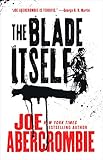
The First Law Trilogy — Joe Abercrombie (2006-2008)
The finest grimdark fantasy trilogy, beginning with The Blade Itself. Abercrombie takes the conventions of epic fantasy — the quest, the chosen one, the dark lord — and asks what they would actually look like in a world with consequences. His characters are morally compromised in ways that make them more realistic than most fantasy heroes: the torturer who is the most humane character in the book, the barbarian hero who is neither as heroic as he appears nor as savage, the woman who pursues her own agenda in a world that denies women formal power. The trilogy is complete and fully satisfying; the later standalone novels in the same world are also excellent.
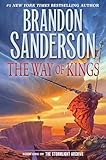
The Stormlight Archive — Brandon Sanderson (2010-)
The most ambitious ongoing epic fantasy series. Set on the storm-ravaged world of Roshar, the series follows multiple characters (primarily Kaladin, Dalinar, and Shallan) across a world shaped by the regular supernatural storms called highstorms and by a magic system tied to the stormlight they produce. Sanderson is the most technically accomplished magic system designer in fantasy, and the Stormlight Archive is his most ambitious project — planned for ten books, with each volume over 1,000 pages. The Way of Kings is the best entry point.
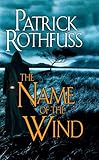
The Kingkiller Chronicle — Patrick Rothfuss (2007-)
The most literary prose in contemporary epic fantasy. Kvothe tells his own story to a chronicler — the years of poverty after his family’s murder, his education at the University (where he studies sympathy, a magic based on analogical connection), his pursuit of the Chandrian who killed his parents. Rothfuss’s prose is unusually graceful for the genre, and the nested narrative structure gives the story an elegance that most epic fantasy lacks. Note: the trilogy remains incomplete (as of 2026, only two of three books have been published).
The Classic Series
The Farseer Trilogy — Robin Hobb (1995-1997)
Beginning with Assassin’s Apprentice, Hobb’s trilogy follows Fitz — the illegitimate son of a prince, trained as an assassin in the Farseer court — through a fantasy of court politics, loyalty, and the specific costs of Fitz’s magical gifts (the Skill and the Wit). Hobb’s characterisation is unusually deep for epic fantasy, and Fitz is one of the most fully realised protagonists in the genre. The trilogy is complete and deeply satisfying; the subsequent series in the same world are equally good.
The Heist Fantasy
The Gentleman Bastard Sequence — Scott Lynch (2006-)
Beginning with The Lies of Locke Lamora, Lynch’s series follows Locke Lamora — a master thief and con artist in Camorr, a fantasy city modelled on Venice — and his crew of Gentleman Bastards. The blend of heist plotting, crime fiction conventions, and fantasy world-building is unlike most epic fantasy, and Lynch’s dialogue is the wittiest in the genre. Three of the planned seven books have been published.
What Makes a Fantasy Series Epic
The word “epic” is so overused in fantasy marketing that it has nearly lost meaning, but the series gathered here demonstrate what it genuinely denotes: scope. An epic fantasy is not merely a long book or a series with a dragon on the cover; it is a narrative whose canvas is large enough to hold the rise and fall of nations, the turning of ages, and casts of characters numerous enough that no single perspective can contain the whole. Tolkien established the template — a war for the fate of an entire invented world, told across multiple lands and peoples and rooted in invented languages, histories, and mythologies that extend far beyond the edges of the plot. What the form demands is a sense of consequence on the largest possible scale: the reader must feel that the stakes are civilizational, that the world existed before the story began and will continue after it ends, and that the events depicted are a hinge on which everything turns. This is why the best epic fantasy reads less like a single adventure than like the chronicle of a world’s history. The genre’s ambition is fundamentally architectural — to build something so complete and internally coherent that the reader can lose themselves in it as in a real place. When a series achieves this, the label “epic” is not hype but accurate description: it names the rare books whose imaginative scale matches the grandeur the word was meant to convey, and which reward the reader with the immersive vastness that only this form can provide.
The Cost and Reward of Commitment
Epic fantasy asks more of its readers than almost any other genre. To begin a multi-volume series is to commit hundreds, sometimes thousands, of pages and often years of reading to a single imaginative world — a demand that can feel daunting and that fairly raises the question of whether the investment is worth it. The honest answer is that it depends on what a reader wants from fiction, but for those willing to make the commitment, the rewards are of a kind no shorter work can offer. The deep immersion that comes from spending so long inside one world produces an intimacy with its characters and places that approaches the feeling of memory rather than reading; by the final volume, the reader knows these invented people and lands as well as they know some real ones. The long form also permits arcs of transformation — political, moral, personal — that unfold with a gradualness impossible in a single book, so that change feels lived rather than asserted. This is the great compensation for the genre’s demands: an emotional and imaginative payoff proportional to the investment, the accumulated weight of thousands of pages delivering a catharsis that a quick read cannot. The reader who reaches the end of a great series has not merely finished a story but completed a long journey, and the sense of loss at parting with the world is itself a measure of how much was gained. For those with the patience, epic fantasy offers one of reading’s most complete and lasting forms of immersion.
Worldbuilding as the Real Protagonist
In most fiction, the world is the setting and the characters are the point; in the greatest epic fantasy, the relationship is more balanced, and sometimes inverted, so that the invented world itself becomes the work’s true protagonist and abiding achievement. Readers remember Middle-earth, with its languages and ages and deep history, as vividly as they remember any of its inhabitants, and the same is true of the most fully realized of the modern series, whose intricate systems of magic, politics, religion, and economy give their worlds a texture of total reality. This is the distinctive art of the form: the construction of a secondary world so internally consistent and richly detailed that it acquires the solidity of an actual place, governed by its own coherent rules and animated by its own history. The finest practitioners treat magic not as a convenient device but as a system with costs, limits, and logic; they give their nations real political tensions and their cultures real depth; they let the world’s past press on its present exactly as history presses on our own. The pleasure this affords is unique to the genre — the sense of exploring a place vast enough that it exceeds any single story told within it, and convincing enough that it seems to continue existing when the book is closed. To evaluate epic fantasy is, in large part, to evaluate its worldbuilding, because that is where the form’s deepest satisfactions and its highest artistry reside. The series on this list endure because their worlds do: invented places that have become, for millions of readers, as real and as worth returning to as any on the map.
Reading Order by Entry Point
New to epic fantasy: Assassin’s Apprentice → The Blade Itself → The Way of Kings.
Best completed series: The First Law Trilogy (3 books) → The Farseer Trilogy (3 books) — both are complete and satisfying.
For prose quality: The Name of the Wind → The Lies of Locke Lamora → The Blade Itself.
Frequently Asked Questions
What is the best epic fantasy series?
The Lord of the Rings by Tolkien is the foundational and most celebrated epic fantasy series — the one that established the genre's conventions. For modern epic fantasy, Brandon Sanderson's Stormlight Archive (beginning with The Way of Kings) is the most acclaimed ongoing series — massive in scope, with one of fantasy's most elaborate magic systems. Joe Abercrombie's First Law trilogy (beginning with The Blade Itself) is the best grimdark fantasy — a deliberate subversion of genre conventions that asks what heroism actually looks like. The Name of the Wind by Patrick Rothfuss is the best prose in the genre.
What is grimdark fantasy?
Grimdark is a subgenre of epic fantasy that deliberately subverts the moral clarity of traditional high fantasy — in which heroes are heroic, villains are evil, and good eventually prevails. Grimdark fantasy presents morally ambiguous characters, realistic violence, political complexity, and often bleaker outcomes. Joe Abercrombie is the genre's defining author; his First Law trilogy follows characters who are all compromised in different ways, whose 'heroism' has costs and consequences, and whose world does not reward goodness with simple outcomes. George R.R. Martin's A Song of Ice and Fire is the most widely known grimdark series.
What is the Stormlight Archive?
The Stormlight Archive is an epic fantasy series by Brandon Sanderson — planned for ten books, with five published as of 2025. Set on the world of Roshar, which is battered by regular supernatural storms, the series follows multiple characters across a world with elaborate magic systems (Stormlight, Shards, Surgebinding). The Way of Kings, the first book, is over 1,000 pages, and the series is notable for its worldbuilding ambition, its magic system's internal consistency, and its character development across multiple volumes.
What is The Name of the Wind about?
The Name of the Wind by Patrick Rothfuss (2007) is the first book in the Kingkiller Chronicle — the story of Kvothe, narrated in retrospect by the man himself (now living as an innkeeper under a false name) to a chronicler who has tracked him down. The story is Kvothe's own account of his education at the University, his years as a traveling player's child, and his pursuit of the Chandrian, who killed his family. Rothfuss's prose is unusually literary for the genre, and the nested narrative structure (Kvothe telling his own story) creates an elegance that distinguishes the series from most epic fantasy.