Wheel of Time Books in Order: Complete Robert Jordan Reading Guide (2026)
The complete Wheel of Time reading order — all 14 novels by Robert Jordan and Brandon Sanderson, plus the prequel New Spring, with tips for newcomers and veterans alike.

The Wheel of Time is fourteen novels, one prequel, 4.4 million words, and thirty years of publishing history — the longest single fantasy series ever written. Robert Jordan began it in 1990 with The Eye of the World and spent the rest of his life building a world so dense and internally consistent that it generated its own encyclopaedia, its own fan lexicon, and a readership that passed copies between generations like a family inheritance. When Jordan died in 2007, leaving the final book unfinished, it was a genuine cultural event in fantasy fiction.
The reading-order question is simpler than the series’ scale suggests. Read the main series in publication order. That’s it. The only real complexity is the prequel, New Spring, which many new readers are tempted to read first because it’s labelled a prequel — this is a mistake, and we’ll explain why below.
Start with The Eye of the World. Work forward. The series rewards exactly the kind of sustained, committed reading it demands.
Quick answer: The Eye of the World → The Great Hunt → The Dragon Reborn → The Shadow Rising → The Fires of Heaven → Lord of Chaos → A Crown of Swords → The Path of Daggers → Winter’s Heart → Crossroads of Twilight → Knife of Dreams → The Gathering Storm → Towers of Midnight → A Memory of Light. Then New Spring (the prequel) last.
All 14 Wheel of Time Books at a Glance
| # | Title | Year | Author |
|---|---|---|---|
| 1 | The Eye of the World | 1990 | Robert Jordan |
| 2 | The Great Hunt | 1990 | Robert Jordan |
| 3 | The Dragon Reborn | 1991 | Robert Jordan |
| 4 | The Shadow Rising | 1992 | Robert Jordan |
| 5 | The Fires of Heaven | 1993 | Robert Jordan |
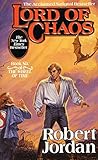
| 6 | Lord of Chaos | 1994 | Robert Jordan |
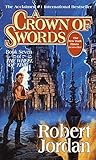
| 7 | A Crown of Swords | 1996 | Robert Jordan |
| 8 | The Path of Daggers | 1998 | Robert Jordan |
| 9 | Winter’s Heart | 2000 | Robert Jordan |
| 10 | Crossroads of Twilight | 2003 | Robert Jordan |
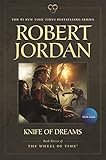
| 11 | Knife of Dreams | 2005 | Robert Jordan |
| 12 | The Gathering Storm | 2009 | Brandon Sanderson |
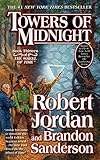
| 13 | Towers of Midnight | 2010 | Brandon Sanderson |
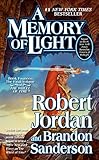
| 14 | A Memory of Light | 2013 | Brandon Sanderson |
Best starting point: The Eye of the World — the only correct entry point into the series.
Where to Start: The Eye of the World
The Eye of the World is the only entry point into the Wheel of Time. There is no shortcut, no alternative first book, no condensed introduction that substitutes for sitting down with the full opening volume. The series is built as a single continuous narrative, and Jordan begins laying foundations on page one that don’t resolve until the final chapter of Book 14.
The common criticism of The Eye of the World is that it opens slowly, with extended time in the village of Emond’s Field before the story accelerates. That criticism is partly fair and mostly overstated. The Trolloc attack comes early — within the first hundred pages — and once the central characters are on the road, the pace is sustained. Jordan uses the early pages to establish the world and the characters’ relationships in a way that pays off considerably later. Readers who find the opening slow should push into the second act before making any judgement.
The deeper honest point about entry: this series requires commitment. The Eye of the World alone is 782 pages in paperback. You are signing up for something long. The payoff — and there is a payoff, one of the most satisfying conclusions in the history of the genre — is worth it. But know what you’re beginning before you begin it.
The Wheel of Time Reading Order
Read these in order. Do not skip. The series tracks dozens of viewpoint characters across multiple plot threads, and the connections between them are part of what Jordan was building.
Books 12–14 were completed by Brandon Sanderson from Robert Jordan’s extensive notes, outlines, and partially written scenes following Jordan’s death in 2007.
- The Eye of the World (1990) — Three young men from a remote village are hunted by forces of the Dark One and drawn into a world they don’t yet understand.
- The Great Hunt (1990) — The chase for a stolen artifact takes the central characters across the world and deepens the stakes established in Book 1.
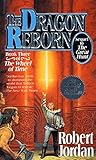
- The Dragon Reborn (1991) — Rand al’Thor accepts his destiny; the series’ central mythology crystallises around what that acceptance means.
- The Shadow Rising (1992) — Widely considered the best book in the series; Jordan expands the world, deepens the backstory, and delivers one of the great battles in epic fantasy.
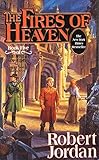
- The Fires of Heaven (1993) — The scope of conflict widens; the Forsaken become active threats rather than background presences.
- Lord of Chaos (1994) — Ends with one of the most shocking single chapters in the series; the political complexity reaches full intensity.
- A Crown of Swords (1996) — Consolidates the aftermath of Book 6 and advances multiple threads simultaneously.
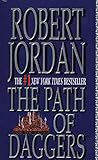
- The Path of Daggers (1998) — The first of what readers call the slog; the pace slows significantly and several major plotlines stall. Push through.
- Winter’s Heart (2000) — The infamous middle period continues, though the final chapters deliver a payoff that justifies the patience required.
- Crossroads of Twilight (2003) — The slowest book in the series by most readers’ reckoning. It is not a reason to quit; it is a reason to move quickly to Book 11.
- Knife of Dreams (2005) — Jordan clearly knew he was dying and resolved to accelerate. The series snaps back to life; multiple long-running threads resolve in a single volume.
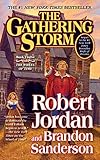
- The Gathering Storm (2009) — Completed by Brandon Sanderson from Robert Jordan’s notes. Focuses primarily on Rand and Egwene; Sanderson’s handling of the series’ emotional core is confident and respectful.
- Towers of Midnight (2010) — Completed by Brandon Sanderson from Robert Jordan’s notes. Mat and Perrin take centre stage; the world converges on the Last Battle.
- A Memory of Light (2013) — Completed by Brandon Sanderson from Robert Jordan’s notes. The Last Battle, resolved across a single massive volume. One of the most ambitious finales in genre history.
New Spring — Should You Read the Prequel?
New Spring is a prequel novella — published in full novel form in 2004 — that depicts how Moiraine Damodred and Lan Mandragoran first met and how Moiraine received the mission that drives the events of The Eye of the World. It is well-written Jordan, and it matters. Read it after you finish the main series, not before.
The problem with reading New Spring first is that its emotional weight depends on knowing who Moiraine and Lan become across fourteen books. The novella is a portrait of two characters at the beginning of their long journey together, and the resonance of that portrait — why it is affecting rather than merely informative — comes from having followed where that journey ends. Read as a prequel-in-position, New Spring is pleasant backstory. Read after the full series, it is something more.
New readers who stumble across New Spring and read it first will not ruin anything. But they will get considerably less from it than readers who save it for last. New Spring does not currently have a review page in our catalogue; see our individual book reviews for the main series volumes linked throughout this guide.
The Best Wheel of Time Books
Five books stand out across the series as exceptional achievements, beyond the already high baseline of the main narrative.
The Eye of the World works because Jordan understood that a series of this scale needed an opening that functioned almost as a self-contained novel. The young characters leaving their village, the sense of a larger world pressing in, the gradual revelation that the stakes are cosmic — it is one of the most effective first volumes in epic fantasy, and it does its job precisely because Jordan took his time with it.
The Shadow Rising is the book the series has been building toward. Jordan opens up the history of the Aiel people and the origins of the world’s mythology in a way that recontextualises everything before it. The Rhuidean sequences, in which characters walk through visions of the ancient past, are among the most sustained examples of worldbuilding-as-character-development in the genre. Most long-term readers name this as the best book in the series.
Lord of Chaos is where Jordan demonstrated that he was willing to follow the logic of his world to its most extreme consequences. The final sequence — the word “kneel” resonating as one of the most precise single images Jordan ever wrote — is the moment the series announces that it will not resolve easily or safely.
The Gathering Storm is Brandon Sanderson’s first volume, and it is better than many readers expected. Sanderson’s prose is different from Jordan’s — cleaner, faster, less atmospheric — but his handling of Rand’s psychological disintegration in this volume is genuinely powerful. The scene in which Rand reaches his lowest point on Dragonmount is one of the most important in the series, and Sanderson wrote it well.
A Memory of Light is the answer to the question the series has been asking since 1990: what does the Last Battle actually look like, and does it justify everything that preceded it. Sanderson’s answer, across 900 pages and a single continuous battle sequence that occupies much of the volume, is yes.
The Amazon Prime Video Series
Amazon’s adaptation of the Wheel of Time launched in November 2021 with Rosamund Pike as Moiraine, and it is a handsomely produced show that makes significant departures from the source material. Season 1 draws on the events of The Eye of the World with substantial changes to character arcs and plot structure — some characters are combined, some storylines restructured, and several of Jordan’s thematic emphases shifted. Season 2 draws primarily from The Great Hunt. A third season has been confirmed.
Pike is well-cast as Moiraine, and the production design — particularly the White Tower and the Aiel Waste sequences in later seasons — captures the visual scale of Jordan’s world. The departures from the books are, for the most part, the result of genuine adaptation decisions rather than negligence, though book readers will find specific choices difficult to accept, especially across Season 1.
The honest assessment: the show is worth watching as a companion to the books, not as a substitute for them. It is good television that treats its source material seriously. It is not the Wheel of Time.
How Long Does Wheel of Time Take to Read?
The 14-volume main series totals approximately 4.4 million words — the longest fantasy series in print, longer than the combined works of Tolkien several times over. Individual volumes average 300 to 1,000 pages in hardcover. At an average adult reading pace of 250 words per minute, the complete series represents roughly 290 hours of reading.
That figure is not a deterrent; it is a planning tool. Most readers who finish the series do so over one to three years, reading one or two books per month. That pace is sustainable and allows the world to settle between volumes. Trying to binge the entire series in a matter of weeks is possible but tends to make the middle-period slog feel worse than it is.
For readers who want to go deeper into the world during or after the series, The World of Robert Jordan’s Wheel of Time is a companion reference covering geography, history, and factions that Jordan developed but couldn’t fully integrate into the narrative. The Wheel of Time Companion, published in 2015, is more comprehensive still and is best saved for after the full series to avoid spoilers.
The commitment is real. So is the payoff.
Individual book reviews for all 14 volumes are linked throughout this guide. For deeper reads on the standout entries, see our reviews of The Eye of the World, The Shadow Rising, Lord of Chaos, The Gathering Storm, and A Memory of Light.
Frequently Asked Questions
Is the Wheel of Time worth reading in 2026?
Yes — the series has aged exceptionally well as a foundational text of modern epic fantasy. The Amazon Prime adaptation (2021–present) has introduced a new generation of readers to Jordan’s world. The series’ scale, its internal consistency, and the scope of its conclusion make it one of the most rewarding long-series commitments in genre fiction.
How does the Wheel of Time compare to Game of Thrones?
Both are multi-volume epic fantasies, but they differ fundamentally in tone and structure. Jordan’s series is optimistic in its deep structure — the Wheel turns, the Light has champions, and there is a resolution built into the world’s cosmology. Martin’s series is deliberately subversive of that optimism. WoT is longer, more densely world-built, and has a clear ending. ASOIAF remains unfinished. Readers who want a complete, fully-resolved epic fantasy should choose the Wheel of Time.
Who should read the prequel New Spring?
New Spring is best for readers who have completed the full 14-book series and want more. It depicts Moiraine and Lan’s first meeting and the beginning of Moiraine’s mission — events whose significance is fully understood only by readers who know where those characters’ journeys end.
Is the Wheel of Time appropriate for younger readers?
The series is generally appropriate for readers 13 and up, with violence and some mature themes increasing in intensity in the later books. Many readers encounter the series in early adolescence and grow up with it across the years the full series spans. It is not as dark as some adult epic fantasy.
Can I start with the Amazon Prime show instead of the books?
The show is a reasonable entry point for curious readers who want to see the world before committing to the books. It makes significant changes to the source material, so the experience will not replicate reading from the beginning. Most viewers who enjoy the show report eventually wanting to read the books to get the full story.
Books Like The Wheel of Time
For epic fantasy series that match the Wheel of Time’s scope, world-building depth, and multi-volume commitment, see our Books Like The Wheel of Time guide.
For the Best Fantasy Books
For the definitive guide to fantasy fiction — from Tolkien and Le Guin to Brandon Sanderson and George R.R. Martin — see our Best Fantasy Books of All Time list.
For the full Robert Jordan bibliography, reviews, and biography, visit the Robert Jordan author page on Editors Reads.
Affiliate disclosure: Links on this site are affiliate links. We earn a small commission at no extra cost to you. This does not influence our editorial recommendations.
Frequently Asked Questions
What order should I read the Wheel of Time books?
Read the main series in publication order, starting with The Eye of the World (Book 1). Skip the prequel New Spring until after you've finished the main series — it's best appreciated with full knowledge of who the characters become.
Can I skip any Wheel of Time books?
Technically no — the series is deeply interconnected and skipping books will leave you lost. Books 8–10 (The Path of Daggers, Winter's Heart, Crossroads of Twilight) are considered the slowest, but they contain events that matter later. Stick with it; the payoff is enormous.
How long does it take to read all of Wheel of Time?
The main series totals roughly 4.4 million words — the longest fantasy series ever written. At an average reading pace of 250 words per minute, that's about 290 hours of reading. Most readers spread the series over one to three years.
When did Brandon Sanderson join the Wheel of Time?
Robert Jordan passed away in 2007 while writing the final book. His widow Harriet McDougal selected Brandon Sanderson to complete the series using Jordan's extensive notes. Sanderson split the conclusion into three volumes: The Gathering Storm (2009), Towers of Midnight (2010), and A Memory of Light (2013).
Is the Wheel of Time TV series faithful to the books?
The Amazon Prime series (2021–present) makes significant changes to character arcs and plot structure, particularly in Season 1. Book readers will notice many departures. The show is an enjoyable adaptation but not a substitute for the books.