Best Economics Books: Essential Reading List
The best economics books for general readers — from The Wealth of Nations and Freakonomics to Why Nations Fail and Thinking, Fast and Slow. Economics that changes how you see the world.
By Marcus Webb

The best economics books don’t just explain how markets work — they change the way you see human behaviour, political power, and the forces that determine whether societies prosper or fail. Economics at its best is a method for thinking about incentives, information, and the gap between what people say and what they do; the books below apply that method to everything from national wealth to the housing crisis to the specific ways human cognition undermines rational decision-making.
Popular Economics: The Accessible Classics
Freakonomics — Steven Levitt and Stephen Dubner (2005)
The book that made economics accessible to general readers and launched a genre. Levitt, a University of Chicago economist, and Dubner, a journalist, apply the economic method — incentives, data, counter-intuitive conclusions — to questions that seem far from economics: why did crime drop in the 1990s? Why do drug dealers live with their mothers? What do sumo wrestlers and schoolteachers have in common? The conclusions are consistently surprising and consistently argued from evidence.
The method is the message: the book teaches readers to ask “what are the incentives?” and “what does the data actually show?” rather than accepting conventional wisdom.
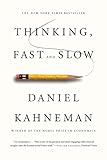
Thinking, Fast and Slow — Daniel Kahneman (2011)
The definitive popular account of behavioural economics — the field that documents how human decision-making systematically deviates from the rational model that classical economics assumed. Kahneman, who won the Nobel Prize in Economics, describes two systems of thinking: System 1 (fast, automatic, emotional) and System 2 (slow, deliberate, rational), and examines the specific ways that System 1’s biases — anchoring, loss aversion, overconfidence — produce predictable errors in judgement. The most important economics book of the last twenty years for understanding human behaviour.
Political Economy
Why Nations Fail — Daron Acemoglu and James A. Robinson (2012)
The most persuasive account of why some countries are wealthy and others are poor. The argument: it’s not geography, culture, or natural resources — it’s institutions. Countries that develop inclusive political and economic institutions (rule of law, property rights, distributed power, open access to markets) prosper; those that maintain extractive institutions (power concentrated in elite hands, rent-seeking instead of production, exclusion of the majority) stagnate. The historical case studies — from the Glorious Revolution to the partition of Korea — are extensive and well-argued.
The Wealth of Nations — Adam Smith (1776)
The foundational text of modern economics, and more nuanced than its reputation as capitalism’s charter suggests. Smith celebrated markets and competition, but he also criticised monopoly, argued that businessmen conspire against the public interest when given the chance, and worried about the human costs of the division of labour. Essential as a primary source and as evidence that the most important economic thinker is not the simple free-market advocate he has been made into.
Financial History
The Big Short — Michael Lewis (2010)
The most readable account of the 2008 financial crisis. Lewis follows the small group of investors — Steve Eisman, Michael Burry, and others — who recognised that the US housing market was a fraud and bet against it. In explaining why their bet paid off, Lewis explains the specific financial instruments (credit default swaps, CDOs, the rating agencies’ failures) that made the crisis possible. The result is simultaneously a thrilling narrative and the clearest explanation of the crisis’s causes available to non-specialist readers.
The Ascent of Money — Niall Ferguson (2008)
A financial history of the world — from Mesopotamian clay tablets to the 2008 crisis — that traces how money, credit, stocks, and insurance evolved and how each financial innovation created new possibilities for both prosperity and catastrophe. Ferguson is a narrative historian and the book is more accessible than most financial history.
Surveillance Capitalism
The Age of Surveillance Capitalism — Shoshana Zuboff (2019)
The most important analysis of the new economic form in which user behavioural data is the raw material for a new kind of market — prediction markets that trade in human futures. Zuboff argues that surveillance capitalism, exemplified by Google and Facebook, represents a fundamental threat to human autonomy because it depends on predicting and modifying behaviour rather than simply serving human needs. Demanding but essential for understanding the economy we actually live in.
Naked Economics (Recommended for Beginners)
Naked Economics by Charles Wheelan is the clearest introductory text for readers who want a traditional survey of economic concepts — supply and demand, market failures, trade, monetary policy — explained without jargon and with clear real-world examples. The best starting point for readers with no economics background.
Economics as a Way of Seeing
The deepest value of reading economics lies not in the acquisition of particular facts or theories but in the development of a distinctive way of seeing the world — a set of conceptual tools and habits of thought that, once acquired, permanently alter how one understands human behavior, social organization, and the countless decisions and exchanges that constitute economic life. Economics, at its best, offers not merely a body of knowledge but a lens, a way of analyzing and understanding the world that illuminates aspects of human affairs invisible to the untrained eye. The best economics books impart this way of seeing, teaching the reader to think in terms of incentives and trade-offs, to recognize the often hidden consequences of actions and policies, to understand how the uncoordinated decisions of countless individuals produce the large-scale patterns of economic life, and to perceive the economic dimension of human behavior that pervades far more of life than is commonly recognized. Once acquired, this economic way of thinking transforms one’s understanding of an enormous range of phenomena, revealing the incentives that drive behavior, the trade-offs that underlie every choice, the unintended consequences that flow from well-meaning interventions, and the complex order that emerges from the interaction of self-interested actors. This is why the study of economics is so valuable even to those who will never work as economists, for it provides a powerful and broadly applicable set of conceptual tools, a way of thinking clearly about how the world works that illuminates everything from personal decisions to public policy. The best economics books are valuable above all for imparting this way of seeing, for developing in the reader the economic habits of thought that permanently sharpen and deepen their understanding of human behavior and social life. To learn to think like an economist is to acquire a lens that, once possessed, can never be set aside, and that reveals dimensions of the world the untrained eye cannot perceive.
The Great Arguments
Economics is not a settled body of agreed-upon truth but a field of profound and continuing argument, and the best economics books introduce the reader to the great debates that have animated the discipline — between competing schools of thought, between rival visions of how economies work and how they should be governed — debates whose stakes extend far beyond the academy into the most consequential questions of public policy and political life. The history of economic thought is a history of argument, of contending theories and clashing visions: about the proper role of the state in the economy, about the virtues and failures of markets, about the causes of prosperity and poverty, about the management of recessions and the control of inflation, about the trade-offs between efficiency and equality. These arguments are not mere academic disputes but conflicts with enormous practical consequences, for the economic theories that prevail shape the policies that govern nations and determine the prosperity, security, and welfare of billions of people. The best economics books engage these great arguments, presenting the competing schools of thought and the rival visions that have contended within the discipline, and equipping the reader to understand the fundamental debates that underlie the economic policy disputes of the day. This engagement with argument is essential to a genuine understanding of economics, for the field cannot be reduced to a set of settled conclusions but must be grasped as an ongoing debate among competing perspectives, each with its insights and its limitations. By introducing the reader to the great arguments of economics, the best books provide not a false certainty but a genuine understanding, an appreciation of the contending visions and the real complexity of the questions at stake, and the capacity to think critically about the economic debates that shape public policy and political life. To understand economics is to understand its arguments, and the best books make the reader a participant in the great and continuing debate.
The Human Reality Behind the Numbers
For all its apparatus of data, models, and abstraction, economics is ultimately about human beings — their needs, choices, struggles, and welfare — and the best economics books never lose sight of this human reality behind the numbers, remembering that the abstractions of the discipline refer always to the concrete circumstances of actual human lives. There is a persistent danger in economics, the danger of becoming so absorbed in the mathematical models and statistical abstractions that the human reality they represent is forgotten, of treating the economy as a machine to be analyzed rather than as the vast and intricate web of human activity, need, and welfare that it actually is. The best economics writing resists this danger, keeping always in view the human beings behind the numbers, the real people whose lives are shaped by economic forces and policies, whose welfare is the ultimate subject and purpose of the discipline. This humane economics remembers that behind the unemployment statistics are real people without work, that behind the measures of poverty and inequality are real lives constrained by deprivation, that behind the abstractions of growth and productivity are the concrete circumstances of human flourishing or suffering, and that the purpose of economic understanding is ultimately to improve the human condition. The best economics books bring this human reality to life, using narrative, example, and a concern for the actual circumstances of human lives to ground the abstractions of the discipline in the concrete realities they represent, and reminding the reader that economics, properly understood, is a deeply human subject concerned with the welfare and flourishing of real people. This attention to the human reality behind the numbers is what distinguishes the best economics writing from the arid technicality of lesser work, and what makes the great economics books not merely informative but humane, illuminating the discipline’s ultimate subject and purpose: the welfare and the lives of human beings.
Reading Order
Start accessible: Freakonomics → Thinking, Fast and Slow → Why Nations Fail.
Financial crisis: The Big Short → The Ascent of Money → The Age of Surveillance Capitalism.
Historical depth: The Wealth of Nations → Why Nations Fail → Freakonomics.
Frequently Asked Questions
What is the best economics book for beginners?
Freakonomics by Steven Levitt and Stephen Dubner is the most accessible introduction to economic thinking — it applies the economic method (incentives, data, counter-intuitive conclusions) to questions that seem far from conventional economics (why do drug dealers live with their mothers? does sumo wrestling involve cheating?). Thinking, Fast and Slow by Daniel Kahneman is the best introduction to behavioural economics — the ways that human decision-making systematically deviates from the rational model. Naked Economics by Charles Wheelan is the clearest introductory text if you want a more traditional survey of economic concepts.
What is Why Nations Fail about?
Why Nations Fail by Daron Acemoglu and James A. Robinson argues that the wealth or poverty of nations is determined not by geography, culture, or natural resources but by the political and economic institutions they develop. 'Inclusive institutions' — rule of law, property rights, distributed power, open markets — produce prosperity. 'Extractive institutions' — concentrated power, elite rent-seeking, exclusion of the majority from economic participation — produce poverty and stagnation. The historical evidence they assemble, from the Glorious Revolution in England to the partition of Korea, is the most compelling version of this argument in popular economics.
What is The Big Short about?
The Big Short by Michael Lewis is the account of the small group of investors who recognised that the US housing market was a bubble built on fraudulent mortgage securities — and bet against it in the years before the 2008 financial crisis. Lewis follows Steve Eisman, Michael Burry, and others who made enormous profits when the crisis arrived, using their stories to explain the specific financial instruments (credit default swaps, collateralised debt obligations) that made the crisis possible. It is the most readable account of the 2008 financial crisis and the human failures that caused it.
What economics books are most important for understanding capitalism?
The Wealth of Nations by Adam Smith (1776) is the foundational text — not the capitalism cheerleader he is often portrayed as, but a nuanced analyst who criticised monopoly and the political capture of markets. The Age of Surveillance Capitalism by Shoshana Zuboff is the most important recent analysis of the new form of capitalism in which user data is the raw material. Why Nations Fail is the most persuasive account of the institutional conditions that allow capitalism to produce widespread prosperity rather than concentrating it. Capital in the Twenty-First Century by Thomas Piketty is the most important academic economics book of the last decade, though demanding.