Best Books Set in Africa: Essential Reading Across the Continent
The best books set in Africa — from Things Fall Apart and Half of a Yellow Sun to Disgrace and Americanah. Essential African fiction and literature from across the continent.

African literature is one of the richest and most diverse bodies of writing in the world — encompassing the traditions of West, East, Central, and Southern Africa; fiction in English, French, Portuguese, and African languages; the experience of colonialism and its aftermath; and the full range of human experience across a continent of over a billion people. The novels listed here represent a fraction of African literary achievement, focused on the most widely available and widely read works in English.
Things Fall Apart by Chinua Achebe (1958)
The foundational novel of African literature in English — and one of the most important novels of the twentieth century. Okonkwo, a respected Igbo warrior and farmer in pre-colonial Nigeria, watches as the world he has built — through effort and will, escaping the disgrace of his idle, improvident father — is destroyed by the arrival of British missionaries and colonial administrators. The novel is both the definitive account of a culture at the moment of European contact and a profound psychological portrait of a man whose strength is also his fatal rigidity. Required reading; the starting point for all African fiction.
Half of a Yellow Sun by Chimamanda Ngozi Adichie (2006)
The finest novel about the Nigerian civil war — and one of the finest war novels of recent decades. Adichie follows three characters through the Biafran War of 1967–70, in which the Eastern Region of Nigeria declared independence and was suppressed at devastating human cost. The novel is deeply researched, emotionally devastating, and written with the formal confidence of a major novelist at the height of her powers. Adichie restores to historical memory a war that has been largely forgotten outside Nigeria.
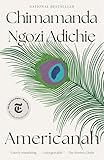
Americanah by Chimamanda Ngozi Adichie (2013)
Adichie’s most ambitious novel — a love story, a novel of ideas, and an extended meditation on race and identity. Ifemelu leaves Nigeria for America to study, and encounters for the first time the experience of being Black in a country where race organises everything. Obinze, her first love, goes to London and finds a different version of the same encounter with European attitudes towards African immigrants. The novel is the most acute account of how Africans experience race in the West — how Blackness, which was not their primary identity at home, becomes inescapable abroad.
Disgrace by J.M. Coetzee (1999)
The finest South African novel of the post-apartheid era — a Booker Prize winner that follows David Lurie, a Cape Town professor who loses his position after an affair with a student, and retreats to his daughter Lucy’s smallholding in the Eastern Cape, where a violent attack forces both of them to reckon with the new South Africa. Coetzee’s novel is bleakly honest about the legacy of apartheid — the violence it created, the adjustments white South Africans must make, the impossibility of full atonement — and refuses all consolation. One of the most morally serious novels of the past thirty years.
No Longer at Ease by Chinua Achebe (1960)
Achebe’s second novel — a direct sequel to Things Fall Apart following Okonkwo’s grandson Obi, who returns from studying in England to take a civil service post in Lagos and finds himself caught between two worlds: the expectations of his Igbo community and the corruption of the colonial bureaucracy. The novel is Achebe’s portrait of the first generation of educated Africans who entered colonial institutions — how they were simultaneously promised opportunity and denied dignity, and how the compromises they made destroyed them.
Arrow of God by Chinua Achebe (1964)
Many critics’ choice as Achebe’s finest novel — set in the same Igbo Nigeria as Things Fall Apart but following the collision between the priest Ezeulu, Chief Priest of the god Ulu, and the British colonial administration that wants to use him as an instrument of control. The novel is Achebe’s most psychologically complex portrait of a great man destroyed by pride and circumstance, and his most nuanced account of how colonial power corrupted even those who resisted it.
Heart of Darkness by Joseph Conrad (1899)
The most famous European novel set in Africa — and the most contested. Marlow’s journey up the Congo River to find the ivory trader Kurtz is Conrad’s meditation on colonialism and the ‘darkness’ at the heart of European civilisation. As Chinua Achebe argued, the novel dehumanises Africans and uses Africa as a psychological backdrop rather than a real place; it remains essential reading as the text against which African literature defined itself and as an honest account of how European colonialism imagined the continent it was destroying.
A Bend in the River by V.S. Naipaul (1979)
Set in a fictional central African country (based on Mobutu’s Congo), the novel follows Salim, an Indian trader who sets up a shop in a town at a bend in the river and watches the post-independence African state collapse under authoritarian rule, corruption, and the gap between the rhetoric of the liberation movement and its reality. Naipaul’s Africa is desolate and his perspective on post-colonial African politics is controversial (many African critics have found it condescending), but the novel is one of the most unflinching accounts of post-colonial political failure in any language.
The Grass Is Singing by Doris Lessing (1950)
Doris Lessing’s debut novel — set in Southern Rhodesia (now Zimbabwe), where a white farm couple’s marriage deteriorates under the pressures of poverty, isolation, and the racial tensions of the colonial system. The novel follows the psychic disintegration of Mary Turner and her complex, forbidden relationship with Moses, a Black farm worker. Lessing’s portrait of white colonial society — its privileges, its anxieties, and its inability to sustain the self-image it requires — is one of the sharpest in Southern African fiction.
Reading African Literature
African literature rewards the reader who brings some context: the specific histories of colonialism, independence, civil war, and post-colonial politics in individual countries make the fiction richer. Begin with Things Fall Apart — it provides both a foundational text and a model for reading African fiction on its own terms rather than as a response to European expectations. Continue with Adichie’s work, which is the most immediately accessible; then Coetzee, then Achebe’s other novels. The continent’s literary wealth is vast; this list is a beginning, not an end.
Frequently Asked Questions
What is the best novel set in Africa?
Things Fall Apart (1958) by Chinua Achebe is the most widely read and most influential novel set in Africa — the story of Okonkwo, an Igbo warrior in pre-colonial Nigeria, whose world is destroyed by the arrival of European missionaries. It is both the foundational text of African literature in English and one of the most important postcolonial novels in the world. Half of a Yellow Sun by Chimamanda Ngozi Adichie, Disgrace by J.M. Coetzee, and Americanah are equally essential for different aspects of the continent's literary landscape.
Who are the most important African novelists?
The most important African novelists writing in English include Chinua Achebe (Nigeria), Chimamanda Ngozi Adichie (Nigeria), J.M. Coetzee (South Africa), Ngugi wa Thiong'o (Kenya), Nadine Gordimer (South Africa), and Doris Lessing (Zimbabwe/UK). In French, the major figures include Ousmane Sembène (Senegal) and Ahmadou Kourouma (Ivory Coast). African literature is extraordinarily diverse — the continent has fifty-four countries and hundreds of literary traditions — and no single list can represent it fully.
What is Half of a Yellow Sun about?
Half of a Yellow Sun (2006) by Chimamanda Ngozi Adichie follows three characters across the Nigerian civil war of 1967–70 — the Biafran War — in which the Eastern Region of Nigeria declared independence as Biafra and was suppressed by federal forces at the cost of between one and three million lives, many from famine. The novel is the most fully realised account of the Biafran War in English literature, rendered through the perspectives of Ugwu (a village boy become a houseboy to a radical professor), Olanna (the professor's girlfriend), and Richard (a British journalist in love with Olanna's twin sister). One of the finest war novels of the past twenty years.
Is Heart of Darkness problematic?
Heart of Darkness (1899) by Joseph Conrad is both one of the most important English-language texts about colonialism and, as Chinua Achebe argued influentially in 1977, a deeply problematic novel that dehumanises Africans and uses Africa as a backdrop for a European psychological drama rather than treating it as a real place with real people. Achebe's essay 'An Image of Africa' made this argument so persuasively that the novel is now taught alongside it. It is worth reading as a historical document of how Europe imagined Africa and as the target against which African literature positioned itself; it should not be read as the definitive account of Africa.