Best Books in Translation: Essential World Literature
The best books in translation — from One Hundred Years of Solitude and Crime and Punishment to My Brilliant Friend and The Name of the Rose. Essential world literature.
The literature available in English translation constitutes the richest literary tradition in the world — not because translation is perfect, but because the best translators make available works that could not otherwise exist in English. Reading in translation requires a modest act of trust: trust that the translator has made good decisions about the trade-offs between fidelity and readability, between the foreignness of the source text and the fluency of the target language. That trust is almost always rewarded.
The books listed here are the essential works of translated literature — the novels that have most shaped the literary tradition and that offer the greatest rewards to English-language readers.
The Essential List
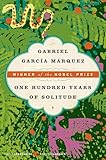
One Hundred Years of Solitude — Gabriel García Márquez, trans. Gregory Rabassa (1967)
The novel that made Latin American literature visible to the world. The Buendía family’s century in Macondo — its founding, its growth, its repetitions and its eventual dissolution — is told with a matter-of-fact deployment of miraculous events (levitations, prophetic dreams, a rain of yellow flowers) that defined magical realism as a literary mode. García Márquez said that Gregory Rabassa’s translation was better than the original. Whether or not this is true, Rabassa’s English captures the novel’s essential tone: a biblical gravity inflected with comedy. The most influential novel in translation of the twentieth century.
Crime and Punishment — Fyodor Dostoevsky, trans. Pevear and Volokhanshy (1866)
Raskolnikov’s murder of the pawnbroker Alyona Ivanovna — which he has theorised as the act of an ‘extraordinary person’ above ordinary moral law — and his subsequent psychological disintegration is one of the great studies of guilt, pride, and the failure of pure reason as a moral framework. Dostoevsky’s prose is urgent and relentless; the Pevear and Volokhanshy translation preserves this urgency better than older versions. The most accessible of Dostoevsky’s novels and the best introduction to his work.
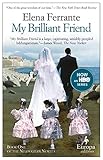
My Brilliant Friend — Elena Ferrante, trans. Ann Goldstein (2011)
The opening volume of the Neapolitan Novels and the most important literary fiction of the 2010s. Elena and Lila’s friendship — competitive, obsessive, mutually transformative — is embedded in a Naples neighbourhood whose poverty, violence, and particular constraints on women’s lives are as present as the two central characters. Ferrante’s prose, in Ann Goldstein’s translation, is dense and immediate; the narrative voice carries the retrospective intelligence of an old woman describing a life she is still trying to understand. Read all four volumes.
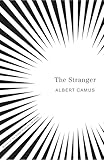
The Stranger — Albert Camus, trans. Matthew Ward (1942)
The most read French novel of the twentieth century and the most concentrated statement of absurdist philosophy in fiction. Meursault’s narration of his mother’s death, his subsequent beach romance, his killing of an Arab on a beach, and his trial — narrated in the same flat, affectless tone throughout — is both a philosophically serious argument about the indifference of the universe and a perfectly constructed novella. Matthew Ward’s 1988 translation (‘Mother died today’) is preferred to Stuart Gilbert’s earlier version (‘Maman died today’) for its accuracy of register.
The Name of the Rose — Umberto Eco, trans. William Weaver (1980)
An intellectual thriller set in a medieval Italian monastery, where Brother William of Baskerville (based on William of Ockham and named for Sherlock Holmes) investigates a series of murders connected to a forbidden book. Eco’s novel is simultaneously a medieval whodunit, an essay on semiotics, a meditation on heresy and orthodoxy, and a love letter to the library as a repository of forbidden knowledge. The most intellectually ambitious novel in translation of the 1980s.
Anna Karenina — Leo Tolstoy, trans. Pevear and Volokhanshy (1878)
Tolstoy’s masterpiece and, for many readers, the greatest novel ever written. Anna’s love for Vronsky — which costs her marriage, son, and position — is told in parallel with Levin’s more grounded story of farming, faith, and domestic happiness; the contrast illuminates what each protagonist is reaching for and why both roads are difficult. The Pevear and Volokhanshy translation (2000) is the best currently available.
The Master and Margarita — Mikhail Bulgakov, trans. Burgin and O’Connor (1967)
The great Soviet satirical novel, suppressed for decades. The Devil’s visit to Moscow, accompanied by a demonic retinue, results in chaos among the Soviet literary establishment; the parallel narrative of Pontius Pilate’s encounter with Yeshua (Jesus) provides the moral and theological framework. Bulgakov’s novel is funny, terrifying, and deeply serious; its portrait of the Soviet literary bureaucracy remains one of the most accurate and corrosive accounts of intellectual compromise under authoritarian rule.
The Vegetarian — Han Kang, trans. Deborah Smith (2007)
The Korean novel that brought Han Kang to international attention. Yeong-hye’s decision to stop eating meat — triggered by a dream — is presented through three perspectives (her husband, her brother-in-law, her sister) that illuminate different aspects of her defiance. The novel is a study of a woman who refuses, without ideology or explanation, to participate in systems that require her compliance. Deborah Smith’s translation is controversial in Korean literary circles for its liberties; it is also remarkably powerful in English.
The Unbearable Lightness of Being — Milan Kundera, trans. Michael Henry Heim (1984)
Kundera’s meditation on love, politics, and metaphysics, set in Prague during and after the 1968 Soviet invasion. Tomas and Tereza’s love affair — and the contrasting relationships of Sabina and Franz — is structured around Kundera’s central philosophical opposition: lightness (freedom, irresponsibility, non-attachment) versus weight (commitment, consequence, repetition). The novel refuses the resolution that its characters’ love affairs seem to demand; it is the most philosophically serious popular novel of its era.
The Wind-Up Bird Chronicle — Haruki Murakami, trans. Jay Rubin (1994)
Murakami’s most ambitious novel and his most explicitly political — connecting the quiet suburban mystery of Toru Okada’s lost cat and missing wife to the historical violence of Japan’s military past in Manchuria. Jay Rubin’s translation is the best available; Murakami himself has praised it. The most rewarding of Murakami’s novels for readers willing to engage with its considerable length and digressive structure.
On Translation Quality
The best translation is the one that makes the original accessible without making it feel like a translation. For Russian literature: Pevear and Volokhanshy (Dostoevsky, Tolstoy, Bulgakov). For French: Matthew Ward (Camus), Lydia Davis (Proust, Flaubert). For Italian: Ann Goldstein (Ferrante), William Weaver (Eco, Calvino). For Japanese: Jay Rubin (Murakami), Edwin McClellan. For Korean: Deborah Smith (Han Kang) and Bora Kim (for newer work).
Frequently Asked Questions
What is the best book in translation to start with?
My Brilliant Friend (2011) by Elena Ferrante is the best starting point for readers new to translated fiction — the first volume of the Neapolitan Novels, following Elena and Lila's friendship from childhood in a Naples neighbourhood, is immediately accessible and gripping while being as psychologically complex as any literary fiction. For readers happy to begin with a classic, The Stranger (1942) by Albert Camus is short, perfectly constructed, and remains one of the most readable of the canonical translated novels.
Is reading books in translation worth it?
Reading books in translation is not merely worth it — it is essential to any serious reading life. The most important novels of the twentieth century include works in Spanish (García Márquez, Borges), Russian (Tolstoy, Dostoevsky), French (Camus, Proust), Italian (Ferrante, Calvino), German (Kafka, Mann), Japanese (Murakami), and Norwegian (Knausgård). English-language fiction, however strong, covers only a fraction of the literary tradition available. The question of translation quality is real but manageable: for most major works, excellent translations exist, and contemporary translators are better trained and better resourced than their predecessors.
Which translation should I read for Crime and Punishment?
The Pevear and Volokhanshy translation (Vintage, 1993) is currently considered the best English translation of Crime and Punishment — more faithful to Dostoevsky's original tone (energetic, slightly rough-edged) than older versions, which tended to smooth and literarise his prose. The David McDuff translation (Penguin Classics) is also excellent and more affordable. Avoid older translations that use Victorian diction; Dostoevsky's Russian is direct and urgent, and good translations reflect this.
What is My Brilliant Friend about?
My Brilliant Friend (2011) by Elena Ferrante is the first volume of the Neapolitan Novels — four novels following Elena Greco and Lila Cerullo from their childhood in a poor Naples neighbourhood in the 1950s through more than sixty years of friendship, enmity, and mutual transformation. The series is as much about Naples and class as about the two women: the city's violence, the neighbourhood's poverty, and the specific constraints on women's intellectual and personal ambitions in postwar Italy are as present as the psychological portrait of the central friendship. The most important literary fiction published in the 2010s.