Kino, a poor pearl diver in Mexico, finds the Pearl of the World—and everything unravels. A fable in the tradition of the Bible and La Fontaine, The Pearl is Steinbeck's most concentrated exploration of how the dream of wealth destroys those who have nothing.
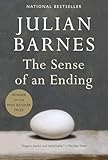
Tony Webster, a comfortably divorced man in late middle age, receives a small bequest from the mother of his first serious girlfriend that forces him to re-examine the version of his youth he has been living with for forty years — and to confront the gap between what he remembers and what he actually did.
A young British backpacker follows a hand-drawn map to a secret beach in Thailand, joining an isolated community of travellers who believe they have found paradise — before the illusions begin to crack.
Charlie Gordon, a man with intellectual disabilities, undergoes experimental brain surgery that dramatically increases his intelligence — and must grapple with the emotional and social consequences.
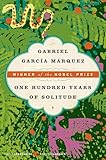
Gabriel García Márquez's Nobel Prize-winning epic follows the Buendía family through seven generations in the mythical town of Macondo, blending magical and real with luminous prose.
A successful judge who has lived a conventional, comfortable life falls ill and, in the process of dying, confronts the question of whether his life has been good — and discovers that it has not.
The Ramsay family's two visits to their summer house in the Hebrides, separated by ten years and the First World War — and Lily Briscoe's attempt to paint what cannot be painted.
Based on the true story of Grace Marks, an Irish immigrant in Canada convicted of murdering her employer and his housekeeper in 1843. A young psychiatrist interviews Grace in prison — the novel is his attempt to determine whether she is guilty, innocent, or something more complicated.
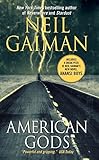
Neil Gaiman's mythological fantasy follows ex-convict Shadow through a road trip across America with the god Odin, as old gods prepare for war against new gods born of technology and media.
Étienne Lantier arrives at a northern French coalmine and finds a community of miners ground down by poverty and despotism. He organises a strike. The strike fails. The novel follows the miners' world with documentary precision — the mine, the housing, the pub, the hunger — and arrives at a vision of revolutionary potential coiled beneath suffering.
Bjartur of Summerhouses has spent eighteen years in bondage to pay for his croft. Now free, he will be independent or die. Through drought, famine, debt, and the deaths of those he might have loved, Bjartur's stubbornness is heroic and catastrophic in equal measure. Laxness's masterpiece—the great Icelandic novel, and the reason he won the Nobel Prize.
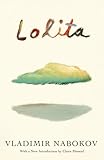
Humbert Humbert's confession of his obsession with and abuse of twelve-year-old Dolores Haze — told in prose of devastating beauty by a narrator who is both brilliant and monstrous.
Two hundred and fifty myths from the creation of the world to the deification of Julius Caesar, unified by the theme of transformation. Apollo and Daphne, Narcissus and Echo, Pygmalion, Actaeon, Orpheus and Eurydice, the Fall of Icarus — the source of more subsequent Western art than any other single text.
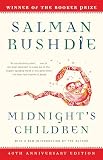
Born at the exact moment of Indian independence, Saleem Sinai discovers he is telepathically connected to the 1,001 children born in the first hour of a free India — and that his own life is fatally, inextricably entwined with the history of his nation.
A single day in the life of Clarissa Dalloway, preparing a party in postwar London — intercut with the experiences of Septimus Warren Smith, a shell-shocked veteran she will never meet.
The fall of Satan, the creation of the world, the temptation and fall of Adam and Eve — in twelve books of blank verse written by a blind man from memory and dictation. Milton's stated aim was to 'justify the ways of God to men', but the poem's Satan is so compelling that Blake argued Milton was 'of the Devil's party without knowing it'.
Chimamanda Ngozi Adichie's debut novel follows fifteen-year-old Kambili Achike growing up in Nigeria with a wealthy, devoutly Catholic father who is publicly generous and privately tyrannical — a study of silence, religious authority, family violence, and the flowering of a young woman's inner life.
Bertie Wooster decides to handle matters himself for once, without Jeeves. He will sort out Gussie Fink-Nottle's love life and Tuppy Glossop's engagement without the butler's assistance. The resulting catastrophe — culminating in a prize-giving speech at Market Snodsbury Grammar School — is the funniest extended sequence in English comic fiction.
Shūsaku Endō's masterpiece of faith and doubt. A young Portuguese Jesuit smuggles himself into seventeenth-century Japan during the brutal persecution of Christians, only to confront the apparent silence of God in the face of unbearable suffering.
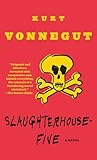
Kurt Vonnegut's anti-war masterpiece follows Billy Pilgrim, who has become 'unstuck in time' and moves non-linearly through his experiences as a prisoner of war in Dresden and his later suburban American life.
Iris Chase, elderly and alone, narrates the story of her family's collapse over the 20th century. Nested within her memoir is her dead sister Laura's posthumous novel — and within that, a pulp science-fiction story told by clandestine lovers. The Booker Prize winner 2000.
Bertie Wooster is dispatched to Totleigh Towers, home of the terrifying Roderick Spode and the magistrate Sir Watkyn Bassett, to steal a silver cow creamer and assist various friends with their tangled romantic lives. Only Jeeves can navigate the catastrophe that follows.
Billy Parham, sixteen, traps a pregnant wolf in New Mexico and decides to return her to Mexico — three journeys across the border over a decade, each one costing more than the last.
Set in the 1960s Netherlands, The Safekeep follows Isabel, a fastidious, controlled woman whose carefully ordered life begins to unravel when her brother's girlfriend Isabelle arrives and starts disturbing both her possessions and her sense of self — forcing a confrontation with questions about how the Dutch acquired the objects in their homes after World War II.