Ngũgĩ wa Thiong'o's landmark debut, the first English-language novel by an East African writer. Through the hopes of young Njoroge, who longs for education, it tells of a Kenyan family and community torn apart by the Mau Mau uprising and the violence of British colonial rule.
Thomas Bernhard's part-memoir, part-fiction account of a friendship. While confined to a hospital, the narrator reflects on his bond with Paul Wittgenstein — nephew of the philosopher — a brilliant, doomed man given to madness, in a mordant, obsessive meditation on illness, friendship, genius, and Austrian society.
Vienna in the late 1950s: four young people from different classes terrorise random strangers in a park, acting out their rage against an Austria that refuses to acknowledge its Nazi past.
In Tokyo in 1984, a fitness instructor named Aomame and a maths teacher and aspiring novelist named Tengo are on parallel tracks that gradually converge. Aomame assassinates abusive men; Tengo ghost-writes a novel about a world with two moons. Both become entangled with a sinister religious cult. Murakami's most ambitious novel — nearly a thousand pages, three books, a full reimagining of what a Murakami novel can hold.
James Bray, a British colonial official who was expelled from a newly independent African country for supporting the independence movement, is invited back ten years later to advise the government. He discovers the revolutionary leaders have become the new oppressors. Gordimer's most geopolitically ambitious novel.
A California oil millionaire obsessed with immortality, his entourage, and a visiting English scholar encounter evidence that an eighteenth-century Earl found the key to extending life indefinitely — with grotesque consequences.
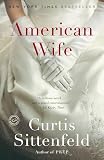
Curtis Sittenfeld's acclaimed novel loosely inspired by Laura Bush. Alice Lindgren, a quiet Midwestern librarian, marries into a powerful, wealthy family and finds herself, improbably, the First Lady of the United States — a sympathetic, psychologically rich exploration of conscience, complicity, and a private woman in a public life.
Stan and Joy Delaney — retired tennis coaches and parents of four adult children — seem to have the perfect marriage. Then Joy disappears, and each of her children has a theory about what happened. Told across multiple perspectives over the year before and after Joy's disappearance, the novel dissects a family's myths about itself.
Sy Baumgartner, a 71-year-old philosophy professor, has spent nine years living in the aftermath of his wife Anna's death in a swimming accident — still surrounded by her manuscripts, her presence in every corner of the house, and the ongoing conversation with her that he cannot stop having.
A novelist travels to Kyoto to hear the New Year's bell and reconnect with his former lover, now a celebrated painter. But she has sent her young student in her place—and the student has her own agenda. The novel becomes a story of obsession, revenge, and the destruction that art can carry. Kawabata's darkest novel.
Kerouac retreats to Lawrence Ferlinghetti's cabin in Big Sur to escape fame and alcohol, fails to escape either, and has a breakdown. His most autobiographically honest novel is also his darkest — the romantic road narrative collapsed into the specific hell of alcoholism and celebrity.
Greta transcribes sex therapy sessions in Hudson, New York, and becomes obsessed with a patient she has never met — a Swiss woman she calls Big Swiss — until they meet through a dog, and things become extremely complicated.
Nathan Glass, a retired insurance salesman who has moved to Brooklyn to die in peace, gradually finds himself drawn back into life through his nephew Tom, a failed academic working in a bookshop, and a series of warm, eccentric characters who make Brooklyn feel like the best possible place to rediscover the will to live.
Pilar and her childhood friend reunite in Spain after eleven years apart. He has become a spiritual teacher; she has become practical and cautious. As they travel through France and Spain together, the question of whether to love — really love, with all the vulnerability that requires — becomes the central conflict. Coelho's most romantic novel.
A young Scottish woman goes to occupied France during World War II ostensibly to find her missing RAF boyfriend, but discovers more about herself and the French under occupation than she expected. The third volume of Faulks's loose French trilogy, following Birdsong.
A group of intellectuals and eccentrics gather at Crome, a country house, for a summer of endless conversation about art, philosophy, sex, and the nature of reality — while accomplishing nothing whatsoever.
An Andean village where three people have disappeared. A corporal and his assistant investigate: the suspects are Shining Path guerrillas, but the mystery deepens into something older and stranger—the Andean world of pishtacos (fat-extracting demons) and ancient violence. Vargas Llosa's novel about Peru's civil conflict as seen from the highlands.
In a small unnamed country, death simply stops. No one dies. The immediate consequences—the chaos for funeral homes, hospitals, insurance companies, and the Church—are comedic and precise. Then death resumes, but only announces her arrivals by violet letter seven days in advance. In the second half, death falls in love with a cellist who refuses to die.
Edith Howland keeps a diary. In it, her son Cliffie is successful, married, fulfilling his potential. In reality, Cliffie is a parasitic failure who has moved back into her house and contributes nothing. Her husband has left her. Her diary diverges from reality and then departs from it altogether — becoming not delusion but an act of private creation, a novel within the novel. Highsmith's most feminist work and one of her most devastating.
Elizabeth Costello is an elderly Australian novelist who travels to give lectures—on animal rights, on evil, on the existence of the good—and returns home to her son's discomfort. The novel is a series of lectures that Coetzee himself gave, presented as fiction; the distinction between author and character is deliberately uncertain.
An unnamed man is buried. The novel is the story of his life told backward from that grave — marriages, affairs, children, his body's progressive failures, the operations that punctuate his later years. Roth's meditation on mortality is his most compressed and perhaps most personal later novel.
Jonathan Safran Foer's acclaimed debut. A young American named Jonathan travels to Ukraine to find the woman who may have saved his grandfather from the Nazis, guided by a hilariously mistranslating young guide named Alex — a novel that braids comedy, history, and the weight of the Holocaust.
Joyce's final novel is written in a multilingual dream-prose of puns, portmanteaux, and allusions, narrating the sleep and dream of HCE in a Dublin pub. The greatest single act of formal ambition in the novel's history.
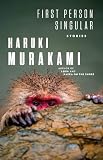
Eight stories, each narrated by a reflective, often-lonely man who keeps blurring into Haruki Murakami himself. Memory, jazz, the Beatles, baseball and a name-stealing talking monkey weave through a late-career collection preoccupied with aging, identity, and the elusiveness of the past.