Chieko, a merchant's daughter in Kyoto, discovers she has a twin sister—Naeko, who was given away and grew up in poverty in the mountains. The seasons of Kyoto (cherry blossoms, gion festival, autumn maples, winter snow) structure the novel as the two sisters negotiate whether to acknowledge each other. Kawabata's most accessible work.
Isabel Archer, a spirited American woman, inherits a fortune and goes to Europe seeking freedom and experience — only to make a catastrophically wrong marriage. James's defining novel is the supreme portrait of a consciousness discovering the limits of its own idealism.
On a birthday dinner that her partner misses, Irina is tempted to kiss Ramsey, a charismatic snooker player. The novel follows both paths: the life she lives if she kisses him, and the life she lives if she doesn't.
The third Cemetery of Forgotten Books novel returns to Daniel Sempere and reveals the backstory of Fermín Romero de Torres — his imprisonment in Montjuïc Castle during the early Franco years — connecting the series' mysteries to the specific historical violence of the Spanish Civil War's aftermath.
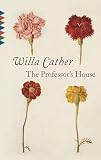
Willa Cather's subtle, melancholy novel of middle age. Professor Godfrey St. Peter, having achieved every success, finds himself unable to leave his old study and strangely estranged from his own life — a quiet meditation on disillusion, memory, and the lost promise of youth.
On Egdon Heath, Clym Yeobright returns from Paris to improve the lives of the local people through education. His plans collide with the ambitions of Eustacia Vye, who yearns to escape the heath, and with the web of desire and disappointment that connects them both to others.
Sebastian Barry's Booker-shortlisted novel of memory and Irish history. Roseanne McNulty, nearing one hundred and confined for decades in a mental hospital, secretly writes the story of her life, while her psychiatrist investigates her past — two accounts that circle a buried tragedy of love, faith, and a punishing society.
Tookie, a Native American woman who works at a Minneapolis independent bookshop (based on Erdrich's own Birchbark Books), is haunted by the ghost of the most annoying customer who ever died. Set during 2020 — the pandemic, the murder of George Floyd, and the uprising that followed in the city where Erdrich lives.
Anton Waker, who has spent years laundering documents and facilitating his family's criminal enterprises, tries to go straight by taking an office job — only to find that the past is not easily outrun. Mandel's second novel is more overtly thriller-shaped than her debut, with multiple timelines and unreliable perspectives dissolving into a portrait of complicity.
A graduate student discovers a mysterious book in his university library that contains a story about his own childhood — and is drawn through it into an underground world of stories, doors, and a sea that smells of honey and blood.
A three-week love affair between Leo Percepied and Mardou Fox, a young Black woman, in San Francisco's North Beach — narrated in the long, breath-driven sentences Kerouac developed from jazz improvisation. Written in three nights, his most formally concentrated novel.
Dejima, 1799: the Dutch trading post is the only window between Japan and the Western world. Clerk Jacob de Zoet arrives hoping to restore his family's fortune and falls in love with a Japanese midwife student. Mitchell's most disciplined novel is a masterwork of historical fiction.
Thessaloniki (Salonika) in the early twentieth century: a city of Greeks, Jews, Turks, and refugees, one of the most cosmopolitan cities in the Mediterranean. The Thread follows two families — one Greek Orthodox, one from the city's ancient Jewish community — across eight decades of fire, war, occupation, and transformation, as the city loses its plurality and becomes something more singular. Hislop's most historically ambitious novel.
Lima's Leoncio Prado Military Academy: the cadets live under brutal hierarchy, organize theft rings, and maintain codes of silence. When a cadet is killed, someone informs. The search for the informer consumes the novel. Vargas Llosa's debut—written at twenty-six—was burned publicly in Peru and made him internationally famous.
As the Greek fleet sails home from the ruins of Troy, the enslaved healer Ritsa accompanies the doomed prophet Cassandra toward Mycenae and the vengeful queen Clytemnestra, in Pat Barker's fierce conclusion to her Women of Troy trilogy.
A sequel to The Silence of the Girls, following Briseis and the Trojan women through the aftermath of the war's end as the Greeks are stranded on the beach, unable to sail home, and old wounds refuse to heal.
Athens, 1941. The German occupation begins, and with it the great famine in which hundreds of thousands of Greeks die. Themis, a young woman from a divided Athens family — some Communist, some right-wing, all suffering — lives through the occupation, the resistance, the civil war that follows, and the decades of political fracture that define 20th-century Greek history. Hislop's most politically complex novel, spanning sixty years of Greek history.
Tom Jones, a foundling of unknown parentage raised by the good-natured Squire Allworthy, is in love with the beautiful Sophia Western. Expelled from the estate, he travels toward London through a comic series of adventures, misidentifications, and encounters with English society at every level. Fielding's masterpiece and the most important comic novel in English before Dickens.
Danny and his friends—the paisanos of Monterey's Tortilla Flat district—live outside the conventional economy, drinking wine, pursuing women, and avoiding work. Steinbeck's first commercial success structures their adventures as a mock-Arthurian legend, with Danny's house as Camelot and the paisanos as his errant knights.
Horselover Fat — a thinly veiled version of Philip K. Dick — receives a beam of pink light that reveals divine information to him in 1974. VALIS is Dick's attempt to rationalise this experience through science fiction, Gnostic theology, and painful self-examination. Part novel, part theological treatise, part mental breakdown.
Veronika is twenty-four, beautiful, and has everything — and decides to kill herself because her life seems to be going nowhere different from where it already is. She survives, is confined to a psychiatric facility, and told she has only days to live. In the face of certain death, she begins to actually live for the first time.
A young man calling himself Victor Chmara has fled Paris to a lake town near the Swiss border, avoiding a danger he can't quite name. He falls in with a beautiful actress and her circle of summer people. Twenty years later, he reconstructs what happened that summer—and what he lost when it ended. Modiano's most romantic novel.
Georges Perec's haunting, formally daring memoir-novel. Alternating chapters braid Perec's fragmentary memories of a childhood shadowed by the Holocaust with a chilling fictional allegory of an island society obsessed with sport — two narratives that converge on the unspeakable horror at the heart of his lost family.