Thirteen-year-old Joel Harrison Knox travels to a decaying Louisiana mansion to find the father he has never met, and discovers instead a world of eccentrics, decay, and his own nascent desires. Capote's debut is the definitive Southern Gothic coming-of-age novel.
Cayce Pollard, a coolhunter with a pathological sensitivity to corporate branding, is hired to trace the source of mysterious film footage appearing anonymously online — footage that obsesses millions of people worldwide.
A roman à clef of London intellectual and artistic life in the 1920s, following dozens of characters through parties and arguments and affairs, structured like a fugue in prose with multiple themes developed simultaneously.
Mickey Sabbath is 64, a former puppeteer, recently fired, grieving his mistress of thirteen years who has died of cancer. He is considering suicide. The novel is his furious, obscene, grief-saturated attempt to make sense of a life spent in obsessive pursuit of women and pleasure — and the losses that have accumulated.
A time-travel investigator in the twenty-fifth century investigates an anomaly that appears across centuries: 1912 British Columbia, 2020 New York, 2203 on the moon. Mandel's most formally ambitious novel braids pandemic themes with time-travel structure into a meditation on art, simulation, and what human beings owe each other across time.
Shep Knacker has saved his whole life for an early retirement in a developing country — until his wife Glynis is diagnosed with a rare and ruinously expensive cancer. A devastating examination of the American healthcare system through the lives of ordinary people it destroys.
Two strangers meet on a train: Guy Haines, an architect trying to escape his unhappy marriage, and Charles Bruno, a wealthy charming sociopath. Bruno proposes a perfect crime — they will swap murders, each killing the other's problem person. Guy refuses, but Bruno kills his wife anyway, then demands Guy complete the bargain. Highsmith's debut novel and the template for her entire career: the complicity between the guilty and the innocent, the creeping contamination of violence.
Eleven interconnected stories set in Firozsha Baag, a Parsi apartment complex in Bombay — a community portrait that introduces many of the themes and the compassionate vision that would define Mistry's later novels.
K. arrives in a village dominated by an enormous castle and attempts to gain access to the authorities who have apparently summoned him as a land surveyor — an attempt that proves endlessly deferred, interrupted, and obscured.
Fabrizio del Dongo, a young Italian nobleman, wanders onto the field of Waterloo (without understanding what is happening), flees various entanglements, falls in love with the actress Marietta, and becomes caught in the political intrigues of the court of Parma, where his aunt, the Duchess Sanseverina, rules through her relationship with the Count.
Styron's Pulitzer Prize-winning novel inhabits the first-person voice of Nat Turner, leader of the 1831 Virginia slave rebellion, as he awaits execution. The most controversial American novel of the 1960s — attacked by ten Black writers as a white man's appropriation of Black history — it is also a work of extraordinary formal achievement and moral seriousness.
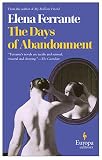
Olga's husband of fifteen years announces he is leaving her for a younger woman. The novel follows the weeks that follow — the rage, the dissolution, the terrifying loss of self that abandonment can produce in someone whose identity was built around a partnership. Ferrante's most concentrated and most visceral novel.
Ray Smith and the poet Japhy Ryder climb mountains, attend rucksack parties, and discuss Buddhism — embodying the 'rucksack revolution' Kerouac imagined for young Americans who had dropped out of the postwar dream. More focused and more spiritually serious than On the Road.
Two elderly cousins and a boy go to live in a treehouse in a chinaberry tree rather than conform to the small town's expectations, and the town decides to bring them down. Capote's most gentle novel is a celebration of eccentricity, chosen family, and the prose is some of the most beautiful he ever wrote.
Lily Bart, beautiful, brilliant, and financially precarious, navigates New York society's marriage market and slowly loses ground in a game she was not born to win.
Dick Young, staying at his friend's house in Cornwall, takes an experimental drug that sends him back to fourteenth-century Cornwall — where he becomes obsessed with the lives of a long-dead woman and her circle.
Ludvik Jahn writes a postcard joking about the Party to impress a girl; the Party expels him, sends him to a labour battalion, and destroys his life — for a joke. Kundera's first novel is his most political: a study of totalitarianism's inability to tolerate irony, and of revenge as a futile response to power.
A radical reimagining of the life of Christ — depicting Jesus as a man torn between the flesh and the spirit, tempted on the cross by a vision of the ordinary human life he might have lived.
Sarah Waters's slow-burning Gothic novel. In postwar England, a country doctor becomes entangled with the genteel, declining Ayres family and their crumbling estate, Hundreds Hall — where a series of disturbing events suggests something malevolent, or something all too human, at work.
Jim Nashe, a former firefighter driving aimlessly through America with his inheritance, picks up a young gambler named Pozzi — and after losing everything in a card game against two eccentric millionaires, they find themselves building a medieval wall in a Pennsylvania field to pay off their debt.
Norman Mailer's monumental debut, drawn from his service in the Pacific. Following an army platoon during the invasion of a Japanese-held island, the novel renders the brutality, boredom, and power struggles of war while probing the authoritarian impulses lurking within the American character.
The sixth and final Earthsea novel revisits the question that has haunted the series since The Farthest Shore — the nature of death and the afterlife in the world of the Archipelago. A sorcerer haunted by the dead comes to Roke, and the answer found will transform Earthsea's understanding of what comes after.
Wallace's unfinished posthumous novel follows IRS agents in a Midwest tax processing centre, examining boredom, attention, and the ethical weight of choosing to care about something the world deems worthless.
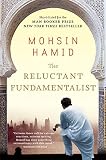
Mohsin Hamid's Booker-shortlisted novel. In a Lahore café, a bearded Pakistani man named Changez tells a nervous American stranger the story of his life — his Princeton education, his Wall Street success, and his disillusionment with America after 9/11 — in a tense, ambiguous monologue.