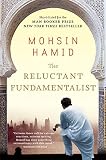
Editors Reads Verdict
A taut, elegant, and unsettling novel of identity and disillusionment. Hamid's one-sided café monologue builds quiet menace while probing America, ambition, and belonging after 9/11 — short, sharp, and deliberately ambiguous.
What We Loved
- A taut, elegant dramatic monologue with masterful control of tension
- A nuanced exploration of identity, belonging, and post-9/11 America
- Short, sharp, and richly ambiguous — it rewards rereading
Minor Drawbacks
- The deliberate ambiguity frustrates readers wanting resolution
- The one-sided monologue form keeps other characters at a distance
Key Takeaways
- → Identity and belonging fracture under the pressure of politics and prejudice
- → The 'fundamentalist' of the title is pointedly ambiguous in its meaning
- → A monologue can implicate the listener — and the reader — in its tension
| Author | Mohsin Hamid |
|---|---|
| Publisher | Mariner Books |
| Pages | 192 |
| Published | January 1, 2007 |
| Language | English |
| Genre | Literary Fiction, Political Fiction |
| Difficulty | Intermediate |
| Best For | Readers of literary and political fiction interested in identity, immigration, and the post-9/11 world. |
How The Reluctant Fundamentalist Compares
The Reluctant Fundamentalist at a glance against 3 similar books readers weigh alongside it.
| Book | Author | Rating | Best for |
|---|---|---|---|
| The Reluctant Fundamentalist (this book) | Mohsin Hamid | ★ 4.2 | Readers of literary and political fiction interested in identity, immigration, |
| Exit West | Mohsin Hamid | ★ 4.0 | Readers interested in migration, contemporary fiction about displacement, and |
| The Kite Runner | Khaled Hosseini | ★ 4.5 | Readers who appreciate literary fiction dealing with guilt, cultural |
| The Namesake | Jhumpa Lahiri | ★ 4.2 | Literary fiction readers interested in the immigrant experience, family |
A Conversation Full of Menace
Mohsin Hamid’s The Reluctant Fundamentalist, published in 2007 and shortlisted for the Booker Prize, is a short, taut, elegant novel that accomplishes a great deal in fewer than two hundred pages. It takes the form of a dramatic monologue: in a café in Lahore, Pakistan, a bearded young man named Changez engages a nervous, watchful American stranger in conversation, and over the course of a single evening — and a single meal — tells the stranger the story of his life. We hear only Changez’s voice; the American never speaks directly, his words and reactions reported only through Changez’s narration. This one-sided, intimate, and increasingly tense form is the novel’s masterstroke, and Hamid uses it to build a quiet, mounting menace while telling a nuanced and unsettling story of identity, ambition, belonging, and disillusionment in the shadow of September 11th.
Changez’s tale is, on its surface, an immigrant success story turned sour. A brilliant young Pakistani, he wins a scholarship to Princeton, excels, and lands a coveted job at a prestigious New York valuation firm, embracing the American dream of meritocratic success and falling in love with both the country and a troubled American woman, Erica. He is, for a time, the model of the assimilated, ambitious immigrant, thriving at the heart of American capitalism. Then the attacks of September 11, 2001 change everything — not just the world around him but something within him. In the suspicious, fearful America that follows, Changez finds himself increasingly alienated, subjected to prejudice and scrutiny, and forced to confront his own complicated feelings about America, about his role in its economic machinery, and about where he truly belongs. His gradual disillusionment, and the choices it leads him to, form the heart of his story.
The Ambiguity of the Title
The novel’s brilliance lies in its sustained ambiguity, beginning with its title. “The Reluctant Fundamentalist” pointedly refuses to settle its meaning. Does it refer to religious or political fundamentalism — has Changez become a radical, perhaps even a threat to the American he is talking to? Or does it refer to the “fundamentals” of finance and capitalism that Changez’s firm was devoted to, the cold logic of maximizing value that he comes to reject? Hamid keeps both meanings, and others, alive throughout, refusing to resolve who Changez has become or what, exactly, he represents. This ambiguity extends to the framing conversation itself, which grows steadily more tense and menacing: Is the American a tourist, or an assassin sent for Changez? Is Changez a victim, or a danger? Is the meeting innocent, or is one of them about to kill the other? The novel builds this dread masterfully and then, in its final pages, refuses to dispel it, ending on a note of deliberate, charged uncertainty that has divided and fascinated readers.
This refusal of resolution is the point. Hamid is dramatizing the mutual suspicion, the failure of understanding, the way each side projects its fears onto the other, in the fraught post-9/11 relationship between America and the Muslim world. The reader, like the American listener, is made to feel the menace, to wonder and to suspect — and in doing so, is implicated in exactly the assumptions and fears the novel is examining. The monologue form makes the reader complicit in the tension, and the unresolved ending throws the question of judgment back onto us.
A Nuanced Exploration
Beneath the tension, The Reluctant Fundamentalist is a genuinely nuanced exploration of identity and belonging. Changez is no caricature; his disillusionment with America is rendered with real complexity, rooted not in fanaticism but in a thoughtful and increasingly painful reckoning with his place in the world, with the prejudice he faces, with the role his country and his work play in global power, and with the impossibility of fully belonging to a place that has begun to see him as a threat. Hamid resists easy answers and easy sympathies, presenting Changez’s perspective with understanding while never simply endorsing his choices, and leaving the reader to grapple with a figure who is sympathetic, troubling, and finally unknowable. The novel is a meditation on how identity and belonging fracture under the pressure of politics and prejudice, and on the failures of understanding that follow.
The Demands of the Form
Two honest caveats. The deliberate ambiguity, so central to the book’s power, frustrates readers who want resolution; the unanswered questions — about who Changez has become, about what happens in that café — are left unanswered on purpose, and readers who need closure will find the ending maddening rather than provocative. And the one-sided monologue form, brilliant as it is, keeps the other characters — the silent American, and even Erica — at a distance, filtered entirely through Changez’s narration, which some readers find limiting. Both are features rather than flaws, integral to Hamid’s design, but they shape the reading experience in ways worth knowing.
For readers attuned to its method, The Reluctant Fundamentalist is a small masterpiece of control and implication — short enough to read in a sitting, rich enough to reward rereading, and unsettling in a way that lingers. It is one of the most acute and elegant literary responses to the post-9/11 world, and it confirmed Hamid as one of the most interesting novelists of his generation.
Final Verdict
Our rating: 4.2/5 — A taut, elegant, and unsettling novel of identity and disillusionment. Hamid’s one-sided café monologue builds quiet menace while probing America, ambition, and belonging after 9/11. Short, sharp, richly ambiguous, and deliberately unresolved — a small masterpiece of control and implication.
For more on identity, immigration, and belonging, see The Kite Runner, Exit West, and The Namesake.
Frequently Asked Questions
What is "The Reluctant Fundamentalist" about?
Mohsin Hamid's Booker-shortlisted novel. In a Lahore café, a bearded Pakistani man named Changez tells a nervous American stranger the story of his life — his Princeton education, his Wall Street success, and his disillusionment with America after 9/11 — in a tense, ambiguous monologue.
Who should read "The Reluctant Fundamentalist"?
Readers of literary and political fiction interested in identity, immigration, and the post-9/11 world.
What are the key takeaways from "The Reluctant Fundamentalist"?
Identity and belonging fracture under the pressure of politics and prejudice The 'fundamentalist' of the title is pointedly ambiguous in its meaning A monologue can implicate the listener — and the reader — in its tension
Is "The Reluctant Fundamentalist" worth reading?
A taut, elegant, and unsettling novel of identity and disillusionment. Hamid's one-sided café monologue builds quiet menace while probing America, ambition, and belonging after 9/11 — short, sharp, and deliberately ambiguous.
Ready to Read The Reluctant Fundamentalist?
Check the current price on Amazon.
Check Price on Amazon (paid link)Prices and availability are subject to change. See Amazon for current price.
Review last updated: