Baldwin's first and most autobiographical novel follows fourteen-year-old John Grimes on his birthday in 1935 Harlem, moving between his stepfather's fierce Pentecostal faith and the sins and suffering that faith is meant to redeem. The novel interweaves three generations of a Black family in the American South and Harlem in prose of extraordinary lyrical power.
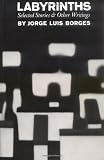
The essential Borges collection for English readers: twenty-three stories and ten essays, including 'The Garden of Forking Paths,' 'Pierre Menard Author of the Quixote,' 'The Library of Babel,' 'Tlön, Uqbar, Orbis Tertius,' and 'The Lottery in Babylon.'
Saunders's most celebrated story collection brings together ten pieces including the title story — a dying man and a boy converge on an icy pond — and 'Escape from Spiderhead.' Winner of the Story Prize, called 'the best book you'll read this year' by the New York Times. The best introduction to what Saunders does: satirical surfaces, genuine moral feeling, linguistic invention that earns its sentiment.
When Alice's grandmother, Babcia, has a stroke and starts whispering names that no one recognises, Alice travels to Poland to uncover the truth. Alternating with the story of a young woman in Nazi-occupied Poland who made impossible choices to protect those she loved.
DeLillo's masterwork begins with a legendary 1951 baseball game between the Giants and the Dodgers — the 'shot heard round the world' — and traces the fate of the ball hit for the home run through fifty years of American history: the Cold War, nuclear anxiety, the waste stream, art, crime, and the interconnected lives of ordinary Americans. It is the great American novel of the second half of the twentieth century.
When Sara Crewe's father dies, she is stripped of her privileged status at Miss Minchin's Seminary and reduced to a servant in the attic she once occupied as a princess. But Sara refuses to surrender her imagination or her sense of herself — and her story becomes one of children's literature's most powerful studies of dignity under humiliation.
A German composer of genius makes a Faustian bargain — syphilitic infection in exchange for twenty-four years of musical creativity — as Germany makes its own bargain with Nazism. Told through the biography of his lifelong friend, Mann's most ambitious novel.
Thelonious 'Monk' Ellison, a Black literary novelist whose experimental work is dismissed as 'not Black enough,' writes a savage parody of the ghetto-lit novels the publishing industry craves — and watches in horror as it becomes a bestseller.
Jorge Luis Borges's most celebrated collection of stories — including The Garden of Forking Paths, The Library of Babel, Pierre Menard Author of the Quixote, and The Lottery in Babylon — stories that read like philosophical thought experiments and have influenced nearly every significant fiction writer since.
John Ames, a seventy-six-year-old Congregationalist minister in Gilead, Iowa in 1956, knowing he is dying, writes a long letter to his young son — a letter about faith, memory, his father and grandfather, and the complicated situation of his old friend's son John Ames Boughton.
Set during the Nigerian-Biafran War of the late 1960s, the novel follows three characters — twin sisters and a British writer — through one of Africa's most devastating postcolonial conflicts.
Two sisters, Ruth and Lucille, grow up in the small lakeside town of Fingerbone after their mother drives into the lake, looked after by a succession of unsuitable relatives, until their drifting aunt Sylvie arrives.
Tish Rivers, nineteen years old and pregnant, narrates the story of her fiancé Fonny, a sculptor falsely accused of rape and imprisoned in the Tombs. Baldwin's most tender novel is also his most explicitly political — a love story told inside an indictment of American racial injustice that is both heartbreaking and precise.
DeLillo's fictional account of Lee Harvey Oswald — the conspiracy theorists who recruited him, the forces that shaped him, and the day in Dallas — is the most formally rigorous of the many Kennedy assassination novels. DeLillo is not interested in whether Oswald did it but in what kind of person could be shaped into such an act: a man made entirely of images, ideologies, and other people's narratives.
The third Gilead novel tells the story of John Ames's young wife — the drifter Lila, who grew up in poverty on the American roads, cared for by the woman Doll who stole her as an infant — and how she came to arrive in Gilead and sit down in the back of an old preacher's church.
A 999-line poem by fictional American poet John Shade, followed by an obsessive commentary by his neighbour Charles Kinbote — who may be the exiled king of a fictional country called Zembla. One of the most formally inventive novels ever written.
The quiet, ordinary life of William Stoner — Missouri farm boy, English professor, failed husband and father — told with such precision and compassion that it becomes a meditation on what makes a life worth living.
Dick Diver, a brilliant American psychiatrist on the French Riviera in the 1920s, has married his former patient Nicole and constructed a life of exquisite social grace — which we watch unravel across the novel.
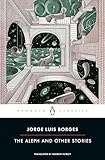
The title story — in which the narrator discovers a point in space that contains all other points simultaneously — is Borges's most ambitious and most affecting piece, alongside 'The Zahir,' 'The Dead Man,' 'The Theologians,' and other stories engaging with infinity, identity, and the impossibility of complete knowledge.
A Moscow street dog is given a human pituitary gland and testicles by a surgeon, transforms into a crude, politically useful Soviet citizen, and must eventually be returned to his original state. Bulgakov's suppressed novella is the most precise literary satire of Soviet ideology ever written — the experiment of creating the New Soviet Man literalized as a surgical procedure with predictable results.
The fourth and final Cemetery of Forgotten Books novel follows Alicia Gris, a secret police operative in Franco's Spain, as she investigates a missing government official whose disappearance connects to a network of Barcelona's literary and intellectual life across decades — resolving the mysteries of the entire series.
Set in the Igbo village of Umuofia in pre-colonial Nigeria, Things Fall Apart follows the warrior Okonkwo whose rigid commitment to traditional masculine strength ultimately destroys him — and whose world is irrevocably transformed by the arrival of British missionaries and colonial administrators.
On the world of Arbre, scholars called avout live cloistered in mathic communities called concents, their contact with the outside world restricted to once every year, decade, century, or millennium — until an alien object enters orbit and changes everything.
Chief priest Ezeulu of the Umuaro clan navigates the arrival of British colonial authority while maintaining the traditional religious structures that give meaning to his community. Achebe's most complex novel examines how traditional power and colonial power interact and corrupt each other, and how a community can destroy itself by holding too firmly to what it is.