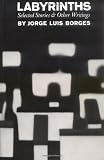
Editors Reads Verdict
The translation that introduced Borges to the English-speaking world, Labyrinths remains the essential single-volume introduction to his work — its selection of stories and essays constituting the most useful map of a mind that made the labyrinth its central metaphor.
What We Loved
- The selection by Donald Yates and James Irby is simply excellent — these are the stories that need to be read, assembled in an order that clarifies their relationships
- The inclusion of ten essays alongside the stories illuminates the thinking that generates the fiction
- This is the translation most English readers encountered first, and its American idiom suits Borges's clean, declarative style
Minor Drawbacks
- Several stories overlap with Ficciones, which can frustrate readers who own both
- The essays, while essential, require some philosophical background that not all readers bring
- The later New Directions translation updates the language in ways some prefer, leaving the question of which edition to own genuinely open
Key Takeaways
- → The labyrinth, the library, and the mirror are Borges's three central metaphors for infinity and self-reference
- → Every choice creates a fork — a path taken and a path untaken — and Borges's fiction insists that both are real
- → A text is not complete when written but when read, and every reader completes it differently
- → The essay and the story are not distinct forms for Borges — the essay can be fiction, the story can be argument
| Author | Jorge Luis Borges |
|---|---|
| Publisher | New Directions |
| Pages | 256 |
| Published | January 1, 1962 |
| Language | English |
| Genre | Short Stories, Literary Fiction, Latin American Literature |
How Labyrinths Compares
Labyrinths at a glance against 3 similar books readers weigh alongside it.
| Book | Author | Rating | Best for |
|---|---|---|---|
| Labyrinths (this book) | Jorge Luis Borges | ★ 4.6 | Short Stories |
| Ficciones | Jorge Luis Borges | ★ 4.5 | Readers of literary fiction comfortable with intellectual density and |
| One Hundred Years of Solitude | Gabriel García Márquez | ★ 4.6 | Readers of literary fiction interested in the most celebrated novel in Spanish, |
| The Aleph and Other Stories | Jorge Luis Borges | ★ 4.5 | Short Stories |
Labyrinths Review
Labyrinths was published by New Directions in 1962, edited and translated by Donald Yates and James Irby, and it introduced Jorge Luis Borges to the English-speaking world with a selection that remains, sixty years later, the best single-volume introduction to his work. The book contains twenty-three fictions and ten essays — a slightly different selection from Ficciones, the Grove Press collection published simultaneously — and its choice of title was apt: the labyrinth is Borges’s central and most recurring image, the architecture of a mind that finds infinity in structures that fold back on themselves.
The collection’s great stories overlap substantially with Ficciones — “The Garden of Forking Paths,” “The Library of Babel,” “Pierre Menard, Author of the Quixote,” “The Lottery in Babylon” — but the additions are what make Labyrinths the richer single volume. “Tlön, Uqbar, Orbis Tertius” is here in the form most English readers know: the story of an encyclopaedia entry for a country that does not exist, which gradually colonises the actual world until objects from Tlön begin appearing in our reality, and finally the fictional country simply replaces the real one. Borges was thirty-nine when he wrote it, and it remains the most concentrated demonstration of what he could do: take a philosophical proposition — idealism’s claim that the world is a projection of mind — and dramatise it as a thriller, a detective story, a horror story, each in sequence, in under thirty pages.
The essays collected here — “The Argentine Writer and Tradition,” “Kafka and His Precursors,” “A New Refutation of Time,” and others — are essential for understanding the fiction. “Kafka and His Precursors” makes Borges’s central critical argument: that a great writer creates their precursors, retrospectively transforming earlier work so that it appears to have led toward them. Zeno’s paradox, a specific prose passage of Browning, a Chinese prose fantasy — none of these appear Kafkaesque until Kafka exists; after Kafka, they are unreadably otherwise. This argument is itself a demonstration of the labyrinthine nature of literary time: the influence runs backward as well as forward, and the past is always being revised by what comes after it.
The translation by Yates, Irby, and a team of additional translators has been both praised and critiqued. Borges’s Spanish is notably clean and precise, aiming for a certain eighteenth-century English tone — he was deeply influenced by De Quincey, Stevenson, and Chesterton — and the American English of the 1962 translation catches this better than later versions. The prose reads as if it were written in English, which was probably Borges’s intention: he claimed to have thought in English as much as Spanish, and read in English throughout his life.
Our rating: 4.6/5 — The collection that made Borges available to the English-speaking world, and the one that remains the best single introduction to the most influential fiction writer of the twentieth century’s second half.
A Gateway to Borges
Labyrinths is the celebrated anthology that introduced many English-language readers to Jorge Luis Borges, gathering the Argentine master’s most essential stories, essays, and parables in a single influential volume. Borges transformed the short story into a vehicle for dazzling intellectual and philosophical exploration, and Labyrinths collects the works that established his international reputation, including such landmark tales as “The Library of Babel,” “The Garden of Forking Paths,” and “Tlon, Uqbar, Orbis Tertius.” Compact, erudite, and endlessly inventive, these pieces reveal a mind of extraordinary originality and have made the collection a touchstone of modern world literature.
Mazes of the Mind
The collection’s title captures Borges’s central obsession: the labyrinth as both image and idea, a symbol of the infinite, the inescapable, and the bewildering complexity of reality and knowledge. His stories construct intricate intellectual mazes, imagining infinite libraries, branching times, and worlds invented by thought, and they invite readers to lose and find themselves in their conceptual depths. This fascination with labyrinths, mirrors, infinity, and the limits of understanding runs throughout the collection, giving it a thematic unity and a hypnotic, vertiginous power.
Fiction as Philosophy
What makes Borges singular is his fusion of storytelling with philosophical and metaphysical speculation. His fictions function as thought experiments, engaging profound questions about reality, identity, time, language, and the nature of knowledge, yet they are rendered with wit, elegance, and imaginative brilliance rather than dry abstraction. The essays and parables in Labyrinths extend this play of ideas, blurring the boundaries between fiction and philosophy. This combination of intellectual depth with literary artistry is the essence of Borges’s genius and the source of his vast influence.
An Influential Classic
Labyrinths has had an enormous influence on modern literature, shaping the development of magical realism, postmodern fiction, and the work of writers across the world. The collection remains one of the best introductions to Borges, gathering his most important and accessible works in a form that has guided generations of readers into his labyrinthine imagination. For anyone seeking to encounter one of the most original and influential writers of the twentieth century, Labyrinths offers an ideal and inexhaustible starting point, and a reading experience unlike any other in literature.
A Reading Experience Like No Other
To read Labyrinths is to encounter a mind unlike any other in literature, one that found in the short story and the brief essay a vehicle for the largest questions human beings can ask. Borges compresses entire philosophies and universes into a handful of pages, and his fictions reward not only reading but rereading and reflection, revealing new depths with each return. For readers willing to follow him into his mazes of mirrors, libraries, and infinities, the collection offers an experience of pure intellectual and imaginative exhilaration, and an introduction to one of the genuine originals in the history of world literature.
Frequently Asked Questions
What is "Labyrinths" about?
The essential Borges collection for English readers: twenty-three stories and ten essays, including 'The Garden of Forking Paths,' 'Pierre Menard Author of the Quixote,' 'The Library of Babel,' 'Tlön, Uqbar, Orbis Tertius,' and 'The Lottery in Babylon.'
What are the key takeaways from "Labyrinths"?
The labyrinth, the library, and the mirror are Borges's three central metaphors for infinity and self-reference Every choice creates a fork — a path taken and a path untaken — and Borges's fiction insists that both are real A text is not complete when written but when read, and every reader completes it differently The essay and the story are not distinct forms for Borges — the essay can be fiction, the story can be argument
Is "Labyrinths" worth reading?
The translation that introduced Borges to the English-speaking world, Labyrinths remains the essential single-volume introduction to his work — its selection of stories and essays constituting the most useful map of a mind that made the labyrinth its central metaphor.
Ready to Read Labyrinths?
Check the current price on Amazon.
Check Price on Amazon (paid link)Prices and availability are subject to change. See Amazon for current price.
Review last updated: