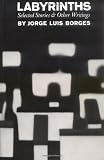
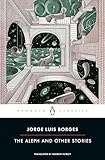
Jorge Luis Borges was an Argentine author whose short story collections — Ficciones, Labyrinths, The Aleph — created a fictional universe so influential that he effectively defined the possibilities of postmodern literature.
Jorge Luis Borges published almost no fiction before 1940 and by 1970 had changed world literature. His method was to take the conventions of genre fiction — the detective story, the fantastic tale, the philosophical dialogue — and fill them with ideas: libraries that contain every possible book, gardens of forking paths where all possible futures coexist, a man who can remember everything without being able to forget anything. The stories are typically short, often under ten pages, and operate at a level of intellectual density that makes each one an event.
Ficciones (1944) and El Aleph (1949) are the essential collections. Stories like “The Garden of Forking Paths,” “Pierre Menard, Author of the Quixote,” “The Library of Babel,” and “Tlön, Uqbar, Orbis Tertius” are so formally inventive that they created the vocabulary subsequent writers needed to describe what they were doing. Gabriel García Márquez, Umberto Eco, Salman Rushdie, and Paul Auster all acknowledged substantial debts to Borges. The adjective “Borgesian” has entered literary vocabulary to describe a particular kind of labyrinthine, self-referential, philosophically charged fiction.
Borges went blind in his fifties but continued producing essays, poems, and prose pieces by dictating them. He became internationally famous through translation — particularly the English selection known as Labyrinths — but was controversial in his own country for his political conservatism. He died in Geneva in 1986. His influence on fiction and literary theory remains without peer among twentieth-century writers who worked primarily in short form.
Reading Guides