Non-fiction at its best is indistinguishable from great writing — rigorous, surprising, and impossible to put down. These are the non-fiction books that deliver on that promise.
Elie Wiesel's memoir of his experiences as a fifteen-year-old Jewish boy deported from Sighet, Transylvania to Auschwitz and then Buchenwald. One of the foundational documents of Holocaust testimony — a first-person account of the camps, the death marches, and the systematic destruction of faith, family, and identity.
Thomas Sowell delivers a comprehensive, jargon-free introduction to economic thinking that trains readers to see beyond immediate effects to the full consequences of policies and actions.
Epidemiologist and data storyteller Hans Rosling identifies ten deep-rooted instincts — from the Gap Instinct to the Fear Instinct — that systematically distort our understanding of the world, and offers a fact-based framework for seeing global progress clearly. Drawing on decades of public health data, Rosling shows that the world is, on almost every measurable dimension, far better than most people believe.
1986: the Chernobyl nuclear plant explodes. The wives, widows, and liquidators speak to Alexievich about what they saw, what they lost, and what has never stopped. The firefighter's wife who held her husband's disintegrating hand. The child who grew up in the zone. The soldier who was told to bury the contaminated soil. The most moving of Alexievich's books.
Krakauer's firsthand account of the 1996 Mount Everest disaster, in which eight climbers died during a single storm. One of the greatest adventure narratives ever written.
Richard Thaler and Cass Sunstein show how small changes to the way choices are presented can steer people toward better decisions without restricting freedom.
Using data from archaeology, history, psychology, and criminology, Steven Pinker argues that violence in virtually every form — war, murder, torture, child abuse, animal cruelty — has declined dramatically over human history, and identifies the institutional, cognitive, and cultural forces responsible.
The investment guide inspired by Jack Bogle's philosophy — written by three of the most active members of the Bogleheads online forum. Covers the full arc from starting to invest through retirement, emphasising low-cost index funds, broad diversification, tax efficiency, and ignoring market noise.
Lawrence Cunningham's compilation of Warren Buffett's annual letters to Berkshire Hathaway shareholders, organised by theme rather than chronology. Covers corporate governance, finance, investments, mergers and acquisitions, accounting, and the valuation framework that made Buffett the world's greatest investor.
Twenty-four case histories from Sacks's neurological practice — patients who have lost the ability to recognise faces, who have Tourette's, who have lost all sense of their own body, who see the world as if it were a painting. Each case is also a meditation on what it means to be a self.
Over a million Soviet women served in World War II—as snipers, pilots, surgeons, tank drivers. Alexievich interviewed hundreds of them in the late 1970s and 1980s, recording what official history excluded: not the heroic war but the sensory war—the smell, the weight, the dreams, the return home, the silence that followed.
Bill Bryson returns to America after twenty years in England and decides to hike the Appalachian Trail — 2,200 miles from Georgia to Maine — with his out-of-shape friend Stephen Katz. They complete a memorable portion of it.
Schwager interviews seventeen of the most successful traders of the 1970s and 1980s — Michael Marcus, Bruce Kovner, Richard Dennis, Paul Tudor Jones, Ed Seykota, and others. Each interview reveals a different trading philosophy and approach, while a consistent set of principles emerges across all of them.
Written as fiction but widely understood as the autobiography of Jesse Livermore — the greatest stock speculator of the early twentieth century — this 1923 classic follows the narrator's career from bucket shops to Wall Street, through multiple fortunes made and lost, and distils lessons about markets, timing, and human nature that remain current.
Tobias Wolff's memoir of his childhood in the late 1950s in Chinook, Washington, with his mother and her brutal second husband Dwight. He lies compulsively, reinvents himself repeatedly, and eventually escapes to a Connecticut boarding school on fraudulently obtained recommendations. One of the great American coming-of-age memoirs — about the self as a thing to be constructed rather than discovered.
The minute-by-minute account of the 2008 financial crisis — from the collapse of Bear Stearns through the Lehman Brothers bankruptcy, the AIG bailout, and TARP. Sorkin had access to every major participant and reconstructed the crisis in novelistic detail.
Hemingway's memoir of his years in 1920s Paris: the cafés where he wrote, the poverty and pleasure of expatriate life, F. Scott Fitzgerald's insecurities, Gertrude Stein's salon, Ezra Pound's generosity, and the first wife he would lose by leaving her. Published posthumously, it remains one of the most beautiful books about writing and Paris ever written.
An exploration of the new science of psychedelics — LSD, psilocybin, DMT, 5-MeO-DMT — and their potential to treat depression, addiction, and end-of-life anxiety. Part science reporting, part cultural history, part personal memoir of Pollan's own experiences with plant medicines.
Richard Preston's harrowing true account follows the 1989 appearance of a lethal strain of the Ebola virus in a primate research facility in Reston, Virginia—just outside Washington, D.C.—and traces the virus's earlier outbreaks in Central Africa, where it killed with near-total lethality. It is one of the most terrifying science books ever written.
Part memoir, part urban history, Pamuk's portrait of Istanbul through his own childhood and adolescence explores the concept of hüzün—the melancholy that permeates the city's self-understanding after the fall of the Ottoman Empire—through family photographs, street scenes, and the Western writers who tried to capture Istanbul from the outside.
A double narrative: the murder of a Mormon woman and her infant daughter by fundamentalist brothers who believed they were acting on divine revelation, intertwined with the full history of the Latter-day Saint movement from Joseph Smith to the present day. A rigorous examination of religious fundamentalism and faith.
A curated collection of Charlie Munger's speeches, talks, and aphorisms covering his mental models framework, investment philosophy, and worldview — edited by Peter Kaufman and long considered one of the most important books in serious investor and intellectual circles.
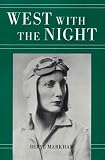
Beryl Markham's memoir of growing up in Kenya in the early twentieth century, training horses, becoming the first person to fly solo non-stop from England to North America west to east, and living a life that defied every category available to women of her era.
Walter Isaacson's comprehensive biography traces Benjamin Franklin's extraordinary life from his Boston childhood through his years as a printer, scientist, diplomat, and Founding Father, revealing the man behind the legend as a pragmatic idealist who helped forge American identity. It is a portrait of perhaps the most versatile genius the colonies produced.
Sapiens by Yuval Noah Harari, Thinking, Fast and Slow by Daniel Kahneman, The Power Broker by Robert Caro, and Man's Search for Meaning by Viktor Frankl are among the most cited non-fiction books across reader surveys and critic lists.
Sapiens is the most universally recommended non-fiction starting point for general readers — it is accessible, surprising, and covers the broadest possible subject. For something shorter and more focused, Man's Search for Meaning by Viktor Frankl repays reading in a single sitting.
Disclosure: Amazon links on this page are affiliate links. If you purchase through them we earn a small commission at no extra cost to you.
We use cookies to understand how visitors use our site (Google Analytics). No data is collected until you accept.
Privacy Policy