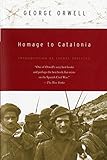
George Orwell's first-person account of fighting for the POUM militia in the Spanish Civil War — the trenches outside Huesca, the revolutionary Barcelona of 1936, the May Days street fighting, the Stalinist suppression of the independent left, and his narrow escape from arrest and execution.
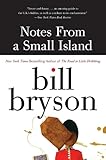
Bill Bryson travels across Australia — a country he cheerfully admits he knows almost nothing about — and discovers that it is simultaneously one of the most beautiful, most deadly, most overlooked, and most underrated countries on earth.
Nobel laureate Richard Thaler tells the inside story of how behavioral economics upended the rational-actor model and transformed our understanding of human decision-making.
Young Gerald Durrell's account of five years living on Corfu with his eccentric family in the 1930s — a childhood paradise of wildlife, sunshine, and complete freedom to roam.
The Soviet Union has collapsed. Its former citizens—Russians, Ukrainians, Armenians, Tajiks—speak to Alexievich about what happened to their lives, their beliefs, and their understanding of happiness. Some grieve communism; some feel liberated; many feel lost. Alexievich's masterpiece and winner of the 2015 Nobel Prize.
First published in 1934 in the aftermath of the Great Crash, Benjamin Graham and David Dodd's foundational text establishes the principles of value investing — rigorous financial analysis, margin of safety, and the distinction between investment and speculation — that remain the intellectual bedrock of serious equity analysis.
Montaigne retired to his tower in 1571 and spent the next twenty years writing essays — a form he essentially invented — on subjects ranging from cannibals to friendship, cruelty to experience. The subject of every essay, regardless of its nominal topic, is Montaigne himself: how he thinks, what he knows, what he doubts.
The definitive account of the Soviet camp system: Solzhenitsyn's three-volume, seven-part history and personal testimony of the Gulag, drawing on 227 survivor testimonies gathered in secret over fifteen years. This abridged edition (authorized by Solzhenitsyn himself) brings the essential text to under 600 pages. One of the most important books of the twentieth century.
Peter Matthiessen and zoologist George Schaller trek 250 miles into the Himalayas to study the bharal (Himalayan blue sheep) and their predator, the nearly mythical snow leopard — a physical journey that becomes a meditation on grief, Zen Buddhism, and the nature of consciousness.
A selection of Cheryl Strayed's advice columns written under the pseudonym 'Sugar' for The Rumpus. Honest to the point of pain, these essays — part advice, part memoir — have become one of the most loved pieces of American non-fiction writing of recent decades.
Soyinka's memoir of his childhood in the Yoruba town of Aké in colonial Nigeria—the parsonage compound where he grew up, his early encounter with spirits and schooling, his mother's role in a women's tax revolt, his father's dignity as a colonial schoolteacher. The most beautifully written African memoir.
In the late 1960s, Sacks treated a group of patients who had been encephalitic 'sleeping sickness' survivors since the 1920s. He administered the new drug L-DOPA and watched them awaken — often dramatically — after decades of stasis. Then, as the drug's effects became erratic, he watched them struggle.
In 1988, Modiano found a newspaper notice from 1941: a missing girl, Dora Bruder, fifteen years old, gone from her parents' home in Paris. He spent eight years tracing her—through the bureaucratic records of occupied Paris, the transit camp at Drancy, and eventually to Auschwitz. His investigation of her life becomes a meditation on memory, disappearance, and what the city keeps.
Bruce Chatwin's account of travelling through Patagonia — the vast, wind-scoured southern cone of South America — in search of a piece of skin he remembered from his grandmother's cabinet, which turned out to belong to a mylodon.
Before moving back to America after twenty years in Britain, Bill Bryson makes a farewell tour of the country that adopted him — by bus, train, and foot, from Dover to the Highlands — in search of what makes Britain lovably, infuriatingly, irreducibly itself.
Dillard spent a year at Tinker Creek in Virginia's Roanoke Valley, watching. The book is a record of that watching — insects, muskrats, water, light, death, and the theological question of what kind of God would make a world this brutal and this beautiful.
Matt Haig recounts his collapse into panic disorder and depression at twenty-four and how, over years of struggle, he rebuilt his life. Funny, honest, and never falsely hopeful, it became a word-of-mouth sensation and one of the most-recommended mental health memoirs of its era.
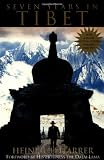
Austrian mountaineer Heinrich Harrer escapes a British prisoner-of-war camp in India during World War II and, after a twenty-one-month crossing of the Himalayas, reaches Lhasa — where he becomes a tutor and friend to the young Dalai Lama as the Chinese invasion closes in.
A dinner party in Athens, 416 BCE: Socrates, Aristophanes, Alcibiades, and others deliver speeches in praise of Love (Eros). Each speech offers a different theory; the climax is Socrates's account of what the priestess Diotima taught him — that Eros is the ascent from beautiful bodies to beauty itself.
Bernstein's framework for intelligent investing built on four pillars: the theory of investing (risk and return, asset allocation), the history of investing (what markets have actually done over two centuries), the psychology of investing (why investors consistently make the same costly mistakes), and the business of investing (how Wall Street profits from investor behaviour).
Macfarlane descends — into caves beneath Somerset, into the Paris catacombs, into a salt mine in Slovenia, into the bedrock of Finland where nuclear waste will be buried for 100,000 years. A book about what lies beneath: time, death, and the dark matter of the planet.
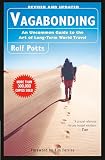
A practical and philosophical guide to long-term travel — arguing that extended independent travel is not a luxury but a choice, and that most people can afford it if they are willing to rethink their relationship to money, time, and consumer culture.
Long-Term Capital Management was a hedge fund run by Nobel laureates and bond-trading legends that nearly collapsed the global financial system in 1998. Lowenstein reconstructs the fund's rise — based on sophisticated arbitrage models — and its catastrophic fall when Russia defaulted and the models stopped working.
Peter Handke's mother killed herself in 1971 at the age of 51. He wrote this account six weeks later: an attempt to write a biography of someone who has been erased from history by her ordinariness, and a meditation on whether literary language can represent a real person without falsifying her. One of the great grief memoirs.