Where to Start with Toni Morrison: A Reading Guide
Where to start with Toni Morrison — whether to begin with Beloved, Song of Solomon, The Bluest Eye, or Sula. A complete reading guide to Morrison's novels.

Toni Morrison (1931–2019) is the most important American novelist of the second half of the twentieth century — the writer who made the experience of Black Americans central to the American literary tradition, using the full resources of literary modernism in service of a profound moral and historical vision. She won the Nobel Prize in Literature in 1993, the first African American woman to do so.
Where to Start
The Best Entry Point: Song of Solomon (1977)
The best first Morrison novel. Macon ‘Milkman’ Dead’s journey from the Northern city of his birth to the Virginia of his family’s origin — in search of a legendary treasure and his own identity — is told with the narrative drive of a folk tale, the historical depth of Morrison’s most serious work, and the poetic beauty of her prose at its most accessible. The novel’s central tension (between Milkman’s self-absorption and the demands of love, history, and community) is resolved through a discovery that is simultaneously personal and mythological. It won the National Book Critics Circle Award and remains the most widely read Morrison novel outside of Beloved.
The Short Masterpiece: Sula (1973)
Morrison’s second novel, and at 174 pages the most concentrated statement of her central concerns. The friendship between Nel Wright and Sula Peace — two Black women from the ‘Bottom,’ a community in Medallion, Ohio — is examined across decades, through Sula’s departure, return, and death. Morrison refuses the conventional moral frameworks: Sula is destructive and amoral, Nel is conventional and constrained; neither is simply right or wrong. The novel argues that the dichotomy between good and evil women is itself a product of a society that cannot accommodate Black women’s full humanity.
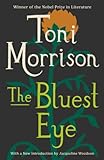
The First Novel: The Bluest Eye (1970)
Morrison’s debut — the most direct statement of her central argument about the internalization of white standards of beauty. Pecola Breedlove, who prays for blue eyes, is the focal point through which Morrison examines the way that a society’s contempt becomes a child’s self-contempt. The novel is short and direct; it lacks the formal ambition of the later work but states Morrison’s concerns with a clarity that makes it an excellent entry point for readers uncertain about their readiness for Beloved.
The Masterpiece: Beloved (1987)
Morrison’s most important novel and one of the greatest American novels ever written. Sethe, a former enslaved woman living in Cincinnati after the Civil War, is haunted by the ghost of the baby daughter she killed rather than allow her return to slavery; when a young woman calling herself Beloved appears, Sethe’s suppressed past returns with full force. The novel’s central formal challenge — the fragmentation of its narrative, the incantatory quality of its prose, its willingness to enter the unreliable consciousness of trauma — requires a reader prepared to surrender the expectation of linear narrative. Read it after Song of Solomon or Sula; then read it again.
The Jazz Trilogy: Jazz (1992) and Paradise (1997)
Morrison conceived Beloved, Jazz, and Paradise as a loose trilogy exploring different periods of African American history. Jazz is set in 1920s Harlem — a novel as improvisatory as its title, told in a voice that sounds like jazz itself, examining the relationship between violence, desire, and the great migration. Paradise is set in an all-Black town in Oklahoma in 1976 — its opening sentence (‘They shoot the white girl first’) is Morrison’s most famous, and the novel is her most explicitly allegorical. Both are challenging; neither requires reading Beloved first, but reading them without it loses the sense of historical arc.
A Late Masterpiece: A Mercy (2008)
Set in seventeenth-century America, before slavery had fully hardened into the system that Beloved describes, A Mercy follows Florens, a young Black girl given away by her master, and the various women — free, indentured, enslaved — who populate the household she joins. The novel is Morrison’s most compressed historical meditation: an account of how the conditions of American slavery were assembled from the disparate elements of race, gender, and economic exploitation. Beautiful, brief (167 pages), and essential.
Why Song of Solomon Is the Ideal First Book
For a reader new to Toni Morrison, the Nobel Prize-winning American novelist, Song of Solomon is the ideal first book because it is among her most acclaimed and accessible novels and a fine expression of her distinctive gifts, the rich, lyrical prose, the mythic imagination, and the profound engagement with African American life, history, and identity. Song of Solomon follows a man called Milkman Dead on a journey from his Northern city to the South of his family’s origins, in search of treasure and, ultimately, of himself and his heritage, in a rich, mythic, and profound novel. As an entry point it is ideal, for it is among her most celebrated and approachable works and a perfect example of her lyrical, mythic, profound fiction. It welcomes the newcomer with its compelling journey, its lyrical prose, and its mythic depth, drawing the reader into her distinctive vision. It is among her major works and a fine representation of her gifts, so the new reader encounters Morrison at her finest. For the newcomer, then, Song of Solomon is an excellent starting point.
What to Expect as a New Reader
As a new reader, you can expect Song of Solomon to be a rich, lyrical, and mythic novel. You can expect rich, lyrical prose, for Morrison writes with extraordinary beauty, power, and music. You can expect a compelling journey, for the novel follows Milkman Dead from his Northern city to the South of his family’s origins, in search of treasure and self-knowledge. You can expect a mythic imagination, for Morrison weaves myth, folklore, and the fantastic into her realism. You can expect profound engagement with African American life, history, and identity. You can expect themes of family, heritage, flight, and the search for self. You can expect emotional and symbolic depth. You should be prepared for some difficult material and a rich, demanding narrative. Expect, in short, a rich, lyrical, and mythic novel, a superb introduction to Morrison’s gifts.
Going Deeper After Your First Book
Once Song of Solomon has introduced you to Morrison’s gifts, the reader who wishes to go deeper can explore her other novels, which continue her rich, lyrical prose, her mythic imagination, and her profound engagement with African American life, history, and identity. Her masterpiece, the powerful and haunting novel of slavery and its aftermath, is among the greatest of American novels, while her other acclaimed works explore community, memory, love, and the legacy of slavery and racism, each marked by her lyrical power and her profound vision. Reading these after Song of Solomon deepens your appreciation of Morrison’s distinctive gifts, the rich, lyrical prose, the mythic imagination, and the profound engagement with African American life and history. Her characteristic power runs through her work. Building your reading journey through Morrison is a matter of following her fiction from Song of Solomon into her masterpiece and her other novels. The reader who begins here and continues will encounter one of the greatest American novelists, and a Nobel laureate.
Reading Morrison
Morrison’s prose rewards patience and rereading. Her sentences often withhold the subject — you must read forward to understand who is speaking and what they are referring to — and her chronology is frequently non-linear. This is not obscurantism but a formal choice: the experience of reading Morrison mirrors the experience of recovering a past that has been suppressed, fragmented, and made difficult to access by the very circumstances it describes. The difficulty is the point.
Frequently Asked Questions
Where should I start with Toni Morrison?
Song of Solomon (1977) is the best starting point — Morrison's most accessible major novel, following Macon 'Milkman' Dead's journey to discover his family history in the American South, written with the narrative momentum of a folk tale and the depth of literary fiction. It won the National Book Critics Circle Award and brought Morrison national recognition. Beloved (1987) is her masterpiece but more demanding; begin with Song of Solomon, then proceed to Beloved.
Is Beloved the best Toni Morrison novel?
Beloved (1987) is widely considered Morrison's masterpiece and one of the greatest American novels of the twentieth century — the story of Sethe, a former enslaved woman haunted by the ghost of the baby she killed rather than allow her return to slavery. It is also Morrison's most formally demanding novel: the prose is fragmented and incantatory, the chronology is fractured, and the emotional demands are extreme. It is not the best starting point; begin with Song of Solomon or Sula, then read Beloved when you have confidence in Morrison's style.
What is The Bluest Eye about?
The Bluest Eye (1970) is Morrison's first novel — the story of Pecola Breedlove, a Black girl growing up in Lorain, Ohio, who believes that if she had blue eyes she would be beautiful, loved, and safe. The novel is a study of the internalization of white standards of beauty and their destructive effect on Black girls and women; its account of how a society's contempt becomes a child's self-contempt is devastating. Short (168 pages) and more accessible than the later novels; the clearest statement of Morrison's central preoccupations.
What order should I read Toni Morrison's novels?
Start with Song of Solomon (1977) for the best entry point. Then read Sula (1973) and The Bluest Eye (1970) for Morrison's early vision. Then Beloved (1987), her masterpiece. Jazz (1992) and Paradise (1997) complete the trilogy. Tar Baby (1981) is a departure — more satirical, set in the present — and A Mercy (2008) is a late masterpiece set in seventeenth-century America. The three volumes of what Morrison called her 'Beloved trilogy' (Beloved, Jazz, Paradise) benefit from being read in order.