Editors Reads Verdict
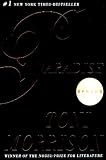
The most demanding of Morrison's Beloved trilogy opens with one of the most famous first sentences in American fiction ('They shoot the white girl first') and never fully explains who is white—insisting that race cannot be read from the body alone.
What We Loved
- One of the great formal experiments in American fiction — the racial identity of the 'white girl' is never revealed
- Morrison's most ambitious examination of Black patriarchy and the violence of utopian insularity
- The women at the Convent are among her most fully realized ensemble
- Completes the Beloved trilogy with a meditation on community that is essential to understanding her full project
Minor Drawbacks
- The most demanding of the trilogy — Morrison's most formally challenging single novel
- The large cast and multiple timeframes require patient, active reading
- Its complexity has led to critical disagreement that can be disorienting for first-time readers
- Best read after Beloved and Jazz — it will not make full sense as a standalone
Key Takeaways
- → A community built to escape oppression can replicate oppression's logic once it gains enough power to enforce its own norms
- → Race as a category cannot be read reliably from the body — Morrison's refusal to identify the white girl is itself an argument
- → Female solidarity threatened by the violence of patriarchy is a thread that runs through all three novels of the trilogy
- → The American West's Black settlements represent a buried history of self-determination that mainstream historiography has largely ignored
- → Paradise is always local — always the paradise of a particular group, achieved at the expense of those deemed outside
| Author | Toni Morrison |
|---|---|
| Publisher | Plume |
| Pages | 322 |
| Published | January 12, 1999 |
| Language | English |
| Genre | Literary Fiction, African American Literature, Historical Fiction |
| Difficulty | Advanced |
| Best For | Serious Morrison readers who have completed Beloved and Jazz and are ready for the most demanding and formally experimental conclusion to her major trilogy. |
How Paradise Compares
Paradise at a glance against 3 similar books readers weigh alongside it.
| Book | Author | Rating | Best for |
|---|---|---|---|
| Paradise (this book) | Toni Morrison | ★ 4.0 | Serious Morrison readers who have completed Beloved and Jazz and are ready for |
| Beloved | Toni Morrison | ★ 4.5 | Serious readers of literary fiction with the patience for challenging, |
| Jazz | Toni Morrison | ★ 4.1 | Morrison readers who have established their bearings with her more accessible |
| Song of Solomon | Toni Morrison | ★ 4.4 | Serious literary fiction readers ready for Morrison's most ambitious work |
Ruby and the Convent
The town of Ruby, Oklahoma was founded by freedmen who were rejected — “disallowed,” in the novel’s language — by other Black communities for being too dark. The founding families, who call themselves the “8-rock” families for the deep color of their skin, built Ruby as a fortress against the white world and against the compromised Blackness of lighter-skinned communities. By the 1970s, Ruby has become exactly what its founders feared: a closed, hierarchical, increasingly rigid society where the founding families’ authority is enforced through social exclusion and, eventually, violence.
Five miles away is a former convent — now a refuge for women who have fled their former lives: a young woman escaping abuse, a grieving mother, a victim of violence, women in various states of dissolution who have found in the Convent’s leader, Consolata, an eccentric form of healing. The women of the Convent are not a threat to Ruby. They are largely ignored by Ruby. But they represent, to the town’s patriarchs, something that cannot be tolerated: women outside male authority, female community beyond male supervision, survival that does not require men.
The novel opens with the raid: nine men from Ruby drive to the Convent at dawn and shoot. The rest of the novel circles backward through time and multiple perspectives to explain how this happened — and Morrison’s strategy of refusing to identify which woman is “the white girl” from the opening sentence is not a mystery to be solved but a meditation to be sustained.
The Beloved Trilogy
Paradise completes the trilogy Morrison called her major project: Beloved (1987), Jazz (1992), and Paradise (1997). The three novels share geography, history, and thematic preoccupation without sharing characters or plot: they are linked by the arc of Black American history from slavery through the Great Migration through the late twentieth century.
Beloved examines the trauma of slavery and its immediate aftermath. Jazz examines the Great Migration and the energies — creative, violent, erotic — released by the move North. Paradise examines the late twentieth century’s reckoning with the limits of Black separatism and the internal dynamics of communities that have won a kind of freedom but must now decide what to do with it.
Read in order, the trilogy is one of the great achievements of American literary fiction: a three-novel examination of what Black freedom has meant and what it has cost across 130 years. Paradise is the most demanding precisely because it refuses the consolations that Beloved ultimately offers: there is no Paul D arriving to help; there are only the women of the Convent, who may or may not survive, and the town of Ruby, whose men will have to reckon eventually with what they have done.
The Famous First Sentence
“They shoot the white girl first.” This sentence is among the most discussed in contemporary American fiction, and for good reason: it is the only moment in the novel when any character is identified as white. Morrison never returns to identify which of the Convent women is the “white girl.” Every time the novel approaches the question — every time it seems about to reveal which woman it means — it turns aside.
This is not coyness or oversight. Morrison has said in interviews that the sentence performs the novel’s central argument: race cannot be read reliably from the body. The reader who expects to be told which woman is white is already operating within the racial logic that the novel is designed to disrupt. If race is a social construction — if it is assigned rather than inherent — then the question “which one is white?” has no stable answer, because the answer has always depended on who was doing the assigning and for what purpose.
The novel’s critical reception was divided when it appeared. Some reviewers found its formal difficulty excessive; others recognized it as the most ambitious of the three trilogy novels. Contemporary reassessment has been more uniformly admiring, and it is now generally read as an essential Morrison text — not despite its difficulty but because of it.
Our rating: 4.0/5 — Morrison’s most formally daring novel, and her most demanding meditation on what communities do with the freedom they win. Essential for readers who have completed Beloved and Jazz.
Morrison’s Presidential Medal of Freedom
Morrison received the Presidential Medal of Freedom in 2012, awarded by President Barack Obama, who described her as a writer who had transformed American literature. By this point Paradise (1997) had been reassessed upward from its initially divided reception, and the novel is now generally read alongside Beloved as one of Morrison’s essential texts — not despite its difficulty but because the difficulty is the argument.
Morrison died on August 5, 2019. God Help the Child (2015) was her final novel. The Beloved trilogy — Beloved, Jazz, Paradise — represents the centre of gravity of her complete work: three novels that together constitute one of the most sustained examinations of Black American freedom in literary history, asking across 130 years of imagined time what freedom means, what it has cost, and what communities do with it when they have won it.
For readers completing the trilogy, Paradise is simultaneously the most demanding and the most necessary conclusion: the novel that insists there is no resolution available, only the ongoing work of reckoning with what has been done in freedom’s name.
Frequently Asked Questions
What is "Paradise" about?
An all-Black Oklahoma town founded by freed slaves attacks a nearby convent housing women who have fled their former lives. The third novel in Morrison's Beloved trilogy, Paradise asks what happens when a community built to protect its own becomes as oppressive as the society it fled.
Who should read "Paradise"?
Serious Morrison readers who have completed Beloved and Jazz and are ready for the most demanding and formally experimental conclusion to her major trilogy.
What are the key takeaways from "Paradise"?
A community built to escape oppression can replicate oppression's logic once it gains enough power to enforce its own norms Race as a category cannot be read reliably from the body — Morrison's refusal to identify the white girl is itself an argument Female solidarity threatened by the violence of patriarchy is a thread that runs through all three novels of the trilogy The American West's Black settlements represent a buried history of self-determination that mainstream historiography has largely ignored Paradise is always local — always the paradise of a particular group, achieved at the expense of those deemed outside
Is "Paradise" worth reading?
The most demanding of Morrison's Beloved trilogy opens with one of the most famous first sentences in American fiction ('They shoot the white girl first') and never fully explains who is white—insisting that race cannot be read from the body alone.
Ready to Read Paradise?
Check the current price on Amazon.
Check Price on Amazon (paid link)Prices and availability are subject to change. See Amazon for current price.
Review last updated: