Where to Start with Julian Barnes: A Reading Guide
Where to start with Julian Barnes — whether to begin with The Sense of an Ending, Flaubert's Parrot, or Nothing to Be Frightened Of. A complete reading guide.
Julian Barnes (born 1946) is the English novelist whose fiction — precise, cerebral, and formally varied — has engaged since 1980 with a set of persistent questions: how unreliable memory is, how we construct and revise our personal histories, and how we face the fact of death. He has written conventional novels (England, England, Arthur & George), a formally hybrid fiction (Flaubert’s Parrot), a book of connected stories (A History of the World in 10½ Chapters), and a memoir-essay on mortality (Nothing to Be Frightened Of). He received the Man Booker Prize for The Sense of an Ending in 2011 — his fourth Booker shortlisting — and is one of the most consistently intelligent voices in contemporary British literature.
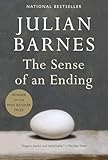
Where to Start: The Sense of an Ending (2011)
The essential Barnes — and his most accessible. Tony Webster is in his sixties, retired and untroubled, living the life of a man who believes he has done reasonably well and behaved reasonably decently. When he receives a small bequest from the mother of a girlfriend he knew at university — a bequest that includes Adrian Finn’s diary — he is forced to revisit a chapter of his past he thought he had understood: his friendship with the brilliant, serious Adrian; the relationship Adrian subsequently had with Tony’s ex-girlfriend Veronica; and Adrian’s suicide.
Barnes constructs the revelation with extraordinary care: Tony’s voice is so self-assured, his memory of events so apparently clear, that the novel’s final turn — the disclosure of what Tony actually did and then forgot — is among the most precisely engineered in contemporary fiction. At 150 pages, it can be read in two hours; it takes longer to process.
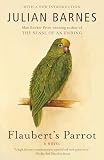
Flaubert’s Parrot (1984)
The novel that established Barnes internationally — and one of the most formally inventive British novels of the 1980s. Geoffrey Braithwaite, a retired English doctor and passionate Flaubertian, has become fixated on a question: which of two stuffed parrots, both claiming to be the original, actually sat on Flaubert’s desk during the composition of Un Coeur Simple? The pursuit of this question takes Braithwaite through Flaubert’s life, letters, and work — and eventually reveals something about his own life (his wife, her infidelity, her death) that explains why he has taken refuge in literary obsession.
The novel mixes biography, criticism, fiction, and personal essay in proportions no one had attempted before. It invented a form; it remains the best example of it.
Nothing to Be Frightened Of (2008)
Barnes’s most personal book — a meditation on death structured around his own family and the writers and composers who have confronted mortality with particular honesty. Barnes is an atheist who has lost his faith in the soul but cannot quite stop mourning its loss; the book investigates this position with complete intellectual honesty, tracing his relationship with his philosopher brother Jonathan (who considers the fear of death irrational), his parents (who were not, it turns out, very interested in him), and a host of writers — Stendhal, Flaubert, Jules Renard, Maugham — who faced death with varying degrees of courage and self-deception.
Funny, candid, and genuinely searching. The best place to start for readers interested in Barnes as an essayist and thinker rather than a novelist.
Why The Sense of an Ending Is the Ideal First Book
For a reader new to Julian Barnes, The Sense of an Ending is the ideal first book because it is his Booker Prize-winning novel and a perfect expression of his distinctive gifts, the precise and elegant prose, the intelligence, and the subtle exploration of memory, time, and self-deception. The Sense of an Ending follows a retired man forced to reconsider his past and the reliability of his own memories after an unexpected bequest, in a short, subtle, and quietly devastating novel. As an entry point it is ideal, for it is among his most celebrated works, short and accessible, and a perfect example of his intelligent, precise, and reflective fiction. It welcomes the newcomer with its compelling reflection, its elegant prose, and its emotional and intellectual depth, drawing the reader into his distinctive vision. It is among his major works and a fine representation of his gifts, so the new reader encounters Barnes at his most characteristic. For the newcomer, then, The Sense of an Ending is the natural and ideal starting point.
What to Expect as a New Reader
As a new reader, you can expect The Sense of an Ending to be a subtle, precise, and quietly devastating short novel. You can expect a reflective narrator, for the novel follows a retired man reconsidering his past after an unexpected bequest. You can expect elegant prose, for Barnes writes with precision, intelligence, and grace. You can expect a profound exploration of memory, for the novel probes how memory is unreliable and how we revise our own pasts. You can expect themes of time, regret, responsibility, and self-deception. You can expect a quiet, intelligent, and reflective mood rather than dramatic action. You can expect a short novel that builds to a subtle, unsettling revelation. You should expect a book that rewards attentive reading. Expect, in short, a subtle, precise, and quietly devastating short novel, a fine introduction to Barnes’s gifts.
Going Deeper After Your First Book
Once The Sense of an Ending has introduced you to Barnes’s gifts, the reader who wishes to go deeper can explore his other novels and nonfiction, which continue his precise, elegant prose, his intelligence, and his exploration of memory, love, mortality, and time. His other acclaimed novels range across inventive, essayistic fiction, love stories, and historical and biographical subjects, while his celebrated meditation on death and his memoir on grief reveal his reflective, intelligent nonfiction. Reading these after The Sense of an Ending deepens your appreciation of Barnes’s distinctive gifts, the precise and elegant prose, the intelligence, and the subtle exploration of memory and time. His characteristic concerns run through his work. Building your reading journey through Barnes is a matter of following his writing from The Sense of an Ending into his other novels and nonfiction. The reader who begins here and continues will find one of the most intelligent and elegant of contemporary English writers.
Reading Julian Barnes
Barnes’s fiction is unified by a set of preoccupations: the unreliability of memory, the self-serving nature of the stories we tell about our own lives, and the difficulty of knowing anything about the past (personal or historical) with confidence. His prose is precise and ironic in the English tradition — Waugh and Amis are in the background — but his concerns are more philosophical than satirical. Begin with The Sense of an Ending for the most concentrated and the most widely discussed demonstration of his gifts; read Flaubert’s Parrot for his most formally ambitious work; approach Nothing to Be Frightened Of when you want Barnes without the protective distance of fiction.
Frequently Asked Questions
Where should I start with Julian Barnes?
The Sense of an Ending (2011) is the best starting point — the Man Booker Prize-winning novella in which Tony Webster, a retired man in his sixties, receives a bequest that forces him to reexamine a chapter of his youth he thought he understood. At barely 150 pages, it is Barnes's most concentrated demonstration of his central preoccupation: how unreliable memory is, and how much we revise the past to protect our self-image. Flaubert's Parrot is the best alternative for readers who want something more formally inventive — a hybrid of fiction and literary criticism that established Barnes as a major writer in 1984.
What is The Sense of an Ending about?
The Sense of an Ending (2011) follows Tony Webster, a complacent, self-satisfied man who believes he has lived a decent, ordinary life. When he receives a small legacy from the mother of a girlfriend he had at university forty years earlier, it leads him back to a chapter of his youth involving his charismatic friend Adrian Finn — who went to Cambridge, had a brief relationship with Tony's ex-girlfriend, and then took his own life — and the diary Adrian left behind. The novella is a study of how memory self-edits, how we construct narratives of our own lives that protect us from uncomfortable truths, and what happens when the truth reasserts itself.
What is Flaubert's Parrot about?
Flaubert's Parrot (1984) is Julian Barnes's most formally inventive novel — narrated by Geoffrey Braithwaite, a retired English doctor and devoted amateur of Flaubert, who becomes obsessed with finding the stuffed parrot that supposedly sat on Flaubert's desk while he wrote 'Un Coeur Simple.' The novel is simultaneously a fiction (Geoffrey's obsession has a source in his own life we eventually understand), a work of literary criticism, a biographical study of Flaubert, and a meditation on the relationship between writers and readers. It invented a form — the novel-as-literary-investigation — that no subsequent imitator has matched.
What is Nothing to Be Frightened Of about?
Nothing to Be Frightened Of (2008) is Julian Barnes's most personal book — a meditation on death, God, religion, and the fear of non-existence, structured around his family (particularly his philosopher brother Jonathan Barnes) and the writers and composers who have faced mortality with more or less honesty. Part memoir, part philosophical investigation, part literary criticism, it is Barnes at his most direct and most searching: an atheist who cannot quite stop believing in the soul, investigating what it means that we will cease to exist. Funny, honest, and genuinely moving.