Where to Start with China Miéville: A Reading Guide
Where to start with China Miéville — whether to begin with The City and the City, Perdido Street Station, or Embassytown. A complete reading guide to weird fiction's master.
China Miéville (born 1972) is the British novelist who — with the Bas-Lag trilogy beginning with Perdido Street Station (2000) — established himself as the foremost practitioner of New Weird fiction: speculative literature that refuses the comforts and conventions of both fantasy and science fiction in favour of something genuinely stranger and more politically engaged. His work is distinguished by extraordinary world-building, a Marxist political intelligence, and a willingness to embrace the grotesque and the formally unconventional. He has won the Arthur C. Clarke Award three times and the Hugo Award once. He is the most important British speculative fiction writer of his generation.
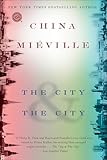
Where to Start: The City and the City (2009)
The most accessible Miéville — and his most formally ingenious single concept. Besźel and Ul Qoma are two cities occupying the same physical space. Residents of each city have been trained from birth to ‘unsee’ everything from the other: the buildings, the people, the events. The enforcement mechanism for this unseeing is Breach — a mysterious authority that intervenes when the law is violated. Inspector Tyador Borlú of Besźel investigates the murder of a young woman whose body was found in his city but whose clothing and physical evidence suggest she was murdered in Ul Qoma.
The concept is original and precisely executed — Miéville uses it to explore how political and social divisions are maintained by the willingness of populations to enforce their own perceptual categories, and the crime plot provides a conventional thriller structure through which the world’s strangeness is gradually revealed. It is his most controlled and most elegantly conceived novel; readers who want to test Miéville’s sensibility before committing to the full density of Bas-Lag will find it the ideal starting point.
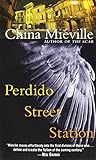
Perdido Street Station (2000)
The essential Miéville — and the founding text of New Weird. New Crobuzon is a city-state of hundreds of thousands, built around the confluence of two rivers, where humans live alongside khepri (scarab-headed women), vodyanoi (frog creatures), cactacae (cactus-men), and remade (criminals whose bodies have been surgically modified as punishment). Isaac Dan der Grimnebulin is a scientist of broad interests who takes an unusual commission: to restore flight to a garuda whose wings were removed. His research leads to a catastrophe involving creatures that feed on dreaming consciousness.
The world-building is the novel’s greatest achievement — New Crobuzon is one of the most fully realised secondary-world cities in fantasy literature, rendered with the specificity of Dickens and the moral texture of someone deeply attentive to economic exploitation and political violence. Dense, sometimes overwhelming, and entirely unlike anything else in the genre.
The Scar (2002)
The second Bas-Lag novel — set in the floating city of Armada, made of thousands of lashed-together ships, where a woman transported from New Crobuzon after the events of Perdido Street Station finds herself drawn into a plan of extraordinary ambition. Standalone in its narrative, though it shares the world and enriches it. Tighter in focus than Perdido Street Station; many readers consider it the better novel.
Embassytown (2011)
Miéville’s most linguistically focused novel — a science fiction engagement with the philosophy of language. Set on an alien planet where the indigenous species cannot speak or comprehend metaphor, the arrival of an Ambassador whose speech has unexpected effects on the Ariekei triggers an addiction, a language revolution, and a civilisational crisis. Accessible without knowledge of the Bas-Lag books; his most intellectually focused and most scientifically rigorous novel.
Why The City and the City Is an Ideal First Book
For a reader new to China Miéville, The City and the City is an ideal first book because it is among his most acclaimed and accessible novels and a fine expression of his distinctive gifts, the dazzling inventiveness, the intellectual ambition, and the blending of genres. The City and the City is a detective story set in two cities that occupy the same physical space but whose inhabitants are trained to unsee each other, a brilliant, strange, and thought-provoking premise. As an entry point it is ideal, for it is one of his more accessible works and a perfect example of his inventive, genre-blending, intellectually ambitious fiction. It welcomes the newcomer with its compelling mystery, its dazzling premise, and its intellectual depth, drawing the reader into his distinctive imagination. It is among his major works and a fine representation of his gifts, so the new reader encounters Miéville at his most characteristic. For the newcomer, then, The City and the City is an excellent starting point.
What to Expect as a New Reader
As a new reader, you can expect The City and the City to be an inventive, strange, and intellectually ambitious genre-blending novel. You can expect a dazzling premise, for the novel is set in two cities that occupy the same physical space, whose inhabitants are trained to unsee the other city. You can expect a detective story, for the novel takes the form of a murder investigation that crosses between the two cities. You can expect genre-blending, for Miéville combines the detective novel, the speculative, and the literary. You can expect intellectual ambition, for the premise invites reflection on borders, perception, and the divisions we are trained to maintain. You can expect a compelling, thought-provoking, and unusual read. You can expect inventive world-building grounded in a single brilliant idea. Expect, in short, an inventive, strange, and intellectually ambitious genre-blending novel, a fine introduction to Miéville’s gifts.
Going Deeper After Your First Book
Once The City and the City has introduced you to Miéville’s gifts, the reader who wishes to go deeper can explore his other novels, which reveal the full range of his dazzling inventiveness and his genre-blending imagination, often gathered under the banner of the new weird. His acclaimed Bas-Lag novels, set in a sprawling, baroque, invented world, are his most famous works of fantastical invention, while his other novels range across science fiction, fantasy, horror, and the weird, each marked by his intellectual ambition and his inventive imagination. Reading these after The City and the City deepens your appreciation of Miéville’s distinctive gifts, the dazzling inventiveness, the intellectual ambition, and the blending of genres. His characteristic inventiveness runs through his varied work, though some of it is more challenging. Building your reading journey through Miéville is a matter of following his fiction from The City and the City into his Bas-Lag novels and his wider work. The reader who begins here and continues will find one of the most inventive and intellectually ambitious writers in contemporary speculative fiction.
Reading China Miéville
Miéville’s fiction demands patience and tolerance for the genuinely strange. Begin with The City and the City for the most controlled and accessible version of his sensibility; move to Perdido Street Station once you are committed to the full density of his imagination. His world-building, his political intelligence, and his willingness to abandon narrative consolation make him unlike anyone else in contemporary fiction.
Frequently Asked Questions
Where should I start with China Miéville?
The City and the City (2009) is the most accessible entry point — a police procedural set in two cities that physically occupy the same space but are kept separate by the absolute social law that residents must 'unsee' the people, buildings, and events of the other city. Detective Tyador Borlú investigates a murder that crosses the boundary between cities and triggers a crisis involving Breach — the authority that enforces the unseen. A genuinely original concept executed with literary precision; accessible without prior knowledge of Miéville's stranger work. Perdido Street Station is the best alternative for readers who want the full immersive depth of Miéville's Bas-Lag world.
What is the New Weird and where does Miéville fit?
New Weird is a subgenre of speculative fiction, associated primarily with Miéville, Jeff VanderMeer, and M. John Harrison, that combines elements of fantasy, science fiction, and horror in ways that refuse conventional genre categories. The defining characteristics are: a willingness to embrace the genuinely strange (not just the familiar-with-added-magic), an absence of narrative consolation (New Weird worlds are not designed to make their inhabitants comfortable), and a critical engagement with the genre traditions being drawn on. Miéville is the most commercially successful and most critically respected New Weird writer; Perdido Street Station (2000) is often cited as the genre's defining text.
What is Perdido Street Station about?
Perdido Street Station (2000) is set in New Crobuzon, a sprawling, corrupt, industrial city of many species, where scientist Isaac Dan der Grimnebulin is hired by a garuda (bird-man) whose wings have been cut off as punishment, to help him regain flight. Isaac's research accidentally releases a Slake Moth — a creature that feeds on consciousness — into the city, and the consequences are catastrophic. The novel is a world-building achievement of extraordinary ambition: New Crobuzon is rendered with the specificity and moral texture of a lived environment, and Miéville's interest in economic exploitation and political oppression is present throughout. Dense, sometimes grotesque, and unmistakably original.
What is Embassytown about?
Embassytown (2011) is Miéville's most explicitly science-fictional and most linguistically focused novel — a first-contact story set on the planet Arieka, where human colonists live in the Embassy and interact with the indigenous Ariekei through a unique communication system. The Ariekei can only speak truth; they cannot use metaphor or counterfactuals; the arrival of a new Ambassador whose speech has an unexpected effect on the Ariekei triggers an addiction and then a language crisis that threatens both species. A rigorous engagement with philosophy of language and linguistics, rendered as science fiction thriller.