The Psychology of Money vs Rich Dad Poor Dad: Which First?
The Psychology of Money and Rich Dad Poor Dad are two of the most-read personal finance books. Here's how they differ, what each gets right, and which to read first.
By Marcus Webb
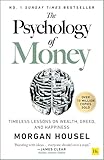
Every personal finance shelf has both of them. The Psychology of Money by Morgan Housel and Rich Dad Poor Dad by Robert Kiyosaki are among the best-selling personal finance books of the past three decades, and they are recommended together so often that many readers treat them as a natural pair — two books that agree on the fundamentals and differ only in tone.
They do not agree on much at all. They are written from different premises, use different standards of evidence, and reach different conclusions about how wealth is built. Understanding what separates them — and not just what each gets right — is the most useful thing you can do before deciding which to read first, or whether the criticisms of either book should affect how much weight you give it.
Quick Comparison
| The Psychology of Money | Rich Dad Poor Dad | |
|---|---|---|
| Author | Morgan Housel | Robert Kiyosaki |
| Published | 2020 | 1997 |
| Core Argument | Behaviour matters more than knowledge in building wealth | Acquiring income-generating assets separates the wealthy from everyone else |
| Evidence Base | Historical data, documented case studies, behavioural research | Personal anecdote, parable, illustrative examples |
| Best For | Understanding your financial psychology and long-term mindset | Reframing your relationship to income, work, and ownership |
| Tone | Calm, analytical, intellectually honest | Motivational, conversational, occasionally provocative |
The Psychology of Money, Briefly
The Psychology of Money is Morgan Housel’s argument that financial success has less to do with what you know than with how you behave. Housel spent years as a columnist for The Motley Fool and The Wall Street Journal writing about markets, and the book emerged from his observation that the most important variables in personal finance are psychological rather than technical. You do not need a higher income or a more sophisticated investment strategy. You need to stop making predictable, avoidable behavioural mistakes.
The book is structured as nineteen short essays, each addressing a specific dimension of how people think about money: how luck and risk are systematically underestimated, why getting wealthy and staying wealthy require entirely different temperaments, how tail risks in investing — rare, catastrophic events — dominate long-run outcomes in ways investors routinely ignore. Housel uses historical examples rather than personal anecdote, and his arguments are traceable and verifiable.
Two ideas stand out as the book’s most durable contributions. The first is that financial independence — having enough that you can choose how to spend your time — is more valuable than any specific level of wealth, and that most people sacrifice the former while pursuing the latter. The second is that long-term investment success is less a function of picking the right assets than of staying in the market long enough for compounding to do its work — and that the chief obstacle is not poor analysis but psychological inability to hold through volatility. Housel’s treatment of this point, illustrated with data on long-run market returns and the careers of investors who consistently underperform by trying to be clever, is the best single explanation of why passive, patient investing outperforms active management for most people.
Rich Dad Poor Dad, Briefly
Rich Dad Poor Dad is Robert Kiyosaki’s account of growing up with two father figures — his own father, an educated public servant who lived paycheque to paycheque, and his best friend’s father, a self-made businessman who became wealthy — and the contrasting lessons each taught him about money. Whether the “rich dad” is a real person or a literary device has never been definitively established; Kiyosaki has given inconsistent accounts, and several journalists have been unable to verify the figure’s existence. The book proceeds in any case as parable rather than memoir.
The core framework is the distinction between assets and liabilities. Rich Dad’s definition is simple and intentionally provocative: an asset puts money in your pocket; a liability takes money out. A house you live in, Kiyosaki argues, is a liability in this sense — it generates costs rather than income. A house you rent out is an asset. A job, regardless of salary, produces active income that stops when you stop working. Real wealth, in Kiyosaki’s framework, is built by accumulating assets — businesses, property, investments — that generate income independently of your labour.
The book’s motivational power comes largely from its framing of the “rat race”: the cycle in which higher income leads to higher spending and higher taxes, leaving the earner no closer to financial independence regardless of what they earn. This reframe has genuinely shifted how many readers think about the relationship between income and wealth. The book’s limitation — and it is a significant one — is that it stops at the reframe. Having told you that you should buy assets rather than trade your time for money, Kiyosaki is notably reluctant to explain how to do so with specificity.
Key Differences
Factual rigour and evidence standards. This is the most important difference and the one most comparison articles understate. Housel’s claims are grounded in documented history — specific market returns, specific investor records, specific case studies — and his arguments are falsifiable. Kiyosaki’s claims rest almost entirely on personal anecdote involving a figure whose existence has been questioned, and several of his specific investment claims have been disputed. This does not make Rich Dad Poor Dad useless, but it means the two books should be held to different standards of credibility.
Philosophical vs practical. Both books are more philosophical than practical, but in different ways. Housel is explicit about this: he is interested in the psychological patterns that govern financial behaviour across a lifetime, not in giving you a specific portfolio allocation or savings rate. Kiyosaki presents himself as practical — his asset-versus-liability framework seems actionable — but the practical specifics are thin. Readers who follow the book hoping for a concrete path to building passive income often find themselves with the vocabulary but not the map.
Investment advice and its specificity. Housel’s investment advice, where he gives it, is general but sound: diversify, invest consistently, stay in the market, do not try to time it. He is transparent that this is not sophisticated advice, and argues that most sophisticated advice actively harms ordinary investors by encouraging overactivity. Kiyosaki’s investment preferences — real estate, small businesses, certain tax-advantaged structures — are more specific in category but rarely specific enough in execution to be followed directly. Professional financial advisers have frequently noted that some of Kiyosaki’s recommendations, taken at face value, carry more risk than the book acknowledges.
Expert reception. The Psychology of Money has been praised by professional investors, economists, and behavioural researchers. Warren Buffett’s partner Charlie Munger recommended the thinking behind Housel’s approach, and the book is widely cited in serious investment circles. Rich Dad Poor Dad has been criticised by several prominent financial commentators, including John T. Reed, whose detailed rebuttal to the book identifies multiple claims he considers factually inaccurate. This does not mean the book has no value — its motivational impact on millions of readers is real — but it does mean that its ideas are better treated as a starting framework than as reliable financial guidance.
Criticisms of Each Book
The Psychology of Money is not without weaknesses. Its greatest limitation is the one Housel himself acknowledges: it is a book about the psychology of financial decisions, not a guide to making them. Readers who finish it feeling inspired but uncertain what to do next have a legitimate complaint. The book’s investment guidance — be patient, diversify, do not react to short-term noise — is correct but thin, and offers little to someone who does not already have savings to invest or debt they need to eliminate first. The essay format also means the book circles some ideas repeatedly; a few of the nineteen chapters cover ground that overlaps substantially with others.
Rich Dad Poor Dad carries more serious criticisms. The unverified “rich dad” figure undermines the book’s credibility as memoir, and some of the specific claims — about tax advantages, about real estate returns, about how corporations are taxed — have been challenged by accountants and tax professionals who argue they are either outdated, jurisdiction-specific, or simply incorrect. The book’s insistence that formal education is a poor investment has struck many readers as irresponsible when presented without nuance to young people making significant life decisions. And the gap between the book’s motivational rhetoric and its operational specificity is wide enough that readers can come away with a new set of concepts — assets, passive income, financial independence — without a clear sense of how to act on them.
The Better Starting Point
Read The Psychology of Money first.
The argument for this sequence is not that Housel’s book is definitively better — it is that its lessons are immediately applicable regardless of your financial situation, and that reading it first gives you a framework for evaluating the claims in every other personal finance book you read afterward, including Kiyosaki’s.
Understanding that behaviour is the chief variable in financial outcomes — not income, not investment sophistication, not insider knowledge — changes how you approach the rest of your financial reading. When you then read Rich Dad Poor Dad, you are better equipped to distinguish the genuinely useful conceptual framework (assets versus liabilities, the rat race, the case for passive income) from the claims that warrant more scepticism. You are also less likely to be swayed by Kiyosaki’s more provocative assertions without checking them.
If your primary goal is motivational — you need a jolt to rethink your relationship to money and work rather than incremental optimisation — Rich Dad Poor Dad may land harder as a first read. Kiyosaki’s writing is deliberately provocative, and the asset-versus-liability framework has genuine power for readers who have never encountered it. But if that describes you, read Housel immediately afterward to ground the motivation in something more evidentially solid.
Further Reading
Once you have read both, the natural next step is a book that translates the mindset and framework into specific action.
I Will Teach You to Be Rich by Ramit Sethi is the best modern guide for readers in their twenties and thirties. Where Kiyosaki gestures at systems and Housel describes psychology, Sethi gives you concrete instructions: how to set up automated savings and investment accounts, how to negotiate your salary, how to optimise credit cards, how to invest in low-cost index funds. It is the operational manual that neither comparison book provides.
The Total Money Makeover by Dave Ramsey is better suited to readers who are carrying significant debt and need a structured elimination plan before investment becomes realistic. Ramsey’s seven Baby Steps are prescriptive to the point of inflexibility, and his investment advice is more conservative than most experts recommend, but his framework for debt elimination is clear and has worked for a large number of readers.
The Millionaire Next Door by Thomas Stanley and William Danko is the most useful corrective to some of the assumptions both books make about how wealth actually accumulates. Based on survey research into actual high-net-worth households, Stanley and Danko found that the majority of wealthy Americans lived modestly, drove ordinary cars, and built wealth through consistent saving and investment rather than through entrepreneurship or investment breakthroughs. The portrait it paints is quieter and more attainable than either Housel’s or Kiyosaki’s, and it serves as a useful anchor to return to when the broader personal finance genre starts to feel abstract.
For further reading on psychology and money, our guide to books like The Psychology of Money covers the best titles that extend Housel’s core themes.
For the Full Business Reading List
For the definitive guide to business books across strategy, management, investing, and entrepreneurship, see our Best Business Books of All Time list.
Books Like Rich Dad Poor Dad
For personal finance books that share Rich Dad Poor Dad’s entrepreneurial mindset, wealth-building philosophy, and financial independence framework, see our Books Like Rich Dad Poor Dad guide.
Affiliate disclosure: Links on this site are affiliate links. We earn a small commission at no extra cost to you. This does not influence our editorial recommendations.
Frequently Asked Questions
Is The Psychology of Money better than Rich Dad Poor Dad?
They are better at different things. The Psychology of Money is the more credible and intellectually rigorous book — Housel's arguments are grounded in documented history and behavioural research, and the book has been widely praised by professional investors and economists. Rich Dad Poor Dad is the more motivationally compelling book for many readers, particularly those who grew up without financial role models, because Kiyosaki's asset-versus-liability framework reframes how people think about income and spending at a fundamental level. If credibility and evidence matter most to you, Housel is the stronger choice. If you need a shift in mindset before the details matter, Kiyosaki may land harder.
Why is Rich Dad Poor Dad so controversial?
Rich Dad Poor Dad attracts serious criticism on two fronts. First, several of the book's factual claims have been disputed or debunked — Kiyosaki has never produced evidence that his 'rich dad' was a real person, and financial journalists have noted that some of his investment anecdotes do not hold up to scrutiny. Second, the book is deliberately vague on specifics: it tells you to acquire assets and avoid liabilities without explaining in concrete terms how to do so, particularly for readers without significant starting capital. Critics argue this vagueness makes it more motivational literature than practical financial guidance. Defenders argue that its value was never in the specifics but in the mindset shift it delivers.
Which book is more actionable for someone starting from scratch?
Neither book is primarily a how-to manual, but The Psychology of Money is more immediately applicable because its lessons — spend less than you earn, value financial independence over status signalling, stay in the market during downturns — translate directly into specific decisions without requiring capital you may not yet have. Rich Dad Poor Dad's framework of buying assets that generate income is sound in principle but requires resources to implement. For genuinely practical step-by-step guidance from scratch, I Will Teach You to Be Rich by Ramit Sethi or The Total Money Makeover by Dave Ramsey are better starting points.
Do I need to read both books?
Reading both is worthwhile, but they serve different purposes and you will not get the same thing from each. The Psychology of Money gives you a durable mental framework for thinking about money over a lifetime — it will change what you pay attention to and how you evaluate financial decisions. Rich Dad Poor Dad gives you a set of concepts — assets, liabilities, passive income, the rat race — that many readers find useful for reframing their relationship to work and money at a structural level. If you only read one, read The Psychology of Money. If you read both, read The Psychology of Money first.
What should I read after these two books?
After both, the most productive next reads depend on your goal. For concrete personal finance implementation — budgeting, investing, debt elimination — The Total Money Makeover by Dave Ramsey is the clearest step-by-step guide for someone starting from a deficit, and I Will Teach You to Be Rich by Ramit Sethi is the best modern guide for people in their twenties and thirties who want to automate their finances. For a deeper portrait of how ordinary millionaires actually accumulate wealth — which often contradicts both Housel and Kiyosaki's assumptions about spending and lifestyle — The Millionaire Next Door by Thomas Stanley is essential reading.