Harry Potter Books in Order: Complete J.K. Rowling Reading Guide (2026)
The complete Harry Potter reading order — all 7 J.K. Rowling novels, the Fantastic Beasts films, and the Wizarding World reading guide for new and returning readers.
The Harry Potter series is the best-selling book series in history. J.K. Rowling published seven novels between 1997 and 2007, and they have since sold over 600 million copies across more than 80 languages. No other series in the history of publishing has come close to that number in so short a time. The books made reading culturally urgent again for an entire generation of children, and they have retained that urgency for the generations that followed.
The reading order question is simple: publication order, no exceptions. Unlike some long fantasy series where entry points can be debated, Harry Potter was designed as a single continuous story. Each book begins where the previous one ended, builds on relationships established earlier, and advances a narrative arc that does not resolve until the final pages of Book 7. There is no alternative entry point, no standalone novel that works in isolation, no shortcut. Start with Book 1 and read to the end.
Where the questions become more interesting is around age-appropriateness, the tonal shift midway through the series, the relationship between the books and the films, and what to read or watch once the main series is finished. This guide addresses all of those directly.
Quick answer: Read all 7 Harry Potter books in publication order: Sorcerer’s Stone → Chamber of Secrets → Prisoner of Azkaban → Goblet of Fire → Order of the Phoenix → Half-Blood Prince → Deathly Hallows. There is no alternative entry point. The series is one continuous story.
All 7 Harry Potter Books at a Glance
| # | Title | Year | Series/Type |
|---|---|---|---|
| 1 | Harry Potter and the Sorcerer’s Stone | 1997 | Main series |
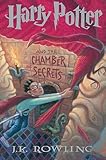
| 2 | Harry Potter and the Chamber of Secrets | 1998 | Main series |
| 3 | Harry Potter and the Prisoner of Azkaban | 1999 | Main series |
| 4 | Harry Potter and the Goblet of Fire | 2000 | Main series |
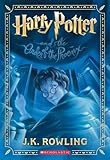
| 5 | Harry Potter and the Order of the Phoenix | 2003 | Main series |
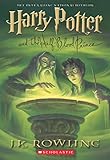
| 6 | Harry Potter and the Half-Blood Prince | 2005 | Main series |
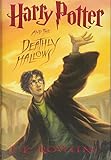
| 7 | Harry Potter and the Deathly Hallows | 2007 | Main series |
Best starting point: Harry Potter and the Sorcerer’s Stone — the only door into the series.
The Harry Potter Reading Order
All seven books must be read in the following sequence. Reading them in any other order will not work.
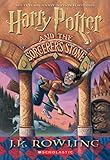
- Harry Potter and the Sorcerer’s Stone (1997) — An orphan boy discovers on his eleventh birthday that he is a wizard and enrolls at Hogwarts School of Witchcraft and Wizardry.
- Harry Potter and the Chamber of Secrets (1998) — Students at Hogwarts are being petrified by an unknown force connected to a chamber sealed fifty years earlier.
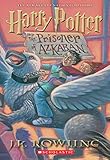
- Harry Potter and the Prisoner of Azkaban (1999) — A dangerous prisoner has escaped from the wizarding world’s high-security prison, and his target appears to be Harry.
- Harry Potter and the Goblet of Fire (2000) — Harry is unexpectedly entered into a deadly magical tournament, and the year ends with consequences that change the series permanently.
- Harry Potter and the Order of the Phoenix (2003) — The Ministry of Magic refuses to believe that Voldemort has returned, and Harry faces his darkest and most grueling year at Hogwarts.
- Harry Potter and the Half-Blood Prince (2005) — Dumbledore takes Harry on a series of private lessons to prepare him for a confrontation that is now inevitable.
- Harry Potter and the Deathly Hallows (2007) — Harry, Ron, and Hermione leave Hogwarts to complete the mission Dumbledore left unfinished, and the war against Voldemort reaches its conclusion.
The series changes significantly in character as it progresses. Books 1 through 3 are shorter — the Sorcerer’s Stone is under 80,000 words — and lighter in tone, oriented around school life, friendship, and relatively contained mysteries. From Book 4 onward the novels grow substantially longer, the stakes become genuinely mortal, and the emotional register shifts from middle-grade adventure to something considerably darker. This is not an accident or a problem; it is the design of the series. The books were written to grow with their readers.
Where to Start — The Sorcerer’s Stone
There is no argument to be made for beginning anywhere other than Harry Potter and the Sorcerer’s Stone. The first book introduces every element the series depends on: the central characters, the rules of the wizarding world, the mythology of Harry’s past, and the nature of the threat that will drive the narrative for six more novels. None of the later books assume you have forgotten what came before. All of them assume you remember it clearly.
The first book is also, in its own right, a precisely crafted piece of storytelling. Rowling constructs Hogwarts and the wizarding world with the confidence of someone who has already written all seven books — because, in essential outline, she had. The details introduced in Book 1 that pay off in Books 6 and 7 are not lucky coincidences; they are the product of a writer who planned the whole thing before she published the first chapter. On a reread, the density of the foreshadowing in the Sorcerer’s Stone is remarkable. On a first read, it simply feels like a world that makes sense.
The question adult readers sometimes ask is whether the first book is too childish for them. It is not. The Sorcerer’s Stone is written with the clarity and precision that characterizes the best children’s literature — which means it is efficient, uncluttered, and pleasurable to read at any age. What it lacks in psychological complexity it makes up for in structural confidence. It is not a difficult book, but it is a good one, and it is the only door into the series.
Books 2 and 3 — Chamber of Secrets and Prisoner of Azkaban
Harry Potter and the Chamber of Secrets (1998) continues Harry’s second year at Hogwarts, where students are being mysteriously petrified by an unseen creature. It is the most direct mystery of the early books and the one that plants the deepest roots in the series’ mythology — the diary Horcrux, the backstory of Tom Riddle, and the chamber beneath Hogwarts all have consequences that only become fully legible in Books 6 and 7. On a first reading it functions as a confident, darker follow-up to Book 1. On a reread, it is one of the most densely foreshadowed novels in the series.
Harry Potter and the Prisoner of Azkaban (1999) is the critical consensus favourite of the early books, and with good reason. The introduction of Dementors, of the Marauder’s Map, and of a backstory that significantly complicates everything Harry thought he knew about his parents’ deaths all arrive in Book 3. Alfonso Cuarón’s film adaptation — widely regarded as the best film in the series — captures the book’s darker and more melancholy tone better than either of its predecessors managed. Prisoner of Azkaban is where Rowling’s series begins to earn its complexity.
The Tonal Shift — Books 4 and Beyond
Harry Potter and the Goblet of Fire is the turning point of the series. It is longer than the first three books combined. A major character dies before the end — not obscured, not softened, but presented with a plainness that readers of the early books would not have predicted. The antagonist returns in a form that is genuinely menacing rather than cartoonishly threatening. The rules of the world, which in Books 1 through 3 had felt safe even when danger was present, are revealed to be fragile.
Everything after Goblet of Fire operates under those new conditions. Order of the Phoenix is the longest book in the series and the most emotionally demanding — Harry is isolated, angry, and often wrong in ways the narrative does not excuse. Half-Blood Prince is the most elegiac, a book about preparation and loss. Deathly Hallows is a war novel, in the sense that the characters are hunted, people they love are killed, and the outcome is not guaranteed.
Harry Potter and the Half-Blood Prince (2005) is the series’ most elegiac volume — a book about preparation and loss. Dumbledore takes Harry on a series of private lessons into Voldemort’s past, and the year ends with a death that changes the series permanently. Book 6 is also where the Horcrux plot, seeded across the earlier novels, becomes explicit and central. It is the most structurally necessary book in the back half of the series, the one that makes the final volume’s events comprehensible.
For parents considering these books for children: the first three are appropriate for most readers aged 8 and up. Goblet of Fire and the subsequent novels are better suited to readers aged 12 and up, not because of content that requires parental gatekeeping but because the emotional weight of what happens in those books — particularly the deaths, which are not abstract — benefits from a reader who can process them. The series does not hide from grief. That is part of what makes it serious literature.
The Films vs. The Books
The Harry Potter film series ran from 2001 to 2011, producing eight films from seven novels, with the final book split into two parts. The films are, by the standards of adaptation, reasonably faithful — the major plot points survive, the casting is broadly inspired, and the visual interpretation of the wizarding world became the definitive one in popular culture.
The fidelity, however, is uneven across the series. Films 1 and 2, directed by Chris Columbus, are close to illustrated versions of the novels. Film 3, Alfonso Cuarón’s adaptation of Prisoner of Azkaban, is widely considered the best film in the series precisely because Cuarón treated it as a film rather than a transcription — it omits significant plot material while capturing the emotional truth of the book more effectively than its predecessors managed.
From Goblet of Fire onward, the cuts become substantial. The Order of the Phoenix film runs 138 minutes while the novel runs to 870 pages; the compression removes character arcs, backstory, and context that the later films rely on readers already knowing. The Half-Blood Prince film restructures the source material significantly. Deathly Hallows, split across two films totaling nearly five hours, remains the most faithful adaptation of the back half of the series, but still loses material that matters.
The practical guidance: read the books first. If you have only seen the films, the books will feel like a different and substantially larger experience — particularly from Book 4 onward, where entire subplots, characters, and emotional threads exist in the novels that never made it to screen. If you have only read the books, the films are worth watching as an interpretation. They are not a substitute.
The Wizarding World Beyond the Series
Once the seven novels are finished, a number of extensions to the wizarding world exist. None of them are necessary. All of them have qualifications.
Fantastic Beasts is a film series, not a book series. The companion book of the same name — written by Rowling as a charity publication, presented as a Hogwarts textbook — is a brief, entertaining curio but is not the basis for the films. The film series, beginning with Fantastic Beasts and Where to Find Them (2016), is set in the same wizarding world approximately 70 years before Harry’s time and follows a different cast of characters. Three films have been released; the series was planned as five. The films are self-contained enough to watch without the main series, but make more sense — and are more enjoyable — for readers who know what the wizarding world eventually becomes. Best approached after finishing the novels.
Harry Potter and the Cursed Child (2016) is a stage play script, not a novel. It is a sequel story set nineteen years after Deathly Hallows, following Harry’s son Albus. The production has won numerous theater awards. Among readers of the novels, the script is divisive — the plot involves time-travel mechanics and character choices that many fans found inconsistent with the established world. It is worth reading with adjusted expectations: it is a play, not a continuation of the novels, and works better as the former than the latter.
The three companion books — Fantastic Beasts and Where to Find Them, Quidditch Through the Ages, and The Tales of Beedle the Bard — are all short and all charming. They were originally published as charity books and work best as supplementary reading for those who have already finished the series and want more time in the world. None of them contains information essential to understanding the novels.
The sequence, then, is clear: main series first, then explore according to interest.
Rereading Harry Potter as an Adult
Harry Potter is one of the few series that actively rewards rereading at a different life stage — not because the books become different books, but because the reader does.
Rowling’s foreshadowing across seven novels is extraordinarily dense. Details planted in the Sorcerer’s Stone resolve in Deathly Hallows in ways that are only visible if you know where to look. The names of characters encode their fates. Objects that appear insignificant in early books turn out to be structurally essential. Conversations that seem like incidental color carry weight that only becomes apparent a thousand pages later. A second reading of the series, knowing the destination, reveals the architecture of the whole thing in a way that a first reading cannot.
The characters also read differently. Severus Snape is one of the most carefully constructed figures in the series — a character whose every action, read in light of the final revelations, carries a meaning opposite to its surface appearance. Dumbledore, presented to young Harry as a reassuring authority figure, is on reread a much more complicated and morally ambiguous person: someone who makes hard decisions with incomplete information and who is not always right. The series does not ask young readers to notice this. It rewards adult readers who do.
What the rereader finds, ultimately, is that the books hold. The architecture is sound. The emotional payoffs at the end of the series — which depend entirely on the details established in the earliest chapters — work because Rowling built them to work. That kind of structural integrity is rare in any fiction, and rarer still in a series of this length.
The Harry Potter series begins with a boy receiving a letter and ends with a war. Everything between those two points was designed to earn the distance traveled. The reading order is publication order, the starting point is Book 1, and the experience of reading all seven is unlike most other things in fiction. Start with Harry Potter and the Sorcerer’s Stone.
Frequently Asked Questions
What is the difference between Sorcerer’s Stone and Philosopher’s Stone?
They are the same book. Harry Potter and the Philosopher’s Stone is the original British title published in 1997. For the American market, Scholastic changed the title to Harry Potter and the Sorcerer’s Stone in 1998, judging “philosopher” too academic for young American readers. The text is largely identical apart from the title and a handful of other Americanised terms (e.g., “jumper” became “sweater”). If you are reading in English, both editions cover the same story.
Which Harry Potter book is the longest and which is the shortest?
Harry Potter and the Order of the Phoenix (Book 5) is the longest at approximately 870 pages and 257,000 words. Harry Potter and the Sorcerer’s Stone (Book 1) is the shortest at approximately 309 pages and 77,000 words. The books roughly double in length from Book 1 to Book 5, then contract slightly for Books 6 and 7.
How long does it take to read all 7 Harry Potter books?
The complete series totals approximately 1,084,170 words — around 4,000 pages in most editions. At an average reading pace of 250 words per minute, that is roughly 72 hours of reading time. Dedicated readers finish the series in a few weeks; most read it over several months. The audiobooks, narrated by Jim Dale (US editions) or Stephen Fry (UK editions), run to approximately 117 hours combined.
Is there a new Harry Potter TV series?
Yes. A new Harry Potter television series was announced by HBO Max (Max), adapting all seven books over multiple seasons. As of 2026 the series was in pre-production. The show will be a fresh adaptation independent of the existing films and is intended to include significantly more of the books’ content than the films managed. No cast has been confirmed and no release date announced as of mid-2026.
What is the best Harry Potter book?
Harry Potter and the Prisoner of Azkaban (Book 3) is the most frequently cited favourite by adult readers and is considered the critical consensus peak of the early series. Deathly Hallows (Book 7) is the most emotionally complete as a series conclusion. Among fans, the ranking is fairly consistent: Books 3, 7, and 6 tend to top the lists; Books 1, 2, and 4 cluster in the middle; Book 5 (Order of the Phoenix) is the most divisive — the longest in the series, the most frustrating for some readers, and a favourite for others precisely for its unflinching portrayal of Harry at his most difficult.
Is Harry Potter appropriate for adults to read?
Yes, without reservation. The series was shelved as children’s fiction but is read and loved by adults of every age. The later books — particularly from Order of the Phoenix onward — deal with themes of death, grief, loss, political manipulation, and institutional failure that are entirely adult concerns rendered with literary skill. Rowling’s plotting and foreshadowing across seven novels reward any reader who pays attention. Many adults report that rereading the series as adults is a substantially different and richer experience than reading it as children.
Books Like Harry Potter
For fantasy series that share Harry Potter’s magic school setting, coming-of-age arc, and sense of wonder, see our Books Like Harry Potter guide.
For the Best Fantasy Books
For the definitive guide to fantasy fiction — from Tolkien and Le Guin to Brandon Sanderson and George R.R. Martin — see our Best Fantasy Books of All Time list.
Also Recommended
For the full J.K. Rowling bibliography, reviews, and biography, visit the J.K. Rowling author page on Editors Reads.
Affiliate disclosure: Links on this site are affiliate links. We earn a small commission at no extra cost to you. This does not influence our editorial recommendations.
Frequently Asked Questions
What order should I read Harry Potter books?
Read the Harry Potter series in publication order, starting with Harry Potter and the Sorcerer's Stone (Book 1). The series is designed to be read sequentially — each book builds directly on the previous one and the overarching story cannot be understood out of order.
How old should you be to read Harry Potter?
The books grow with their intended audience. The Sorcerer's Stone is suitable for ages 8 and up; the series becomes progressively darker, with Goblet of Fire and beyond better suited for ages 12 and up. Adults read and love the series at every age.
Are Fantastic Beasts and the Harry Potter books connected?
Fantastic Beasts is a film series set in the same wizarding world, 70 years before Harry Potter's time. The films are not based on the companion book of the same name. You can watch them independently of the books, but they add context to wizarding history — best enjoyed after finishing the main series.
Should I read the Harry Potter books or watch the films first?
The books are richer and more detailed than the films, particularly from Goblet of Fire onward where significant content was cut. Reading first is recommended. If you've only seen the films, the books will feel like a substantially different and more complete experience.
What are the companion books to Harry Potter?
J.K. Rowling wrote three companion books: Fantastic Beasts and Where to Find Them, Quidditch Through the Ages, and The Tales of Beedle the Bard. All three are short and best read after the main series. Harry Potter and the Cursed Child is a stage play script — a sequel story, though not a novel.