Best Books to Read When You Feel Lost in Life
The best books to read when you feel lost, stuck, or uncertain about direction — from Man's Search for Meaning to The Alchemist to Four Thousand Weeks.
By Lena Fischer
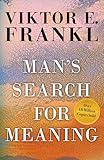
The feeling of being lost — uncertain about direction, unclear about what matters, disconnected from any sense of purpose — is one of the most common and most difficult human experiences. Books can help not by providing a map but by providing company: the knowledge that others have been here, that the feeling is part of the human condition rather than a personal failure, and that there are ways of thinking about it that make it more bearable and more productive.
Man’s Search for Meaning by Viktor Frankl (1946)
The most significant book about finding meaning in adversity — and the one most frequently cited by readers who have found themselves in crisis. Viktor Frankl’s account of survival in Nazi concentration camps is simultaneously a memoir and a philosophical argument: that the human capacity to find meaning in suffering is what makes survival possible, and that the question ‘what can I expect from life?’ is less important than ‘what does life expect from me?’ The book is short, deeply serious, and one of the most honest accounts of what meaning actually requires.
Best for: Readers who feel lost and want a serious account of what meaning is and where it comes from.
Four Thousand Weeks by Oliver Burkeman (2021)
The most useful and most honest book about how to spend one’s limited time. Burkeman’s argument — that productivity optimisation is itself a form of anxiety management, and that the better path is to accept our radical finitude and choose deliberately what to do and what to leave undone — is one of the most genuinely helpful ideas in the productivity genre. The book is not a system; it is a philosophy of limitation, and its central argument (that we will never get on top of things, so we might as well stop waiting and start living) is genuinely liberating.
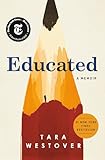
Educated by Tara Westover (2018)
A memoir about the transformative power of intellectual curiosity — and about what it costs to pursue an education that contradicts the world you grew up in. Westover’s journey from her survivalist Idaho childhood to Cambridge University is one of the most remarkable personal histories in recent memoir, and her account of what education means — not as a credential but as a fundamental reorientation of one’s understanding of the world — speaks directly to readers who feel that they have been limited by their circumstances.
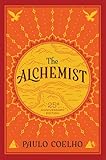
The Alchemist by Paulo Coelho (1988)
The most widely read inspirational novel of the past century — a fable about a young shepherd who dreams of treasure and travels across the world to find it, discovering along the way that what he was seeking was always close to home. The novel is deliberately simple in its prose and its philosophy; its message (that following your ‘Personal Legend’ — your deepest desire — is the purpose of a human life) is the most optimistic in any book on this list. Many readers find it life-changing on a first reading in their teens or twenties; others find it shallow on later reflection. It is most useful as a permission slip — permission to take one’s own desires seriously.
The Midnight Library by Matt Haig (2020)
A novel about the parallel lives we might have lived — and about the question of whether our actual life is the right one. Nora Seed, after a failed suicide attempt, finds herself in the Midnight Library, a place between life and death where every book contains a version of her life with different choices made. The novel is warm, accessible, and directly engaged with questions about regret, possibility, and what makes life worth living. More comforting than philosophical; excellent for readers who are suffering and need reassurance as much as argument.
Tiny Beautiful Things by Cheryl Strayed (2012)
Cheryl Strayed’s collection of advice columns, written under the name Sugar, has become a beloved companion for readers in difficult times. Responding to letters from people facing grief, uncertainty, heartbreak, and the feeling of being lost, Strayed answers not with easy formulas but with radical honesty, deep compassion, and hard-won wisdom drawn from her own struggles. The result is a book that feels less like advice and more like being seen and accompanied by someone who has been through the dark and come out the other side. For the reader who feels lost, its warmth and its unflinching honesty offer real comfort.
The Value of Reading When You Feel Lost
Feeling lost, adrift, uncertain of your direction or your purpose, is one of the most common and most difficult of human experiences, and it is one that reading is especially well suited to address. The right book at the right time can do several things at once: it can remind you that others have felt exactly this and found their way through; it can offer perspective, lifting you out of the narrow tunnel of your own situation; and it can provide not answers, exactly, but companionship and the slow clarification of your own thoughts. The books gathered here, from Frankl’s hard-won meaning to Strayed’s compassion, do not promise to fix what feels broken. What they offer is better, the sense of being accompanied, and the quiet reassurance that feeling lost is not the end of the story but often the beginning of finding a truer way.
What to Read When Feeling Lost
The most useful books for readers in a period of lostness are not the books that promise transformation through positive thinking, but those that help readers understand their actual situation with clarity. Frankl, Burkeman, and Westover do this through different modes — philosophical memoir, essay, and autobiography — but all share an honesty about the difficulty of human life that the most popular self-help books often lack. The comfort they offer is the comfort of being seen accurately rather than the comfort of being told everything will be fine.
Frequently Asked Questions
What is the best book to read when you feel lost?
Viktor Frankl's Man's Search for Meaning (1946) is the most frequently recommended book for readers seeking a sense of purpose or direction — an account of survival in Nazi concentration camps and the philosophical system (logotherapy) that Frankl developed from the insight that humans can bear almost any 'how' if they have a 'why'. The book is short (under 200 pages), personally compelling, and philosophically serious. It does not offer easy answers; it offers an honest account of what meaning actually requires. For readers who prefer fiction, The Midnight Library or The Alchemist are more immediately comforting alternatives.
What self-help book actually helps?
The most reliably helpful self-help books are those that are honest about the difficulty of human life rather than those that promise transformation through simple steps. Man's Search for Meaning, Four Thousand Weeks, and Educated work because they describe real human experience with precision and refuse consolation that isn't earned. Books that offer step-by-step systems for radical transformation are often popular but rarely produce lasting change; books that help readers understand their actual situation — its constraints, its possibilities, its finitude — are more durably useful.
What is Four Thousand Weeks about?
Four Thousand Weeks (2021) by Oliver Burkeman is a book about time management that argues against time management as conventionally understood. The title refers to the approximate number of weeks in a human life; Burkeman's argument is that the attempt to optimise every hour is itself a form of avoidance — that the productive thing to do is to accept our radical finitude, to choose deliberately what to be bad at (because we can't do everything), and to engage with the present moment rather than treating life as preparation for a future moment of completion. One of the most original and most honest productivity books written.
What is Educated by Tara Westover about?
Educated (2018) is Tara Westover's memoir of growing up in a survivalist family in rural Idaho — without formal schooling, without medical care, in a world defined by her father's religious paranoia — and her journey, through self-education, to Cambridge University and a PhD. The book is simultaneously a story of intellectual awakening, of family loyalty and its limits, and of what happens when the world you grew up in and the world you have discovered are irreconcilable. Many readers who feel stuck or uncertain find it transformative — not because it promises that self-education will solve everything, but because it demonstrates what is possible when curiosity is taken seriously.