Books Like Throne of Glass: 12 Fantasy Romances
If Throne of Glass hooked you with Celaena, the court intrigue, and the romance, these fantasy novels deliver the same blend of action, magic, and emotional investment.
The Throne of Glass series works because Sarah J. Maas understands something that a lot of fantasy writers miss: readers don’t just want an interesting world, they want characters they feel something about. Celaena Sardothien — assassin, survivor, and the most wanted woman in the kingdom — is one of fantasy’s most fully realised protagonists. The series combines court intrigue, a magic system that deepens with each volume, and romantic tension executed with genuine skill. By the time the story reaches its later volumes, Maas has built one of the most emotionally committed fanbases in fantasy.
The books below are chosen for the specific qualities Throne of Glass does well: heroines with genuine agency, political environments where trust is a weapon, romance that earns its emotional payoff, and magic that feels earned rather than convenient.
Sarah J. Maas’s Other Series
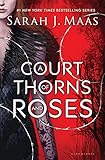
#1 — A Court of Thorns and Roses — Sarah J. Maas
The obvious recommendation. Maas’s Fae-world series begins with a mortal huntress dragged into the world of the immortal Fae after killing a wolf in the woods — and unfolds into a multi-volume story about power, sacrifice, and a romance that has defined the romantasy genre for a generation. A Court of Mist and Fury, the second volume, is widely considered among the best fantasy romances ever written. The ACOTAR series is significantly more adult in tone and content than Throne of Glass — richer, darker, and more sexually explicit. For readers who loved ToG and want more Maas, this is the clear next step.
#2 — Crown of Midnight — Sarah J. Maas
The second Throne of Glass novel and the point where most readers consider the series to become essential — it raises the stakes, deepens the political complexity, and delivers a mid-series revelation that recontextualises everything in the first book. If you’ve finished Throne of Glass and are uncertain about continuing: Crown of Midnight is the answer.
Fantasy with the Same Fierce Heroines
#3 — Shadow and Bone — Leigh Bardugo
In the Grishaverse, Alina Starkov — an orphaned mapmaker — discovers she possesses a rare magical ability and is swept into the world of the Grisha, Ravka’s magical elite. Bardugo’s world draws on Russian folklore, and the political landscape (a divided kingdom, a manipulative power structure, a mysterious antagonist who may be more than he appears) shares ToG’s interest in the mechanics of institutional power. The Grishaverse expands into Six of Crows (a heist narrative set in the same world, darker and arguably better) and Bardugo’s most recent work. Start with Shadow and Bone for the story; Six of Crows for the craft.
#4 — The Cruel Prince — Holly Black
Juliette Morrow was taken to Faerie as a child after her parents were murdered by her stepfather, a Fae general. Now a mortal in the Fae court, she wants nothing more than to belong — or to escape. Black’s novel is smaller in scale than Maas’s work but more precise: the fae politics are genuinely dangerous, the romance is built on antagonism and power imbalance that’s both frustrating and compelling, and the protagonist’s choices have actual consequences. For readers who want ToG’s court intrigue with a literary sensibility.
#5 — An Ember in the Ashes — Sabaa Tahir
In a Roman-inspired empire built on slavery and military conquest, Laia goes undercover as a slave at the empire’s military academy to rescue her brother, while Elias — the academy’s finest graduate — wants nothing more than to escape the violence he’s been trained for. Tahir’s dual-POV structure (one character on each side of the power divide) generates the kind of tension that Maas manages with romantic antagonists. The magic system is mythological rather than systematic, and the stakes are consistently higher than they appear.
Epic Fantasy with Strong Female Leads
#6 — The Priory of the Orange Tree — Samantha Shannon
A standalone epic fantasy with three female protagonists, a mythology of dragons and ancient cataclysm, and politics across multiple queendoms that reward attention. Shannon’s world is more feminist in its explicit concerns than Maas’s (the politics of female rule are the novel’s central subject), and the romantic threads are present but secondary to the epic plot. For readers who want ToG’s scope and female-centred world-building at the level of adult literary fantasy.
#7 — Red Rising — Pierce Brown
A different entry point: Pierce Brown’s near-future caste system has the same structural DNA as fantasy court intrigue, and the protagonist’s journey from outsider to political operative follows the same arc as Celaena’s. The romance is secondary to the political maneuvering, and the series gets significantly darker as it develops — but for ToG readers who want something that escalates in the same way, Red Rising delivers.
For the Romance and Slow Burn
#8 — The Kiss of Deception — Mary E. Pearson
A princess flees an arranged marriage and is pursued by both a prince and an assassin — neither of whom she knows by their true identity. Pearson’s series has the same slow-burn romantic tension as Maas’s work, with a protagonist whose intelligence and agency drive the plot rather than just reacting to it. The identity-reveal structure generates a specific kind of dread and anticipation that ToG readers will recognise.
Fantasy with Morally Complex Antagonists
#9 — The Name of the Wind — Patrick Rothfuss
A different kind of recommendation: Rothfuss’s series is male-narrated and lacks ToG’s romantic structure, but it shares the essential quality of a protagonist who is genuinely exceptional — at magic, at music, at survival — and whose story is as much about the formation of a legend as it is about plot events. For ToG readers ready to step into more literary adult fantasy.
If You Want More Court Intrigue
#10 — A Little Hatred — Joe Abercrombie
Abercrombie’s Age of Madness trilogy begins with the industrial revolution arriving in a world still structured by feudal power — with all the violence, political maneuvering, and moral complexity that implies. The female characters in this trilogy (particularly Savine dan Glokta) are among the most fully realised in the grimdark genre: ambitious, strategically brilliant, and operating in a world that punishes failure absolutely. Much darker than Maas, but for ToG readers who want court intrigue taken to its logical conclusion.
The Throne of Glass series earns its readership because Maas takes her characters’ emotional lives as seriously as their plot functions. The books above are chosen for the same quality: they understand that fantasy readers aren’t just looking for magic and battles — they’re looking for characters they can’t stop thinking about.
Frequently Asked Questions
What order should I read Sarah J. Maas books?
Start with either Throne of Glass or A Court of Thorns and Roses — both are entry points to Maas's interconnected universe. The Throne of Glass series runs: Throne of Glass, Crown of Midnight, Heir of Fire, Queen of Shadows, Empire of Storms, Tower of Dawn (concurrent with Empire of Storms), Kingdom of the Wicked, and the novella collection The Assassin's Blade. ACOTAR runs: A Court of Thorns and Roses, A Court of Mist and Fury, A Court of Wings and Ruin, plus two novellas.
Is Throne of Glass YA or adult?
The early books are YA; the series gradually darkens and ages up as Celaena/Aelin's story develops. By Heir of Fire (book 3) and beyond, the violence and complexity are more adult in tone, though the romance stays on the less explicit side compared to Maas's ACOTAR series. Most adult readers who enjoy fantasy romance find the full series accessible and satisfying.
What fantasy series has the best female protagonist after Throne of Glass?
For fierce, morally complex heroines: The Cruel Prince (Holly Black) and An Ember in the Ashes (Sabaa Tahir) are the closest in character type. For more adult romance alongside the action: A Court of Thorns and Roses (Maas herself). For literary depth with a complex female lead: The Name of the Wind is male-narrated, but Leigh Bardugo's Six of Crows and Shadow and Bone both deliver equally compelling female perspectives.


