Books Like The Pillars of the Earth: 11 Epics
If Ken Follett's cathedral saga gripped you for all 1,000+ pages, these epic historical novels deliver the same sweep, drama, and depth.

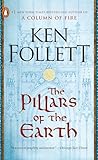
Ken Follett spent years researching medieval architecture before writing The Pillars of the Earth, and the novel’s nearly 1,000 pages are proof that the obsession was worth it. Set in 12th-century England during the civil war between King Stephen and Empress Maud, it follows the building of a cathedral in the fictional town of Kingsbridge across decades and through multiple generations of characters — a master builder, a priory monk, a noblewoman, and the villains who menace them at every turn. The scope is genuinely epic: characters age, marry, have children, and die; political tides shift; and the cathedral itself rises slowly from rubble into something that changes the lives of everyone around it.
What readers consistently report is the paradox of this book — it is enormous and should feel slow, but it reads like a thriller. Follett structures each section around conflict and forward momentum, and the villains, particularly William Hamleigh and Bishop Waleran, are written with a malevolence that is almost melodramatic and almost impossible to resist. The love stories cross social classes in ways that feel genuinely dangerous given the period, and the craftsmanship of cathedral-building is rendered with enough technical specificity to feel real without ever becoming a lecture. Readers who say they don’t read long books finish this one and immediately reach for the sequel.
The books below share one or more of the qualities that make Pillars so hard to shake: a medieval or historical world rendered in vivid physical detail, narratives that span generations or decades, antagonists with genuine power over the protagonists, and the particular pleasure of feeling that you have lived inside another era by the time you turn the last page.
Other Ken Follett: The Kingsbridge Series and Beyond
#1 — World Without End by Ken Follett
Set two centuries after The Pillars of the Earth in the same town of Kingsbridge, this direct successor follows a new generation of characters through the early stages of the Black Death, the Hundred Years War, and the continuing battles over control of the priory. Follett brings the same structural instincts — propulsive plotting, hissable villains, love stories stretched across decades — to a period defined by catastrophic mortality. New characters carry the story entirely on their own, which means readers who have not yet read Pillars can start here, but those who have will feel the weight of the town’s history beneath every scene.
#2 — A Column of Fire by Ken Follett
The third Kingsbridge novel jumps forward again to the 16th century and the religious wars between Catholics and Protestants that tore Europe apart. Ned Willard loves Margery Fitzgerald, but their families stand on opposite sides of a conflict that will determine who rules England. Follett weaves real historical figures — including Queen Elizabeth I and Mary Queen of Scots — into the narrative alongside his Kingsbridge characters, giving the novel an even broader political canvas than its predecessors. The same thriller DNA is fully present: spies, assassination plots, and a villain whose reach extends across decades.
Epic Medieval Historical Fiction
#3 — Shogun by James Clavell
An English navigator is shipwrecked in feudal Japan in 1600 and finds himself caught in a war between powerful lords at the moment Japan’s future hangs in the balance. Clavell immerses the reader so completely in the logic, ritual, and danger of samurai culture that the 1,200-page length becomes irrelevant — you simply do not want to leave. Like Pillars, Shogun is built around a foreigner who must understand an entirely alien set of rules to survive, and around antagonists who hold genuine power over life and death. It remains the gold standard for historical fiction that makes another world feel fully inhabited.
#4 — The Name of the Rose by Umberto Eco
A Franciscan friar and his novice arrive at an Italian abbey in 1327 to find monks dying under mysterious circumstances. What follows is a medieval murder mystery, but also a dense, brilliant meditation on knowledge, heresy, and the power of texts in a world where almost no one can read. Eco’s novel is slower and far more literary than Follett’s — readers looking for the same propulsive thriller energy should be warned — but for those who want the most fully realized medieval world in fiction, this is it. The specificity of monastic life, scholastic argument, and Inquisition-era politics is astonishing.
#5 — The Physician by Noah Gordon
Rob Cole is an orphan in 11th-century England who discovers he has an uncanny ability to sense when a person is close to death. Determined to become a physician at a time when medicine barely exists in Europe, he disguises himself as a Jew to study at the great medical school in Persia. Gordon’s novel has the same epic scope as Pillars — a single life unfolding over decades against a vividly realized medieval world — and the same appetite for adventure, romance, and historical texture. It is far less well known than it deserves to be, and readers who love Follett discover it and wonder why they waited.
Multi-Generational Sagas
#6 — Fall of Giants by Ken Follett
The first volume of Follett’s Century Trilogy follows five families — British, American, Russian, German, and Welsh — through the First World War and the Russian Revolution. The scope is continental rather than local, and the time scale covers roughly a decade rather than centuries, but the same skills are fully deployed: multiple viewpoint characters whose fates intertwine, villains with institutional power, love stories across class lines, and historical events rendered with enough detail to feel lived-in. This is where to go if you loved Follett’s storytelling but want something that feels more like a war epic than a medieval saga.
#7 — Kane and Abel by Jeffrey Archer
William Lowell Kane is born in a Boston bank on the same day that Abel Rosnovski is born in a Polish forest. Their lives parallel each other across decades — the 20th century’s defining events marking both men — until they finally come into direct conflict. Archer’s novel is perhaps the purest example of the propulsive multi-generational saga: it covers more than fifty years, contains enormous historical sweep, and is constructed entirely around forward momentum and the reader’s investment in what happens to characters whose origins could not be more different. It reads fast for a long book, exactly as Pillars does.
#8 — The Clan of the Cave Bear by Jean M. Auel
Ayla is a Cro-Magnon child adopted by a Neanderthal clan after her family is killed by an earthquake. Auel’s novel is set in prehistoric Europe, which sounds unlikely territory for Follett fans, but it shares his commitment to visceral physical specificity — the making of tools, the rituals of the clan, the difficulty of daily survival — and his instinct for high emotional stakes. Ayla is a protagonist who must navigate a world that does not want her to exist on her own terms, which is essentially the situation of every Follett heroine. The first book in the Earth’s Children series stands entirely alone.
Intimate Historical Fiction With Epic Feeling
#9 — A Gentleman in Moscow by Amor Towles
Count Alexander Rostov is sentenced by a Bolshevik tribunal in 1922 to spend the rest of his life under house arrest in a luxury Moscow hotel. Towles’s novel covers thirty years of Soviet history from inside those walls, through the count’s relationships with the hotel’s staff and guests and through the changes in the world visible from his attic room. The scale is deliberately compressed rather than expansive, but the effect of a life fully lived inside enormous historical forces is the same. It is warmer and more comedic than Pillars, but equally impossible to put down.
#10 — Birdsong by Sebastian Faulks
Stephen Wraysford falls into a consuming love affair in pre-war France, then serves in the trenches during the First World War in ways that change him irreversibly. Faulks cuts between the war years and the 1970s, where Stephen’s granddaughter tries to understand what he lived through. The novel is less plot-driven than Follett and more concerned with grief and memory, but it shares the sense of a historical world rendered with absolute conviction, and the trench sequences are among the most devastating in English fiction. Readers who responded to the human cost in Pillars will find it here in a different register.
#11 — Atonement by Ian McEwan
In 1935 England, thirteen-year-old Briony Tallis witnesses something she misunderstands and makes an accusation that destroys two lives. The consequences play out across the Second World War and into old age. McEwan’s novel is more formally sophisticated than Follett’s — the third section is a meditation on fiction itself — but it shares the sense of individual lives crushed or shaped by the forces of history, and the social texture of pre-war English class is rendered with the same precision that Follett brings to the medieval period. The ending is one of the most discussed in contemporary fiction.
How to Choose Your Next Read
If you want more Kingsbridge: World Without End next, then A Column of Fire.
If you want the same scale in a completely different world: Shogun is the closest match in ambition and immersion.
If you want a multi-generational saga with the same thriller pace: Kane and Abel or Fall of Giants.
If you want medieval fiction but more literary: The Name of the Rose — though expect a slower, denser experience.
If you want something shorter but equally immersive: A Gentleman in Moscow or Atonement.
If you want the least well-known recommendation on this list: The Physician — it is genuinely underrated and will consume a weekend.
For the Best Historical Fiction
For the definitive guide to historical fiction — from Ken Follett and Hilary Mantel to Kristin Hannah and Anthony Doerr — see our Best Historical Fiction Books list.
Affiliate disclosure: Links to Amazon on this page are affiliate links. We earn a small commission at no extra cost to you. This does not influence our editorial recommendations.
Frequently Asked Questions
Do I need to read The Pillars of the Earth before World Without End?
No. World Without End is set in the same fictional town of Kingsbridge two centuries after the events of The Pillars of the Earth, but it follows entirely new characters and tells a self-contained story. Reading Pillars first deepens the sense of a place with a long history, but it is not required — World Without End works perfectly well as a standalone novel.
What are the best long historical novels for readers who love big, immersive stories?
The best long historical novels for readers who want total immersion are Shogun by James Clavell, The Name of the Rose by Umberto Eco, Fall of Giants by Ken Follett, and World Without End by Ken Follett. For multi-generational scope, Kane and Abel by Jeffrey Archer and The Clan of the Cave Bear by Jean M. Auel are both deeply absorbing despite covering very different eras.
How does medieval England in The Pillars of the Earth compare to other historical settings?
The Pillars of the Earth uses its 12th-century English setting as an active force — the church politics, feudal violence, and sheer difficulty of building anything in the medieval period are inseparable from the drama. Readers who love that specificity will find similar texture in The Name of the Rose, which uses 14th-century Italy with equal precision. For a different era with the same visceral sense of a world fully imagined, Shogun does the same for feudal Japan.
Why does The Pillars of the Earth read more like a thriller than traditional historical fiction?
Ken Follett came from the thriller genre before he wrote Pillars, and it shows. The novel is structured around suspense and propulsion — villains who actively menace the protagonists, cliffhangers at chapter ends, and a forward momentum that is unusual for a book of its length and historical scope. This is why readers who normally avoid 1,000-page novels find themselves unable to stop. It is closer to Shogun or Kane and Abel in pacing than to the more meditative historical fiction of Hilary Mantel or Umberto Eco.