Books Like The Picture of Dorian Gray: Gothic Classics
Oscar Wilde's novel of a young man who sells his soul for eternal beauty — and the portrait that ages in his place — is the defining Victorian fable about art, pleasure, and moral decay. These books share its wit, its decadence, and its dark conclusion.
Oscar Wilde published The Picture of Dorian Gray in Lippincott’s Monthly Magazine in 1890, and the scandal was immediate. Victorian critics found it immoral, corrupting, and — the word that kept appearing — unhealthy. Wilde revised the text for book publication in 1891, adding a preface that is itself one of the great statements of aesthetic philosophy: “There is no such thing as a moral or an immoral book. Books are well written, or badly written. That is all.” The preface is a provocation, and the novel that follows it is a trap: a book that appears to endorse the philosophy of pleasure it describes, and then punishes everyone who accepted the endorsement.
The novel’s central device — the portrait that ages while Dorian stays young — is deceptively simple. It is a thought experiment: what would happen to a person who never faced the physical consequences of his choices? Wilde’s answer is not that the pleasures themselves are wrong. It is that the self requires friction to develop, and a life spent in pursuit of sensation without consequence produces not a complete human being but a beautiful husk. Dorian’s face remains young, but there is nobody home behind it. The portrait is not just his sin — it is his soul, exiled to a locked attic because he could not bear what it was becoming.
The books below share Dorian Gray’s essential territory: the double, the hidden life, the man who believes himself beyond moral law, the beauty that conceals corruption. They range from the Victorian Gothic tradition Wilde was both inheriting and subverting, to the decadent literature that was his direct influence, to twentieth-century novels that carry the same themes into new moral landscapes.
Gothic Doubles and Moral Horror
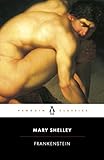
#1 — Frankenstein by Mary Shelley
Shelley’s creature and Dorian’s portrait share the same Gothic logic: the created double that embodies the creator’s guilt, kept hidden because to face it would be to face the truth about oneself. Victor Frankenstein and Dorian Gray are the same figure in different costumes — brilliant young men who produce something they cannot control and spend the rest of the novel fleeing it. But where Victor’s creature is external and eventually confrontational, Dorian’s portrait is locked away: the sin is internalised, the confrontation endlessly deferred, until the moment he can no longer avoid it. Reading the two novels together illuminates the range of Gothic doubling from the external monster to the hidden portrait.
#2 — The Strange Case of Dr Jekyll and Mr Hyde by Robert Louis Stevenson
Stevenson’s 1886 novella is the most direct Victorian predecessor to Dorian Gray in its treatment of the double self. Jekyll believes he can separate his good and evil natures; the experiment produces Hyde, who is not a purified version of either but something more primitive, the self with its conscience removed. Wilde read Stevenson, and the influence is visible: both texts are concerned with the Victorian double life, the respectable surface and the hidden pleasure, the self that can be shown and the self that must be locked away. The difference is that Jekyll regrets Hyde from the beginning; Dorian enjoys his portrait’s transformation for years before it destroys him.
#3 — Dracula by Bram Stoker
The immortal who feeds on the living to sustain his own existence: Stoker’s 1897 Dracula is the aesthetic predator in Gothic form, and the parallels with Dorian are more than structural. Both are figures of terrible beauty who survive by consuming others, both move through high society while concealing their nature, and both represent the Victorian terror of the self that refuses to age or repent. Where Dorian’s portrait is the hidden truth, Dracula casts no reflection — the self with no image at all, no conscience, no accumulated evidence of what it has done. The two novels together constitute the fullest Victorian account of beauty sustained by predation.
Art, Decadence, and the Beautiful Life
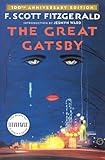
#4 — The Great Gatsby by F. Scott Fitzgerald
Gatsby’s parties, his shirts, his house across the water from Daisy’s green light: Fitzgerald’s 1925 novel is Dorian Gray without the Gothic machinery, the beautiful life as self-created lie sustained by money rather than magic. Gatsby, like Dorian, has constructed an identity from aesthetic surfaces — the right clothes, the right accent, the right parties — and the novel reveals, gradually, that there is nothing underneath. Nick Carraway is the Basil Hallward of the piece, the man who sees Gatsby with genuine admiration and eventually with horror. The difference is that Gatsby is motivated by love, or something he calls love, which gives his corruption a pathos Dorian’s entirely self-involved pleasures never quite achieve.
#5 — Against Nature (À Rebours) by Joris-Karl Huysmans
This is the book Lord Henry gives Dorian, the one that corrupts him — the “yellow book,” thinly fictionalised in the novel. Huysmans’s 1884 novel follows Duc Jean des Esseintes, a French aristocrat who retreats from society to a house designed entirely for aesthetic sensation, surrounding himself with rare objects, perfumes, and books, attempting to live entirely within the artificial. It is the decadent bible and the direct source for Wilde’s philosophy of art for art’s sake: Dorian Gray is essentially a Gothic novel built around the world Huysmans described. Reading it after Dorian Gray is to find the source, and to understand that Wilde was both celebrating and warning against the same thing.
#6 — The Talented Mr. Ripley by Patricia Highsmith
Tom Ripley kills to live the beautiful life and discovers that he is very good at it. Highsmith’s 1955 novel is Dorian Gray in crime fiction form: a man who believes that beauty and comfort are worth any price, who kills without sufficient remorse, and who survives — where Dorian does not — because Highsmith is interested in the successful sociopath rather than the punished one. Ripley, like Dorian, is protected by his surface: he is charming, careful, and aesthetically sensitive, and the novel presents these qualities with deliberate moral ambiguity. The pleasures Ripley takes in Italian art and good clothes are genuine; the bodies accumulate anyway.
#7 — Death in Venice by Thomas Mann
Gustav von Aschenbach, a distinguished German writer on holiday in Venice, becomes obsessed with a Polish boy named Tadzio whose beauty he cannot stop watching. Mann’s 1912 novella is the most classical treatment of beauty as destruction on this list: Aschenbach knows that his obsession is degrading him, that Venice is diseased, that the plague spreading through the city is both literal and metaphorical, and he stays anyway. The connection to Dorian Gray is direct — both texts are about the aesthete who encounters beauty and cannot look away — but where Wilde’s novel is theatrical and Gothic, Mann’s is internal and tragic. Aschenbach dies not having done anything; the contemplation is enough.
Conscience, Guilt, and the Hidden Life
#8 — Crime and Punishment by Fyodor Dostoevsky
Raskolnikov’s theory — that extraordinary people are beyond the moral law — is the philosophical underpinning of Dorian’s behaviour, stated explicitly. Where Dorian simply acts on Lord Henry’s aesthetic philosophy without examining its ethical implications, Raskolnikov theorises his exception first and then tests it with murder. Dostoevsky’s genius is to show that the theory is self-refuting: the extraordinary man who believes he is beyond conscience discovers that conscience is not external, not a social convention he can think his way around, but a feature of his own psychology that he cannot switch off. Dorian destroys his portrait to escape the same conclusion. It is the same ending.
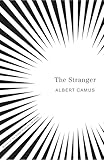
#9 — The Stranger by Albert Camus
Meursault kills a man on a beach and feels nothing about it, or says he feels nothing. Where Dorian cultivates aesthetic sensation to the exclusion of moral feeling, Meursault seems constitutionally incapable of the feeling in the first place — or incapable of performing it in a way society can recognise. Camus is interested in Meursault’s refusal as a philosophical position, an existentialist honesty about the absence of inherent meaning; Wilde is interested in Dorian’s cultivated indifference as a social pose that has become a soul. Both novels are about men who do not feel guilt in the way they are supposed to, and both are finally about what that costs — though Camus’s answer is judicial and Wilde’s is Gothic.
#10 — The Fall by Albert Camus
Jean-Baptiste Clamence, a former Parisian lawyer now living in Amsterdam, constructs elaborate confessions that are really accusations: he recounts his own moral failures in a way that implicates his listener. Camus’s 1956 novel is the most sardonic treatment of guilt on this list, the man who judges others while hiding his own guilt — the same moral structure as Dorian’s, but stripped of Gothic atmosphere and rendered as bitter comedy. Where Dorian externalises his guilt in a portrait, Clamence externalises it in confession, turning his own degradation into a means of degrading others. Both texts are finally about the impossibility of escaping the evidence of what you have become.
How to Choose Your Next Read
If you want the Gothic double in its purest form: The Strange Case of Dr Jekyll and Mr Hyde — Stevenson translates Wilde’s portrait into the divided self.
If you want the direct source text: Against Nature by Huysmans — the decadent bible that Lord Henry gives Dorian, and that Wilde used to build his novel.
If you want the American version: The Great Gatsby — the beautiful life as self-created lie, sustained by money rather than magic.
If you want the crime version: The Talented Mr. Ripley — the aesthete who kills to stay in the beautiful life, and survives where Dorian does not.
If you want the philosophical extreme: Crime and Punishment — Raskolnikov states Dorian’s implicit theory out loud, and Dostoevsky shows why it is wrong.
For the Best Fiction Books
For the definitive guide to fiction — the greatest novels across literary fiction, classics, and contemporary writing — see our Best Fiction Books of All Time list.
More Classic Literature Reading Guides
- Books Like Wuthering Heights: Wild Love and Gothic Atmosphere
- Books Like Great Expectations: Class and Self-Invention
Affiliate disclosure: Links to Amazon on this page are affiliate links. We earn a small commission at no extra cost to you. This does not influence our editorial recommendations.
Frequently Asked Questions
What is The Picture of Dorian Gray actually about?
The Picture of Dorian Gray is about the Faustian bargain in aesthetic form: a beautiful young man wishes that his portrait would age in his place, and the wish is granted. What follows is a study in what happens to a person who is never forced to confront the consequences of his choices in his own body. Dorian indulges every pleasure, corrupts those around him, and eventually commits murder — all while his face remains young and clear, the portrait in the attic accumulating the evidence of what he has become. Wilde's argument is that beauty without conscience is not beauty at all, and that a life devoted to sensation at the expense of others destroys the self that was trying to be preserved.
Is The Picture of Dorian Gray autobiographical?
In significant ways, yes. Wilde published the novel in 1890, several years before his trial and imprisonment, and it reads now as a coded autobiography: Lord Henry Wotton's brilliant, dangerous epigrams are Wilde's own wit deployed against himself, and Dorian's hidden life — the pleasures that cannot be acknowledged in public, the portrait that must be kept locked away — maps onto the double life that Victorian society required of gay men. When Wilde was tried in 1895, the novel was used as evidence against him, the prosecutor reading passages aloud to suggest that its author was complicit in the moral corruption it described. Wilde's response was that the novel was a moral work — that all three characters, Basil, Henry, and Dorian, were versions of himself, and that Dorian was what he feared he might become.
What should I read after The Picture of Dorian Gray if I want more Oscar Wilde?
Wilde's plays are the natural next step and collectively represent his greatest achievement. The Importance of Being Earnest is the masterpiece: a comedy so perfectly constructed that every line is both joke and argument, and its treatment of Victorian respectability and the double life is as radical as anything in the novel. An Ideal Husband and Lady Windermere's Fan work the same territory with more plot. For non-dramatic Wilde, The Decay of Lying and The Critic as Artist — both collected in Intentions — are the best statements of his aesthetic philosophy, and De Profundis, written in prison, is the most emotionally direct and least witty thing he ever produced, and one of the most moving.