Books Like The Martian: 11 Survival Sci-Fi Reads
Andy Weir's Mark Watney — abandoned on Mars, keeping himself alive by growing potatoes in a habitat fertilized with astronaut waste — is the most cheerful castaway in fiction. These books share its relentless ingenuity, its celebration of science, and its faith that problems have solutions.

Andy Weir’s The Martian arrived in 2011 as a self-published ebook posted chapter by chapter on Weir’s website, assembled by a writer who had spent years researching orbital mechanics and chemistry because he wanted the science to be correct. By the time it was picked up by a publisher in 2013, it had already found its audience: readers who wanted science fiction that trusted them to follow the math, and who found something genuinely bracing about a protagonist whose response to almost dying is to figure out the exact caloric yield of his potato crop.
Mark Watney is one of fiction’s great optimists — not because he is unrealistic about his situation (he calculates carefully how long he has before he starves) but because he refuses to treat the calculation as a reason to stop calculating. The novel’s pleasures are the pleasures of competence: watching a smart person apply real knowledge to a real problem and make incremental progress. When something goes wrong — and things frequently go wrong — Watney’s response is to figure out what the new problem is and solve that instead.
The books below were chosen for readers who responded to that spirit: the celebration of science, the castaway who survives through ingenuity, the faith that the universe, however hostile, is at least comprehensible. They are grouped by what they share most closely with Weir’s novel.
More Andy Weir
#1 — Project Hail Mary by Andy Weir
Ryland Grace wakes up alone in a spacecraft with no memory of how he got there, two dead crewmates, and the gradually returning realization that he is the last hope for life on Earth. Weir’s third novel is his best: it has all the problem-solving energy of The Martian but adds a first-contact story that turns out to be one of the warmest in science fiction, a genuine mystery structure built around the amnesia, and emotional stakes that the earlier novel never quite reached. If you read only one Weir after The Martian, this is the one.
#2 — Artemis by Andy Weir
Jazz Bashara is a low-level smuggler on Artemis, humanity’s first city on the Moon, who gets drawn into a conspiracy involving the lunar economy’s most powerful interests. Weir’s second novel has the same voice — quick, jokey, technically precise — but a different kind of story: part heist, part economic thriller, all set against the backdrop of a meticulously designed lunar colony. It is not as well-regarded as The Martian or Project Hail Mary, primarily because Jazz is a more frustrating narrator than Watney, but the science and the world-building are as meticulous as anything Weir has done.
Hard Science Fiction and the Thinking Hero
#3 — The Long Way to a Small, Angry Planet by Becky Chambers
A crew of tunnelling-ship operators travels through deep space on a years-long job, and the novel is largely about what happens between the plot points: the meals, the arguments, the relationships, the way a small group of people become a family in a confined space. Chambers writes the Weir spirit with more emphasis on character and less on technical problem-solving, and the result is science fiction that is warm in the way that good workplace fiction is warm. For readers who loved Watney but found themselves wishing for more people around him, this is the natural next step.
#4 — A Fire Upon the Deep by Vernor Vinge
Vinge’s novel posits a galaxy divided into Zones of Thought, where the laws of physics and the capabilities of minds change depending on how far from the galactic core you travel. A ship from the Transcend accidentally releases something catastrophic, and the fate of civilization depends on a rescue mission to a medieval alien world populated by creatures who think in packs. The scope is enormous and the ideas are genuinely original. Where Weir keeps the science grounded and human-scale, Vinge operates at maximum ambition — but the same faith in intelligence as the appropriate response to the universe runs through both.
#5 — Red Mars by Kim Stanley Robinson
In 2026, one hundred scientists and engineers are sent to Mars to begin the centuries-long process of making it habitable. Robinson’s first volume of the Mars trilogy is the serious-science version of Weir’s playfulness: slower, denser, more interested in politics and ecology than in individual problem-solving, but built on the same foundation of meticulously researched planetary science. For readers who finished The Martian wanting to know what actually living on Mars long-term would look like — the geology, the atmospheric chemistry, the social structures — this is the place to go.
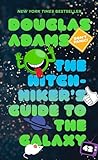
#6 — The Hitchhiker’s Guide to the Galaxy by Douglas Adams
Seconds before Earth is demolished to make way for a hyperspace bypass, Arthur Dent is rescued by his friend Ford Prefect, who turns out to be a researcher for the eponymous guidebook. Adams’s novel is the comic inverse of The Martian: where Watney applies rigorous science to survive, Arthur stumbles through the universe relying on improbability, towels, and the answers to questions he hasn’t asked. But both books find the universe fundamentally ridiculous and fundamentally survivable, and both are animated by the pleasure of watching someone who refuses to take their situation entirely seriously.
Survival Against Impossible Odds
#7 — Robinson Crusoe by Daniel Defoe
An Englishman shipwrecked on a deserted island spends nearly thirty years building a habitable life from scratch. Defoe’s 1719 novel is the literary ancestor of every castaway survival story, and Watney is his direct descendant: the same inventory-taking, the same incremental construction of systems, the same practical theology of survival. Crusoe is more pious and more imperial than Watney, but the core activity — cataloguing what you have, figuring out what you need, solving the immediate problem — is identical. Reading Defoe after Weir illuminates what the castaway genre has always been doing.
#8 — Hatchet by Gary Paulsen
Thirteen-year-old Brian Robeson survives a plane crash in the Canadian wilderness with nothing but a hatchet and has to keep himself alive long enough to be rescued. Paulsen’s 1987 novel is the YA version of The Martian’s survival ingenuity: smaller in scale, more focused on the psychological cost of isolation, and built around the same incremental learning curve. Brian does not have Watney’s humor or his scientific training, but he has the same basic disposition — look at the problem, figure out what you have, make it work. It is the most emotionally honest survival story on this list.
#9 — Endurance by Alfred Lansing
Ernest Shackleton’s 1914 Antarctic expedition goes catastrophically wrong when his ship becomes trapped in pack ice and is slowly crushed. Lansing’s reconstruction — drawn from the diaries and interviews of the twenty-eight men who survived — is nonfiction that out-dramatizes most fiction. The problem-solving is constant and real: how to keep twenty-eight men alive on drifting ice, then in three small boats, then on one of the most inhospitable islands on Earth. Shackleton’s response to every new disaster is essentially Watney’s: assess the situation, identify the immediate problem, solve it, move to the next one.
How to Choose Your Next Read
If you want the most direct sequel in spirit: Project Hail Mary — Weir at his best, with more heart.
If you want the warmest version of the competent-crew story: The Long Way to a Small, Angry Planet — less science, more people.
If you want the comic version: The Hitchhiker’s Guide to the Galaxy — the universe as absurd but survivable.
If you want the nonfiction that matches the spirit: Endurance — real survival, every bit as gripping.
If you want the serious science of Mars: Red Mars — the long version of what Weir compressed.
Andy Weir Books in Order
For every Andy Weir novel in order — The Martian, Artemis, and Project Hail Mary — see our Andy Weir Books in Order guide.
For the Best Science Fiction Books
For the definitive guide to science fiction — from Asimov and Herbert to Andy Weir and Ursula K. Le Guin — see our Best Sci-Fi Books of All Time list.
Affiliate disclosure: Links to Amazon on this page are affiliate links. We earn a small commission at no extra cost to you. This does not influence our editorial recommendations.
Frequently Asked Questions
What makes The Martian different from other survival stories?
Most survival stories are about endurance — the psychological cost of being alone, the question of whether the protagonist will give up. The Martian is about problem-solving. Watney is not brooding or despairing; he is methodical, funny, and relentlessly optimistic. The science is real enough to follow, the problems are specific, and the solutions emerge from chemistry and botany and orbital mechanics rather than from willpower or luck. That makes it feel like a celebration of competence rather than a test of suffering.
Is The Martian scientifically accurate?
Broadly yes, with some deliberate simplifications. Weir researched the orbital mechanics, the chemistry of the habitat systems, and the nutritional requirements in detail, and the core conceit — growing potatoes using human waste as fertilizer on Mars — is plausible. The one major liberty Weir has acknowledged is the Martian dust storm that strands Watney in the first place: Mars's atmosphere is too thin to generate winds with that much force. He kept it because the story required it. Everything else holds up reasonably well to scrutiny.
What should I read after The Martian?
Project Hail Mary, Weir's third novel, is the consensus best next step — it has the same optimistic problem-solving energy but with a more emotionally complex story and a first-contact element. Artemis, Weir's second novel, is set on the Moon and has the same voice but is less beloved. Beyond Weir, The Long Way to a Small, Angry Planet by Becky Chambers has a similar warmth and competence-celebration; and Endurance by Alfred Lansing is the nonfiction survival story that most closely matches the spirit of Watney's situation.