Books Like The Kite Runner: 11 Novels of Guilt & Home
If The Kite Runner moved you with its portrait of friendship, betrayal, and the long road back to something like peace, these novels explore the same territory.

Khaled Hosseini’s The Kite Runner is built around a single act of cowardice. Amir is twelve years old when he watches his friend Hassan — the Hazara boy who has been his companion since infancy, who has defended him, who loves him without reservation — assaulted in an alley, and does nothing. He does not intervene. He tells himself he is afraid. He tells himself it was not his fault. Then he spends the next twenty-five years carrying the memory of the alley and the thing he did not do.
The novel that follows is about whether such failures can be survived — not forgiven, exactly, but answered. Hosseini traces Amir from his privileged childhood in Kabul through the Soviet invasion, refugee life in California, moderate literary success, and ultimately a return to Taliban-controlled Afghanistan on a mission that is, at its root, an attempt to repay a debt that can never be fully settled. The Afghanistan the novel depicts — the pre-war Kabul of kite tournaments and pomegranate trees, and the destroyed, unrecognisable country that replaces it — functions simultaneously as a real place and as the landscape of a moral reckoning.
The books below share The Kite Runner’s central concerns: the weight of what we did or failed to do, the possibility of amends, the way a single moment can determine the shape of a life, and the particular experience of belonging to a world that was destroyed.
The Other Hosseini: Afghanistan from a Different Angle
#1 — A Thousand Splendid Suns by Khaled Hosseini
Hosseini’s second novel covers the same decades of Afghan history as The Kite Runner — Soviet occupation, civil war, Taliban rule, American invasion — but from the perspective of two women whose lives are shaped primarily by the violence directed specifically at them as women. Mariam is given away at fifteen to a man she does not know. Laila loses everything she has to a rocket attack, then finds herself with no choice but the same man’s household. Their relationship — forced together, wary, then deeply bound — is one of the most affecting in contemporary fiction. More emotionally devastating than The Kite Runner, and less concerned with personal guilt than with structural violence, it is in every other way its natural companion.
War, Displacement, and Historical Witness
#2 — Half of a Yellow Sun by Chimamanda Ngozi Adichie
Nigeria, 1960s. The Biafran War tears apart a country and the lives of five people whose stories Adichie follows through the conflict. An Igbo professor and his twin-sister partner, her British lover, and their houseboy each experience the war differently — through privilege, through ideology, through survival — and Adichie is interested in what war does to each kind of person and each kind of love. Like The Kite Runner, it uses intimate personal drama to carry the weight of enormous historical catastrophe, and it refuses the comfort of clean moral resolution. It is Adichie’s most ambitious novel and among the finest literary treatments of African history in the contemporary canon.
#3 — The Book Thief by Markus Zusak
Narrated by Death — a device that should not work as well as it does — Zusak’s novel follows Liesel Meminger through wartime Germany, where she lives with a foster family that hides a Jewish man in their basement and where books become the medium through which she makes sense of the destruction around her. Like The Kite Runner, it is organized around love between people who are not supposed to be equals — a friendship across a social boundary that the surrounding culture treats as unbridgeable — and around what it costs to witness atrocity without being able to stop it. Zusak’s prose is stylized and distinctive, and the emotional impact is genuine.
#4 — The Nightingale by Kristin Hannah
Two sisters in occupied France make opposite choices about resistance. Vianne accommodates, protects her daughter, survives through compromise. Isabelle joins the Resistance and guides airmen across the Pyrenees. Hannah’s novel shares The Kite Runner’s structure of two people who love each other but whose choices diverge irreconcilably under pressure, and its interest in how ordinary people respond to situations of historical extremity. It is more plot-driven than Hosseini’s novel and less psychologically demanding, but it is deeply felt and its portrait of a specific historical moment — France under German occupation — is carefully rendered.
#5 — A Fine Balance by Rohinton Mistry
India during Indira Gandhi’s Emergency of the 1970s. Four people — two tailors from a lower caste, a widow, and a student — are thrown together in a single apartment and then subjected to the full force of political violence and poverty. Mistry’s novel is long, patient, and merciless: it builds deep attachment to its characters and then applies sustained pressure to everything they have. It shares with The Kite Runner an interest in how political history enters and destroys private lives, a moral seriousness about caste and class violence, and a refusal to resolve its catastrophes into comfort. Many readers consider it among the most devastating novels in the post-colonial literary tradition.
Guilt, Redemption, and the Weight of the Past
#6 — Atonement by Ian McEwan
In 1935, thirteen-year-old Briony misreads a scene and makes an accusation that destroys two lives. McEwan’s novel follows the consequences of that accusation across decades — through the war, through adulthood, into old age — and asks, with extraordinary formal precision, whether it is ever possible to atone for an act whose consequences cannot be undone. Atonement is the novel most structurally similar to The Kite Runner in its interest in a single childhood failure and its lifelong aftermath, and McEwan’s treatment of the question is more philosophically rigorous and formally inventive than Hosseini’s. Less emotionally direct, more demanding, and ultimately more ambiguous about whether redemption is possible at all.
#7 — Beloved by Toni Morrison
Sethe escaped slavery eighteen years ago. The house she lives in is haunted by the daughter she killed rather than let be taken back into captivity. Morrison’s novel is the most demanding book on this list — its prose is dense, its structure non-linear, its subject the specific horrors of American slavery — but it is the most serious treatment in American fiction of guilt that has no clean resolution, of a love that has done the most terrible thing, and of whether a person can continue to live with what they have done and suffered. The connection to The Kite Runner is not in plot but in the question both books ask: what do you do with the thing you did, the thing you witnessed, the thing that cannot be undone?
#8 — A Little Life by Hanya Yanagihara
Included here with a significant caveat: A Little Life is one of the most difficult novels in contemporary fiction, and readers who are sensitive to graphic depictions of abuse should approach it cautiously. For readers who can go there, it is the deepest treatment available of what it means to survive damage that no amount of love can fully repair — and of the people who choose, anyway, to keep trying. The connection to The Kite Runner is the question of survival: whether a person can be damaged as severely as Hosseini’s and Yanagihara’s protagonists are damaged and still build something worth calling a life.
Family, Displacement, and Self-Discovery
#9 — Pachinko by Min Jin Lee
A teenage girl’s pregnancy in colonial Korea in 1910 sets in motion a story that extends across four generations and the entire twentieth century. Lee’s novel follows a Korean family living in Japan — a community that cannot fully belong to a country it was partly forced to work in — through decades of discrimination, sacrifice, and the way choices made under impossible circumstances travel into the lives of people who never made them. Like The Kite Runner, it is about the weight of origins, the impossibility of separating yourself from a history you did not choose, and the specific loneliness of existing between two worlds. The scope is enormous and the execution is equal to it.
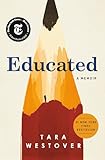
#10 — Educated by Tara Westover
Tara Westover grew up in a survivalist family in rural Idaho, with no schooling, no birth certificate, and no contact with the state. Through extraordinary effort she educated herself, won a place at Brigham Young University, and eventually earned a PhD from Cambridge. Educated is a memoir, not a novel, but it belongs on this list because it shares The Kite Runner’s fundamental structure: a person formed by a world they must eventually leave behind, carrying love for that world and damage from it in equal measure, and reckoning, over many years, with what they owe to the people they came from and what they owe to themselves. Westover’s account of this reckoning is among the most honest and demanding memoirs of recent years.
#11 — The Alchemist by Paulo Coelho
An Andalusian shepherd boy dreams of treasure buried near the Egyptian pyramids. His journey across the desert is a fable about listening to the world’s signs, following your purpose, and the discovery — available only by going away and returning — that what you were looking for was always near where you began. The Alchemist is the most allegorical and least realistic book on this list, and the furthest from The Kite Runner in tone. It belongs here because Hosseini’s novel is, at its core, a journey narrative about a man who must travel back to his origins to complete something he left undone — and Coelho’s fable illuminates that structure more simply and directly than any realistic novel could.
How to Choose Your Next Read
If you want more Hosseini, same setting: A Thousand Splendid Suns is the obvious next read.
If you want historical scope and political devastation: Half of a Yellow Sun or A Fine Balance.
If you want guilt and the question of atonement in literary fiction: Atonement or Beloved.
If you want generational displacement and family: Pachinko or Educated.
If you want war seen through civilian eyes: The Nightingale or The Book Thief.
If you want something more demanding and darker: A Little Life.
For the Best Fiction Books
For the definitive guide to fiction — the greatest novels across literary fiction, classics, and contemporary writing — see our Best Fiction Books of All Time list.
More Literary World Fiction Guides
- Books Like Everything Is Illuminated: Memory and Comedy
- Books Like A Thousand Splendid Suns: Women’s Survival
Affiliate disclosure: Links to Amazon on this page are affiliate links. We earn a small commission at no extra cost to you. This does not influence our editorial recommendations.
Frequently Asked Questions
Does The Kite Runner need a content warning?
Yes. The Kite Runner contains a graphic depiction of the sexual assault of a child — Hassan's rape by Assef — which occurs early in the novel and is the act around which the entire story turns. Readers should know it is coming. The novel also contains sustained violence in its Afghanistan sections, depicting life under Taliban rule with unflinching honesty. These are not gratuitous elements; they are central to what the novel is about. But readers who are sensitive to either subject should go in prepared.
Is The Kite Runner historically accurate about Afghanistan?
Broadly, yes. Hosseini grew up in Kabul and left Afghanistan in 1980, and the novel's portrait of pre-Soviet Kabul — the kite tournaments, the social hierarchies between Pashtun and Hazara, the ordinary pleasures of a city that no longer exists in that form — is drawn from his own childhood memories. The Taliban sections are similarly grounded. What the novel does less of is political analysis; it is primarily a personal and emotional account of what Afghanistan's decades of war cost its people, rather than an examination of why or how those wars happened.
What is the difference between The Kite Runner and A Thousand Splendid Suns?
Both novels are set largely in Afghanistan and span roughly the same historical period. The Kite Runner is told from a male perspective and focuses on guilt, betrayal, and the possibility of redemption across a father-son and friendship dynamic. A Thousand Splendid Suns is told from two female perspectives and focuses on the specific violence directed at women under the Taliban, and on female solidarity as survival. The Kite Runner is Hosseini's more structurally conventional novel; A Thousand Splendid Suns is in many ways more emotionally devastating. Both are essential.
What makes The Kite Runner so resonant with readers?
The Kite Runner operates on a guilt structure that is almost universally recognisable: a moment of failure, witnessed or unwitnessed, that you spent years not being able to look at directly. Most readers know this feeling in some version. What Hosseini does is give that guilt a specific historical and cultural context — the destruction of Afghanistan — and trace its consequences across decades and continents. The combination of personal emotional truth and historical scope is what gives the novel its reach.