Books Like Jurassic Park: 12 Science Techno-Thrillers
If Jurassic Park's blend of cutting-edge science, chaos theory, and all-out survival gripped you, these techno-thrillers deliver the same rush.

Michael Crichton’s Jurassic Park is the gold standard of the techno-thriller — a novel that takes a single audacious scientific premise and extrapolates it to disaster with complete rigor and narrative momentum. Published in 1990, it opens not as a thriller but almost as a thought experiment: what if the extraction of ancient DNA made it possible to clone extinct species. Then it builds the island, populates it with dinosaurs, staffs it with a cast of experts who understand different pieces of the system, and asks what happens when the system fails. The answer, filtered through Ian Malcolm’s chaos theory framework, is that it will fail — has already failed, in a sense — because the park’s designers confused control with the illusion of control.
What separates Crichton from lesser thriller writers is the science lecture problem. Most novels that incorporate technical detail either bury it in appendices or simplify it to the point of meaninglessness. Crichton found a third way: he makes the science the most compelling part of the narrative. Malcolm’s disquisitions on chaos theory, the geneticists’ discussions of de-extinction, the computer code that runs the park’s systems — these sections are genuinely fascinating and they are the novel’s real engine. The thriller plot and the scientific framework are not separable. When the dinosaurs escape, it means something because you understand why they were always going to escape.
The books below share some combination of Crichton’s essential qualities: hard science extrapolated to nightmare, isolated environments where the rules of civilization no longer apply, ensemble casts being systematically reduced, and the consistent theme that the most dangerous creature in any ecosystem is the one that is certain it has everything under control.
More Crichton: The Same Formula, Different Science
#1 — The Lost World by Michael Crichton
The direct sequel to Jurassic Park follows mathematician Ian Malcolm — who supposedly died at the end of the first novel — to a second Costa Rican island where InGen conducted experiments it never reported. The premise is tighter and darker than the original: the dinosaurs on this island have had years to develop into a functioning ecosystem, and the human intrusion disrupts it from multiple directions at once. Malcolm’s chaos theory observations are less formally integrated here than in the original, but the novel delivers exactly what fans of the first book want, and it develops the behavioral ecology of the dinosaurs in ways the first novel did not have space to explore.
#2 — Sphere by Michael Crichton
A team of scientists is taken to the bottom of the Pacific Ocean, where a spacecraft has been discovered on the ocean floor — three hundred years old, American-flagged, and apparently from the future. What they find inside it defies explanation. Sphere applies the Crichton formula to first-contact science and the deep sea: an isolated environment, a phenomenon no one fully understands, and a gradual collapse of rational consensus as the team members are exposed to something that appears to respond to human psychology. The claustrophobia of the underwater habitat is extraordinarily effective.
#3 — Prey by Michael Crichton
A swarm of self-replicating nanobots has escaped from a desert research facility, and the engineer who designed their evolutionary software is sent in to stop them. Prey is Crichton applying the Jurassic Park framework to nanotechnology: the same hubris, the same isolated environment, the same process by which the system the experts built turns against them. The evolution of the swarm’s behavior as it adapts to its environment is technically detailed in a way that feels genuinely alarming rather than fantastic, and the domestic subplot — the engineer’s marriage is unraveling for reasons that turn out to be connected to the swarm — adds a layer of psychological dread that most Crichton novels forgo.
Science-Run-Amok Thrillers
#4 — The Hot Zone by Richard Preston
A true account of a 1989 Ebola outbreak in a monkey facility in Reston, Virginia — seventeen miles from Washington, D.C. Preston writes narrative nonfiction with the pace and structure of a thriller, and The Hot Zone is one of the most terrifying books in any genre. The science is scrupulous and deeply reported, the descriptions of hemorrhagic fever are viscerally horrifying, and the central dread — that a Level 4 pathogen came within very small margins of spreading into the civilian population — is historical fact. For readers who respond to Crichton’s sense that scientists are always working close to the edge of catastrophe, this is the nonfiction version of that feeling.
#5 — Oryx and Crake by Margaret Atwood
The first novel in Atwood’s MaddAddam trilogy, set in a near future where corporate compounds housing biotech and pharmaceutical companies have replaced civic society, and genetic engineering has become the dominant economic activity. Snowman — apparently the only unmodified human left alive — narrates from the post-apocalyptic present while the novel reconstructs the friendship between him and the brilliant, amoral Crake, whose final project was a redesign of the human species. Atwood’s novel is more literary and more morally complex than Crichton’s work, less interested in thriller mechanics and more in the social conditions that make scientific catastrophe possible. It is a necessary complement rather than a straight equivalent.
#6 — Next by Michael Crichton
A mosaic novel that follows multiple storylines — a transgenic chimpanzee raised as a human child, a dispute over the legal ownership of a man’s cancer cells, a parrot with partial human DNA — to build a comprehensive critique of the biotechnology industry. Next is the Crichton book most directly concerned with the ethical and legal infrastructure around genetic science, and it reads at times more like a documented polemic than a thriller. For readers who found the corporate-greed subplot of Jurassic Park as compelling as the dinosaurs, Next is where Crichton develops that theme at full length.
Survival Thrillers in Isolated Environments
#7 — Congo by Michael Crichton
A ERTS expedition into the Congo rainforest, searching for a lost city and a rare blue diamond, accompanied by a gorilla trained in sign language. What the team finds in the rainforest is more dangerous than anything on its maps. Congo is one of Crichton’s most purely adventurous novels, indebted to H. Rider Haggard and Arthur Conan Doyle’s lost-world tradition, but it has the same structural DNA as Jurassic Park: expert team, hostile environment, discovery that invalidates the assumptions they brought with them. The communications and satellite technology sections, dated as they now are, were as technically impressive to 1980 readers as the genetic engineering in Jurassic Park was to readers in 1990.
#8 — The Martian by Andy Weir
Astronaut Mark Watney is left behind on Mars after a mission abort and must survive on available resources until rescue is theoretically possible. Weir’s novel is the closest contemporary equivalent to Crichton’s specific genius: a protagonist who solves problems with applied science in real time, technical detail that is scrupulously accurate and narratively propulsive, and a situation in which the environment is the antagonist rather than any human actor. The tone is considerably lighter than Jurassic Park — Watney’s voice is sardonic and the novel has a fundamentally optimistic relationship to human ingenuity — but the engineering-problem structure is the same.
Genetic Engineering and Biotechnology Fiction
#9 — Brave New World by Aldous Huxley
Huxley’s 1932 novel imagines a World State in which human beings are manufactured and conditioned to fill predetermined social roles. The Bokanovsky Process, which produces up to ninety-six identical humans from a single fertilized egg, is the foundational biotechnology of a society that has eliminated suffering by eliminating freedom. Where Crichton shows the technology failing catastrophically, Huxley shows it succeeding perfectly — which turns out to be the more disturbing scenario. The novel asks the same question Jurassic Park asks about the engineers at InGen: whether the ability to do something provides any justification for doing it.
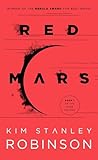
#10 — Red Mars by Kim Stanley Robinson
The first volume of Robinson’s Mars trilogy follows the first hundred colonists sent to terraform Mars — scientists, engineers, and administrators whose competing visions of the planet’s future pull the colony apart from within. Red Mars is the most demanding science fiction novel on this list, dense with geology, atmospheric chemistry, and political theory, and it moves at a pace that rewards patience rather than urgency. But its central question — whether humanity has the right to alter a planetary biosphere, and what happens when people who believe they do encounter people who believe they do not — is the most serious literary extension of the ethical territory Jurassic Park maps. Hammond and Malcolm’s argument is replayed here at civilizational scale.
Hard Science Fiction for the Technically Curious
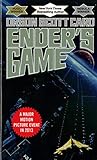
#11 — Ender’s Game by Orson Scott Card
Andrew “Ender” Wiggin is recruited as a child to Battle School, an orbital military academy training humanity’s future commanders for a war against an alien species. Card’s novel is primarily a story about intelligence, manipulation, and the moral cost of using children as weapons — but it shares with Jurassic Park a rigorous interest in systems, strategy, and the gap between what commanders believe they are controlling and what is actually happening. The reveal of the novel’s final act reframes everything that came before in the same way that Malcolm’s chaos theory framework reframes the park’s apparent success in Jurassic Park.
#12 — Dark Matter by Blake Crouch
A physicist is kidnapped, drugged, and wakes up in a version of his life he does not recognize — married to someone else, with a career that belongs to a different version of himself. Dark Matter takes quantum mechanics as its scientific premise and extrapolates it into a survival thriller about identity, choice, and the versions of yourself that your decisions leave behind. Crouch writes with Crichton’s same compulsive pacing and commitment to working through the implications of his scientific premise, and the novel has the same quality of making physics genuinely thrilling rather than merely decorative.
How to Choose Your Next Read
If you want more Crichton first: The Lost World is the immediate next step, followed by Sphere and then Prey.
If you want the best Crichton equivalent by another author: The Hot Zone for nonfiction dread, Dark Matter for breakneck pace, The Martian for science-as-plot-engine optimism.
If you want the literary version of Jurassic Park’s themes: Brave New World for the long view, Oryx and Crake for the near-future corporate version.
If you want classic adventure with the same lost-world DNA: Congo.
If you want hard science fiction that rewards the technically curious: Ender’s Game for systems-thinking and shocking reveals, or Red Mars for the deepest literary treatment of humanity’s hubris in remaking a biosphere.
Michael Crichton Books in Order
For every Michael Crichton novel in order — Jurassic Park, Congo, The Andromeda Strain, and more — see our Michael Crichton Books in Order guide.
For the Best Science Fiction Books
For the definitive guide to science fiction — from Asimov and Herbert to Andy Weir and Ursula K. Le Guin — see our Best Sci-Fi Books of All Time list.
Affiliate disclosure: Links to Amazon on this page are affiliate links. We earn a small commission at no extra cost to you. This does not influence our editorial recommendations.
Frequently Asked Questions
Should I read The Lost World after Jurassic Park?
Yes, The Lost World is the direct sequel to Jurassic Park and picks up several years after the events of the first novel. It brings back mathematician Ian Malcolm and introduces a second island where InGen was conducting additional experiments. Most readers find it a slightly lesser work than the original — the chaos theory framework is less integrated, and the plot is more straightforwardly a thriller — but it delivers exactly what fans of Jurassic Park want: more dinosaurs, more science, and more catastrophic corporate hubris.
Which other Michael Crichton books are most similar to Jurassic Park?
The Crichton novels most similar to Jurassic Park are Sphere, Congo, and Prey. All three follow the same structural template: a team of experts is sent into an isolated environment where cutting-edge science has produced something beyond human control, and the situation deteriorates rapidly. Sphere applies this formula to deep-sea exploration and a mysterious alien artifact; Congo to the rainforest and a lost city; Prey to nanotechnology in the Nevada desert. Next, his posthumously compiled novel, also covers genetic engineering and biotechnology if you want to stay in Jurassic Park's specific territory.
Is Jurassic Park scientifically accurate?
Jurassic Park is extrapolation rather than prediction, but it is grounded in real science more carefully than most thrillers. The DNA extraction premise — recovering dinosaur genetic material from insects preserved in amber — was a plausible hypothesis in 1990 that has since been largely ruled out by the degradation rates of ancient DNA. Crichton's use of chaos theory and complex systems is more durable: the idea that a sufficiently complex system will behave in ways its designers cannot anticipate remains scientifically mainstream. The novel gets the spirit of molecular biology right even where the specific mechanisms are speculative.