Best World War One Books: Fiction and Non-Fiction
The best World War One books — from All Quiet on the Western Front and Birdsong to Regeneration and A Farewell to Arms. Essential WWI fiction and history.

World War One produced some of the most important literature in any language — partly because it was the first modern industrial war, which required new forms to describe, and partly because it killed so many of the writers who would have written about it. The novels below range from the most famous anti-war novel ever written (Remarque) to the most psychologically complex (Barker) to the most detailed account of specific battles (Faulks).
The Anti-War Masterwork
All Quiet on the Western Front — Erich Maria Remarque (1929)
The definitive First World War novel and the most powerful anti-war statement in fiction — Paul Bäumer and his classmates, enlisted from school with their teachers’ encouragement, discovering that the rhetoric of honour and patriotism has nothing to do with the reality of the trenches. The novel was banned and burned by the Nazis in 1933. It has never gone out of print. The most immediate starting point for WWI literature.
British Perspectives
Birdsong — Sebastian Faulks (1993)
The most detailed and most harrowing British WWI novel — Stephen Wraysford’s experience on the Western Front (1916-17), including the Battle of the Somme and the tunnel warfare that followed, interwoven with a contemporary story in which his granddaughter discovers his diaries. Faulks’s account of the Somme (on the first day of the battle, 57,000 British soldiers were killed or wounded) is the most fully realised in fiction.
Regeneration — Pat Barker (1991)
The most intellectually serious British WWI novel — Dr. Rivers treating shell shock at Craiglockhart, Siegfried Sassoon’s protest against the war, and the paradox of a hospital that treats men in order to return them to what broke them. Barker uses the historical Sassoon and Wilfred Owen alongside fictional characters; the result is a novel about the psychology of war, the ethics of protest, and the relationship between the institutional and the personal.
The Ghost Road — Pat Barker (1995)
The final volume of Barker’s Regeneration Trilogy — Rivers’s research into pre-war Melanesian culture (in which headhunting and ritual violence illuminate the logic of the trenches) woven with Billy Prior’s return to the Western Front for the final offensive of 1918. Won the Booker Prize. Read after Regeneration.
American Perspective
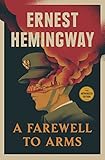
A Farewell to Arms — Ernest Hemingway (1929)
Hemingway’s account of the Italian campaign — Lieutenant Frederic Henry, an American serving with the Italian army, his relationship with the English nurse Catherine Barkley, and his retreat after the Italian defeat at Caporetto. Hemingway’s prose style (short declarative sentences, understatement, the emotion communicated through what is omitted) is perfectly suited to his subject: the war as a world in which grand abstractions have no purchase on the reality of what is happening.
The War That Broke the Old Language
The First World War occupies a unique place in literary history because it did not merely supply new subject matter — it shattered the language available for writing about war at all. The conflict arrived carrying the inherited rhetoric of the nineteenth century: glory, honour, sacrifice, the noble death for one’s country. The industrial slaughter of the trenches — machine guns, artillery barrages, poison gas, the anonymous mass death of the Somme, where tens of thousands fell in a single morning — rendered that vocabulary obscene. The writers on this list are united by their reckoning with this collapse. Hemingway gave it perhaps its most famous statement: his narrator’s confession that abstract words like glory and honour had become embarrassing beside the concrete names of villages and the numbers of regiments, the only words that still meant anything. Remarque’s title itself is bitter irony — the official communiqué’s bland “all quiet” reported over a young man’s death. The war’s literature had to invent an anti-rhetoric of understatement, fragmentation, and unflinching physical detail precisely because the old eloquence had been disgraced. This is why the period is also the cradle of literary modernism: the forms had to break because the world had broken, and these war books are among the first and clearest evidence of the rupture.
Trench, Hospital, and Mind
One of the rewards of reading across this list is the range of vantage points it offers on a single catastrophe, each illuminating a different dimension of the war’s damage. Remarque and Faulks take us into the trench itself — the mud, the bombardment, the tunnelling beneath the lines, the bodily reality of industrial combat rendered with almost unbearable immediacy. Hemingway shifts the angle to the wound and the retreat, the war as experienced through injury, love, and the disillusioned flight from a cause that has revealed itself as hollow. But it is Pat Barker’s Regeneration trilogy that opens the war’s most modern front: the mind. By setting her novels in Craiglockhart war hospital, where the pioneering psychiatrist W.H.R. Rivers treated shell-shocked officers, Barker makes the war’s psychological devastation her explicit subject, and raises the unbearable paradox at the heart of military psychiatry — that the doctor’s task was to heal men precisely in order to return them to what had broken them. Her use of the real poets Sassoon and Owen alongside invented characters also captures how completely this war was mediated through literature, fought and remembered by the writers it produced and destroyed. Trench, hospital, and mind together compose a fuller portrait than any single book could.
Beyond the Novel: Poetry and Memoir
Readers moved by these novels should know that the First World War’s most concentrated literary legacy may lie outside fiction altogether, in the poetry and memoir the war produced in extraordinary abundance. The war poets — Wilfred Owen, Siegfried Sassoon, Isaac Rosenberg, Edward Thomas — created some of the most enduring verse in the English language, and Owen’s “Dulce et Decorum Est,” with its savage demolition of the old lie that it is sweet and fitting to die for one’s country, is perhaps the single most influential anti-war poem ever written; that Barker’s trilogy draws on Owen and Sassoon directly makes the poetry a natural companion to the fiction. The memoir tradition is equally essential: Robert Graves’s Goodbye to All That, Siegfried Sassoon’s lightly fictionalized Memoirs of an Infantry Officer, and Vera Brittain’s Testament of Youth — the latter offering the crucial perspective of a woman who served as a nurse and lost a fiancé, a brother, and nearly an entire generation of friends. For the German side beyond Remarque, Ernst Jünger’s Storm of Steel presents the disturbing counter-vision of war as transformative ordeal rather than pure horror. Begin with the novels here for narrative power, then turn to the poems and memoirs for the war in the words of those who did not survive to write novels.
Reading Order
Start essential: All Quiet on the Western Front → Birdsong → Regeneration.
British trilogy: Regeneration → The Eye in the Door → The Ghost Road.
Compare perspectives: All Quiet on the Western Front (German) → A Farewell to Arms (American) → Birdsong (British).
Frequently Asked Questions
What is the best novel about World War One?
All Quiet on the Western Front (1929) by Erich Maria Remarque is the most widely read First World War novel and the most powerful anti-war statement in fiction — Paul Bäumer's account of life and death in the German trenches is the definitive portrait of the war from the perspective of those who fought it. Birdsong (1993) by Sebastian Faulks is the best British World War One novel — covering both the trenches (1916) and a contemporary English character researching his grandfather's experience. Regeneration (1991) by Pat Barker is the most psychologically complex — set in Craiglockhart War Hospital, where shell shock victims were treated, including Siegfried Sassoon and Wilfred Owen.
What is All Quiet on the Western Front about?
All Quiet on the Western Front (1929) by Erich Maria Remarque follows Paul Bäumer, a nineteen-year-old German soldier who enlists enthusiastically in the First World War with his classmates and immediately discovers that the idealism with which they were sent to the front has nothing to do with the reality of the trenches. The novel covers the war from 1914 to 1918 — the boredom, the hunger, the violence, the deaths of Paul's friends one by one — and ends with Paul's own death on a quiet day, mentioned almost parenthetically in the final paragraph. The most powerful anti-war novel ever published.
What is Birdsong about?
Birdsong (1993) by Sebastian Faulks follows Stephen Wraysford — a young English manager who comes to France before the war and falls in love with his employer's wife — and then his experience as an officer on the Western Front in 1916-17, including the Battle of the Somme and a near-death in a collapsed tunnel. The novel alternates with a contemporary story in which Stephen's granddaughter discovers his war diaries and tries to understand what he survived. Faulks's account of the Battle of the Somme is the most detailed and most harrowing in popular fiction.
What is Regeneration about?
Regeneration (1991) by Pat Barker is set at Craiglockhart War Hospital in Edinburgh in 1917, where Dr. William Rivers treats officers suffering from shell shock — including the poet Siegfried Sassoon, who has been sent there as an alternative to court martial for his public declaration against the war. The novel explores the paradox of the hospital's mission: treating men so that they can return to the front that broke them. Barker weaves the historical Sassoon and Wilfred Owen (who met at Craiglockhart) with fictional characters, and the result is the most intellectually serious British World War One novel.