Best Spanish Literature: Essential Novels from Spain
The best Spanish literature — from Don Quixote and The Shadow of the Wind to One Hundred Years of Solitude. Essential novels from Spain and the Spanish-speaking world.
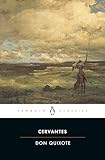
Spanish-language literature — from both Spain and Latin America — encompasses the founding text of Western prose fiction and one of the most vital literary traditions of the twentieth century. The novels below span from Cervantes’s Don Quixote to the magical realism of García Márquez and the gothic romance of Ruiz Zafón, with reading order recommendations for readers approaching the tradition from different directions.
The Foundation
Don Quixote — Miguel de Cervantes (1605/1615)
The founding text of Western prose fiction and still one of its masterworks — Alonso Quixano, a country gentleman who has read too many chivalric romances, believes himself a knight and sets out with his squire Sancho Panza to seek adventure. Part I was published in 1605; Part II (in which Cervantes addresses characters who have read Part I, and which contains some of the most sophisticated metafictional conceits in literature) followed in 1615. Don Quixote’s idealism against Sancho Panza’s pragmatism is the most enduring opposition in fiction. The Edith Grossman translation (2003) is the recommended modern English version.
Contemporary Spain
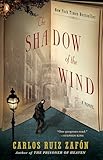
The Shadow of the Wind — Carlos Ruiz Zafón (2001)
The most accessible contemporary Spanish novel and the most widely translated Spanish novel since Don Quixote — a gothic literary mystery set in Barcelona in the 1950s, in which young Daniel discovers a forgotten novel by the mysterious Julián Carax and becomes obsessed with finding out why someone is systematically destroying every copy of every Carax book. Zafón’s Barcelona — fog-shrouded, Francoist, haunted — is one of the most evocative settings in contemporary popular fiction. The first and best volume of a quartet.
Latin American Spanish Literature
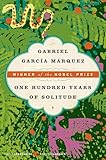
One Hundred Years of Solitude — Gabriel García Márquez (1967)
The foundational text of magical realism and the most celebrated Spanish-language novel of the twentieth century — the Buendía family across seven generations in the fictional town of Macondo, from its founding to its destruction in a hurricane. García Márquez weaves the miraculous into the ordinary (a woman who ascends bodily to heaven while folding laundry; a man who is followed everywhere by yellow butterflies) as a way of capturing the reality of a history that was itself incredible. Won the Nobel Prize.
Ficciones — Jorge Luis Borges (1944)
Borges’s most famous collection — stories that are also philosophical arguments, labyrinths, infinite libraries, circular ruins, gardens of forking paths. Borges invented the short story as a form of speculative philosophy; the stories in Ficciones are each a different version of the same question (what is the nature of reality, of time, of knowledge?), answered through narratives of extraordinary compression and elegance. Essential for any reader of the Spanish tradition and of world literature.
Love in the Time of Cholera — Gabriel García Márquez (1985)
García Márquez’s second major novel — a story of a love affair that begins in adolescence, is rejected, and is resumed fifty years later. The most accessible of his novels and the most romantic, though the romance is complicated by García Márquez’s refusal to sentimentalise desire or fidelity.
The Aleph and Other Stories — Jorge Luis Borges (1949)
The companion collection to Ficciones — including ‘The Aleph’ (a small point in a Buenos Aires basement from which the entire universe can be seen simultaneously), ‘The Garden of Forking Paths,’ and other essential Borges. Slightly more accessible than Ficciones and the better starting point for some readers.
Don Quixote and the Birth of the Novel
Any account of Spanish literature must begin where this list begins, with the towering and singular fact of Don Quixote — not merely the foundation of the Spanish tradition but, by wide consensus, the foundation of the modern novel itself, the book from which all subsequent prose fiction descends. Cervantes’s masterwork, published in two parts in 1605 and 1615, accomplished something genuinely new in the history of literature. Where earlier prose narratives were romances of idealized heroes or allegories of types, Cervantes created fully rounded, psychologically complex characters who change and develop, who hold the reader’s sympathy even as they err, and who exist in a recognizably real and ironic world rather than a fantastical one. The enduring opposition at the book’s heart — between Quixote’s deluded idealism and Sancho Panza’s earthy pragmatism — established a template for character and relationship that fiction has drawn on ever since. Even more remarkably, Part II contains sophisticated metafictional play, with characters who have read Part I, that anticipates the experiments of postmodern literature by three and a half centuries. To read Don Quixote is to encounter the source of the form, the work in which the novel discovered its essential powers: psychological depth, irony, the interplay of illusion and reality, and the capacity to be simultaneously comic and profound. That this fountainhead of world fiction is a Spanish book gives the Spanish-language tradition a unique primacy, and it means that beginning with Cervantes is not merely reading an old classic but encountering the origin of nearly everything the novel would become.
Two Continents, One Language
The richness of Spanish-language literature flows from a remarkable fact of geography and history: it is the shared inheritance of two continents, the literature of Spain and the vast, varied literatures of Latin America, bound together by a common language while diverging in their concerns, their histories, and their imaginative worlds. This list deliberately spans both, and understanding the relationship between them deepens the reading of each. Spain is the origin — the land of Cervantes, of the medieval and Golden Age traditions, and, in the contemporary period, of writers like Carlos Ruiz Zafón, whose gothic Barcelona mysteries have made him among the most widely translated Spanish novelists since Cervantes himself. Latin America, colonized by Spain and inheriting its language, transformed that inheritance into something distinctly its own, most spectacularly in the twentieth-century Boom that produced García Márquez’s magical realism and Borges’s philosophical labyrinths — a body of work that arguably eclipsed the literature of the mother country in global influence. The relationship between the two is complex and sometimes charged, marked by the legacy of colonialism and by Latin American writers’ simultaneous embrace and reinvention of the European tradition. Yet the shared language creates a genuine continuity, a single vast literary conversation conducted across the Atlantic and across centuries. To read Spanish literature fully is to read both continents — to trace the line from Cervantes through the Spanish tradition while also following the extraordinary flowering of Latin American letters — and to appreciate how one language, carried across an ocean and transformed by new worlds and histories, became the vehicle for two of the most important literary traditions on earth.
A Tradition of Imaginative Daring
What unites the diverse works on this list, across four centuries and two continents, is a distinctive spirit of imaginative boldness — a willingness to break the boundaries of conventional realism, to blend the fantastical with the everyday, and to use fiction as a vehicle for philosophical and metaphysical inquiry. This daring runs through the tradition from its very origins. Don Quixote itself plays endlessly with the relationship between illusion and reality, fiction and life, in ways that still feel startlingly modern. Borges built entire metaphysical universes in the space of a few pages, treating the short story as a form of speculative philosophy and inventing the labyrinths, infinite libraries, and forking paths that would influence world literature for generations. García Márquez’s magical realism wove the miraculous seamlessly into the texture of ordinary life, capturing a reality that conventional realism could not contain. Even the contemporary gothic of Ruiz Zafón delights in atmosphere, mystery, and the haunted interplay of books and life. This shared imaginative audacity — the refusal to be confined by literal realism, the embrace of the marvelous, the metaphysical, and the playful — is perhaps the defining characteristic of the Spanish-language tradition and a key source of its enduring appeal. For readers accustomed to the realist conventions that dominate much English-language fiction, Spanish literature offers a thrilling expansion of what the novel and the story can do, a tradition in which the boundaries between the real and the imagined are porous and the imagination is granted the fullest possible freedom. The books on this list are the essential gateway to that tradition, and to one of the most inventive and influential bodies of literature in the world.
Reading Order
Start accessible: The Shadow of the Wind → Love in the Time of Cholera → One Hundred Years of Solitude.
The Spanish tradition: Don Quixote → Ficciones → One Hundred Years of Solitude.
Complete: Don Quixote → Ficciones → The Aleph and Other Stories → One Hundred Years of Solitude → Love in the Time of Cholera → The Shadow of the Wind.
Frequently Asked Questions
What is the best Spanish novel to start with?
Don Quixote (1605/1615) by Miguel de Cervantes is the founding work of Western prose fiction and still one of its greatest achievements — the story of a man who has read so many chivalric romances that he believes himself a knight, and sets out with his squire Sancho Panza to seek adventure. It is also extremely funny. The Shadow of the Wind (2001) by Carlos Ruiz Zafón is the most accessible contemporary Spanish novel — a gothic literary mystery set in post-Civil War Barcelona, involving a secret cemetery of forgotten books and a disappeared author. For readers new to the Spanish-language tradition, The Shadow of the Wind is the most immediately gripping entry point.
What is Don Quixote about?
Don Quixote (Part I: 1605, Part II: 1615) by Miguel de Cervantes follows Alonso Quixano, an elderly gentleman in La Mancha who has read so many chivalric romances that he loses his mind and believes himself a knight errant named Don Quixote. With his peasant squire Sancho Panza, he sets out on quests — attacking windmills as giants, courting a farm girl as a noblewoman, living an elaborate fiction that the world around him consistently refuses to support. The novel is simultaneously a parody of chivalric romance, a meditation on the nature of fiction and reality, and the most human portrait of idealism and its consequences in world literature.
What is The Shadow of the Wind about?
The Shadow of the Wind (2001) by Carlos Ruiz Zafón follows Daniel Sempere, a young boy in Barcelona whose bookseller father takes him to a secret 'Cemetery of Forgotten Books' — a vast library of discarded and ignored books — and tells him he may choose one to be its keeper. Daniel chooses a novel by the obscure author Julián Carax, and discovers that someone has been systematically destroying every copy of every Carax novel that exists. The novel is a gothic literary mystery set against the backdrop of Franco's Spain, enormously entertaining and a love letter to the power of books.
How is Spanish literature different from Latin American literature?
Spanish literature (from Spain) and Latin American literature are part of the same tradition — sharing a language and many literary ancestors — but they developed very differently. Spanish literature from the twentieth century was shaped by the Civil War (1936–39) and Franco's forty-year dictatorship (1939–75), which drove many of the best writers into exile or silence. Latin American literature in the same period produced magical realism — García Márquez, Borges, Vargas Llosa, Cortázar — a tradition with no real equivalent in Spain. The best reading list for the tradition as a whole includes both.