Best Pulitzer Prize-Winning Novels: The Essential Reading List
The best Pulitzer Prize-winning novels from To Kill a Mockingbird and The Road to All the Light We Cannot See and A Visit from the Goon Squad — chosen for literary excellence, not just award prestige.

The Pulitzer Prize for Fiction has been awarded since 1948 (as successor to the Novel prize, which dates to 1918). In its history it has rewarded works of genuine greatness and works of fashionable mediocrity in roughly equal measure. The jury changes every year, the criteria shift, and the politics of American literary culture have periodically distorted the results in ways that are now embarrassing in retrospect.
What follows is not a list of every Pulitzer winner but a guide to the winners that deserve to be read — books that the prize correctly identified as significant and that have justified that identification in the decades since.
The Essential Pulitzer Winners
To Kill a Mockingbird — Harper Lee (1961)
The most widely assigned American novel in schools and the Pulitzer winner with the broadest cultural reach. Set in 1930s Alabama, narrated by Scout Finch, built around her father Atticus’s defence of a Black man falsely accused of raping a white woman. The novel has been criticised by some contemporary scholars for the limitations of its moral perspective — a white saviour narrative seen through the eyes of white children — and those criticisms have substance. The novel has also introduced more American readers to the mechanics and costs of racial injustice than any other single book. Both things are true.
The Grapes of Wrath — John Steinbeck (1940)
The Pulitzer Prize for 1940, and the novel that secured Steinbeck’s Nobel Prize in 1962. The Joad family — Oklahoma sharecroppers dispossessed by drought and mechanised agriculture — drive west to California and find conditions as brutal as what they left. The novel is social realism at its most ambitious: a specific economic catastrophe rendered as universal human experience, alternating chapters of documentary analysis with narrative fiction in a structure that has no precise equivalent elsewhere in American literature.
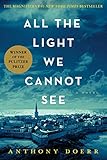
All the Light We Cannot See — Anthony Doerr (2015)
The most acclaimed recent Pulitzer winner and the one most likely to endure. The parallel narratives of a blind French girl and a German orphan soldier converging in Saint-Malo during the Allied siege is handled with extraordinary prose precision. Doerr spent ten years writing it. The result reads like a novel that could not have been written any other way.
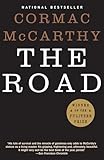
The Road — Cormac McCarthy (2007)
A post-apocalyptic novel in which a father and his young son walk south through a burned, ash-grey America. McCarthy strips language and narrative down to an elemental minimum — no quotation marks, no chapter breaks, prose that functions like poetry. The result is the most intense sustained reading experience produced by an American novel in decades. It is also, despite its bleakness, a book about the refusal to stop caring for another person.
Beloved — Toni Morrison (1988)
The Nobel Prize-winning Morrison’s Pulitzer winner is a novel about Sethe, a formerly enslaved woman in post-Civil War Ohio, who is haunted by the ghost of the daughter she killed to save from slavery. It is the most formally and morally demanding novel on this list: Morrison’s prose operates at the level of myth, and the subject matter — the specific psychological and physical cost of American slavery — is confronted without mitigation.
More Essential Winners
The Goldfinch — Donna Tartt (2014)
The most controversial recent winner — some critics felt the prize rewarded populist literary fiction over more formally ambitious work. Regardless: Tartt’s account of Theo Decker, a New York boy whose mother is killed in a museum bombing and who accidentally takes possession of a Dutch master painting, is one of the most compulsively readable serious novels of recent years. At 800 pages it demands commitment; the commitment is repaid.
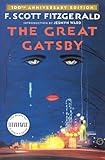
The Great Gatsby — F. Scott Fitzgerald (not won)
Included precisely because the Pulitzer committee’s failure to award The Great Gatsby in 1926 is the prize’s most famous error, and because any list of the best American novels needs to acknowledge it. Fitzgerald’s account of Jay Gatsby, Daisy Buchanan, and the corruption of the American dream is the most analysed, most re-read, and most imitated American novel of the twentieth century. It did not win. This is a fact about the Pulitzer Prize’s limitations, not about the novel.
Recent Winners Worth Reading
Demon Copperhead by Barbara Kingsolver (2023) — A Dickens-inspired account of the opioid epidemic in Appalachian Virginia. The most overtly political recent winner and the most timely.
The Overstory by Richard Powers (2019) — A multigenerational novel about trees and the people who fight to protect them. The most formally ambitious recent winner, and the most likely to be read in fifty years.
The Underground Railroad by Colson Whitehead (2017) — An alternate history in which the Underground Railroad is a literal railway, and a slave named Cora escapes through a series of states that represent different American responses to race. Whitehead’s second Pulitzer winner (The Nickel Boys, 2020, is also excellent).
Pulitzer Winners to Skip
Not every Pulitzer winner deserves its prize. The committee has a historical weakness for safe, accessible literary fiction over formally challenging work, and has periodically awarded books that have aged poorly. Some winners worth skipping:
- The Yearling (1939) — Marjorie Kinnan Rawlings. Once assigned in schools; now dated.
- Tales of the South Pacific (1948) — James Michener. The basis for the musical, not the most durable fiction.
The prize is useful as a starting point, not an endpoint. The books listed above have earned their reputations through decades of reading rather than through committee decisions.
Frequently Asked Questions
Which Pulitzer Prize novel should I read first?
To Kill a Mockingbird (1961) is the most widely read Pulitzer winner and remains the most accessible starting point — it combines moral urgency with narrative clarity in a way that rewards readers of all ages. All the Light We Cannot See (2015) is the best recent winner and a natural second choice. The Road (2007) by Cormac McCarthy is the most immediately gripping if you want something shorter and more intense.
Does the Pulitzer Prize guarantee a great novel?
No — the Pulitzer Prize has a mixed record. It is awarded by a changing jury and has both passed over major works (Fitzgerald's The Great Gatsby and Hemingway's early novels were never awarded) and rewarded books that have not stood the test of time. The prize is a useful signal but not a guarantee. The books listed here represent the winners that have genuinely earned their reputation over time.
What are the most famous Pulitzer Prize-winning novels?
The most culturally significant Pulitzer winners are To Kill a Mockingbird (Harper Lee, 1961), Beloved (Toni Morrison, 1988), The Grapes of Wrath (John Steinbeck, 1940), All the Light We Cannot See (Anthony Doerr, 2015), The Road (Cormac McCarthy, 2007), and A Visit from the Goon Squad (Jennifer Egan, 2011). These represent the prize at its most accurate.
Did The Great Gatsby win the Pulitzer Prize?
No. The Great Gatsby was published in 1925 and did not win the Pulitzer that year — the prize went to Edna Ferber's So Big, a novel almost no one reads today. This remains one of the most frequently cited examples of the Pulitzer committee's unreliability. Fitzgerald won no major awards during his lifetime. The Pulitzer Prize is not the same as posterity's verdict.
What recent Pulitzer winners are worth reading?
The most acclaimed recent winners are: All the Light We Cannot See (Anthony Doerr, 2015); The Goldfinch (Donna Tartt, 2014, though this was controversial); A Visit from the Goon Squad (Jennifer Egan, 2011); Olive Kitteridge (Elizabeth Strout, 2009); The Road (Cormac McCarthy, 2007). Of these, All the Light We Cannot See and The Road have the strongest case for lasting importance.