Best Political Philosophy Books: Essential Texts for Understanding Power
The best political philosophy books — from The Republic and The Prince to Leviathan, The Social Contract, and Utopia. Essential texts for understanding politics and power.
By Elena Marsh

Political philosophy asks the most fundamental questions about organised human life: Why should anyone obey political authority? What is justice? What is the proper relationship between the individual and the state? How should power be distributed and constrained? The texts that have most shaped Western answers to these questions are the ones listed here — works that remain intellectually alive not because they answered these questions finally but because they formulated them with sufficient precision to generate productive disagreement.
The Essential List
The Republic — Plato (c. 380 BCE)
The most important political philosophy text in the Western tradition. Plato’s dialogue on justice — which leads, through Socrates’s examination of various definitions, to his vision of the ideal state — generates the argument that justice in the state mirrors justice in the soul, that philosopher-kings are the only legitimate rulers, and that democracy is the penultimate stage before tyranny. Along the way, Plato develops the allegory of the cave (prisoners who mistake shadows for reality — the most famous image in Western philosophy), the Theory of Forms, and a critique of art as imitation of imitation. Whatever you think of his conclusions, you cannot think clearly about justice and political order without engaging with his arguments.
The Prince — Niccolò Machiavelli (1532)
The most controversial text in political philosophy — and the most honest. Machiavelli’s short guide to political power, addressed to Lorenzo de’ Medici, strips political analysis of its moralistic clothing and asks a simple question: what does a prince actually have to do to acquire and maintain power? His answers — that cruelty used efficiently is less destructive than cruelty used hesitantly; that it is better to be feared than loved when you cannot be both; that a prince must know how to use force and fraud — have been denounced as wicked and praised as clear-eyed realism. The text created the word ‘Machiavellian’ and remains the starting point for all subsequent discussions of political ruthlessness.
Leviathan — Thomas Hobbes (1651)
The founding text of modern political philosophy. Hobbes’s argument — written during the English Civil War, the chaos of which shaped his conclusions — is that human life without government is a war of all against all, and that rational individuals will therefore surrender natural freedom to a sovereign with absolute power in exchange for security. The social contract he describes is not between ruler and ruled but between individuals who transfer their natural rights to a sovereign. Hobbes’s conclusions (absolute sovereignty; no right of rebellion) are controversial, but his methodology — deriving political authority from rational individual consent rather than divine right — transformed political thought permanently.
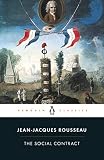
The Social Contract — Jean-Jacques Rousseau (1762)
The text that most directly inspired the French Revolution — and the text that has most influenced both democratic theory and totalitarian practice. Rousseau’s central concept — the ‘general will,’ the collective interest of a community as distinct from the sum of individual interests — is the basis of his argument that legitimate political authority derives from popular sovereignty. ‘Man is born free, and everywhere he is in chains’ is the most quoted sentence in political philosophy; the argument that follows has been used to justify both radical democracy and the suppression of individual rights in the name of collective good. The most politically influential text on this list.
Utopia — Thomas More (1516)
The founding text of the utopian literary and political tradition. More’s description of the island of Utopia — where property is communal, work is equally distributed, religious toleration is the law, and war is avoided by all possible means — is both a critique of contemporary England (the private property, the enclosures, the religious intolerance, the casual violence) and a thought experiment about what a rationally organised society might look like. More’s text is deliberately ambiguous: the name means ‘no place,’ and the narrator who reports the Utopian system is named Hythloday (roughly: ‘dispenser of nonsense’). Whether More endorsed his own utopia has been debated ever since.
The Questions That Will Not Go Away
Political philosophy endures as an essential field of human inquiry because it grapples with questions that every society must answer and that no society can answer once and for all — questions about justice, authority, freedom, equality, and the proper organization of collective life that recur in every age and that the books on this list confront with a depth and rigor that ephemeral political debate never achieves. The fundamental questions of political philosophy are perennial: What makes political authority legitimate, and why should anyone obey the state? What is justice, and how should the benefits and burdens of social life be distributed? How should liberty and equality be balanced, and what are their proper limits? What do citizens owe to one another and to the community, and what does the community owe to its members? These questions are not the property of any particular era or society but arise wherever human beings must live together under common rules, and they admit of no final, universally accepted answer, remaining perpetually contested and perpetually in need of fresh examination. The great works of political philosophy are the most profound and rigorous attempts to grapple with these enduring questions, and their value lies precisely in their depth and seriousness, their willingness to pursue the fundamental issues to their roots rather than skating across the surface of immediate political controversy. To read them is to engage with the deepest questions about how human beings should organize their collective life, questions that underlie all the particular political debates of any age and that every thoughtful citizen must confront. The perennial nature of these questions ensures the lasting relevance of political philosophy, for as long as human beings live in societies governed by collective rules, the fundamental questions of justice, authority, freedom, and equality will continue to demand examination, and the great works that grapple with them will continue to repay study.
Theory Behind the Headlines
One of the most valuable things that the study of political philosophy offers, and a strong reason for reading the books on this list, is the capacity to see the theoretical assumptions and philosophical commitments that underlie the political debates of the day — to recognize that behind every position in contemporary politics lies a set of deeper philosophical assumptions about justice, freedom, rights, and the proper role of the state, and to engage with these underlying questions rather than merely with their surface manifestations. The political controversies that fill the news and dominate public debate are, almost always, surface expressions of deeper philosophical disagreements, conflicts over fundamental questions about how society should be organized, what justice requires, how liberty and equality should be balanced, and what the state may legitimately do. Without an understanding of the underlying philosophy, one engages with these debates only at the surface, taking positions without grasping their deeper foundations and arguing about particulars without understanding the fundamental principles at stake. The study of political philosophy provides the conceptual depth to see beneath the surface, to recognize the philosophical assumptions that underlie political positions, and to engage with the fundamental questions that the immediate debates merely express. This deeper understanding is enormously valuable for the thoughtful citizen, for it transforms one’s engagement with politics from a contest of unexamined opinions into a reasoned consideration of fundamental principles, allowing one to understand not only what positions people hold but why, to recognize the deeper philosophical commitments at stake in political disagreements, and to think more clearly and rigorously about the political questions that confront every society. By revealing the theory behind the headlines, the study of political philosophy equips the citizen to engage with politics at a deeper and more rigorous level, to understand the fundamental questions underlying the controversies of the day, and to think with greater clarity and depth about how society should be organized and governed.
Reading the Tradition as a Conversation
The great works of political philosophy are best understood not as a collection of isolated treatises but as an ongoing conversation across the centuries, a continuing argument in which each thinker responds to those who came before, and approaching the tradition in this way — as a living debate rather than a series of monuments — greatly enriches the reading and reveals the dynamic development of political thought. The major works of political philosophy did not arise in isolation but emerged in dialogue with one another, each thinker building upon, responding to, criticizing, or rejecting the ideas of predecessors, so that the tradition as a whole constitutes a centuries-long conversation about the fundamental questions of political life. To read these works in awareness of this conversation is to understand them far more deeply than to read each in isolation, for the meaning and significance of each thinker’s contribution emerges most fully in relation to the others, in the ways they respond to and depart from what came before, and in their place within the ongoing development of political thought. This conversational approach reveals political philosophy as a dynamic and developing inquiry rather than a static collection of doctrines, a continuing argument in which successive thinkers refine, challenge, and advance the understanding of justice, authority, freedom, and equality, and in which the questions are pursued across the centuries through a sustained exchange of ideas and arguments. Reading the tradition as a conversation also reveals its relevance to the present, for the contemporary debates about political life are themselves the latest stage of this ongoing argument, continuous with the questions and positions that the great thinkers have debated for millennia. To engage with political philosophy as a living conversation, then, is to participate in a centuries-long inquiry into the fundamental questions of collective life, to understand each thinker in relation to the ongoing debate, and to recognize one’s own engagement with these questions as the continuation of a conversation that has occupied the greatest minds across the ages and that remains as urgent and unresolved today as ever.
Beyond the Classics
The political philosophy that most directly shapes contemporary debate includes works not yet old enough to have achieved canonical status: John Rawls’s A Theory of Justice (1971), which provides the most rigorous contemporary framework for political liberalism; Hannah Arendt’s The Origins of Totalitarianism (1951), which remains the definitive philosophical analysis of twentieth-century totalitarianism; and Isaiah Berlin’s ‘Two Concepts of Liberty’ (1958), which distinguishes negative liberty (freedom from interference) from positive liberty (freedom to be the best version of yourself) in a way that has shaped every subsequent liberal political debate. These texts form the bridge between the classical tradition and contemporary political thought.
Frequently Asked Questions
What is the best political philosophy book to start with?
The Prince (1532) by Niccolò Machiavelli is the best starting point — short, clear, and provocative. Machiavelli's argument that political success requires a willingness to use force and deception — that a prince who wants to survive cannot afford conventional morality — is presented with a directness that has made it the most discussed short text in political thought. Plato's Republic is the most important single work but requires more patience; The Prince is more immediately accessible and, for most readers, more immediately relevant.
What is The Prince about?
The Prince (1532) by Niccolò Machiavelli is a short guide to the acquisition and maintenance of political power, addressed to a new prince — someone who has taken control of a state not through hereditary succession but through conquest, fortune, or ability. Machiavelli's advice is deliberately amoral: a prince must be willing to break promises, use fear rather than love when necessary, and simulate virtues he does not possess. The text is understood either as a cynical endorsement of political ruthlessness or as a realistic analysis of how power actually works, stripped of the moralistic illusions that cloud political thinking.
What is Leviathan about?
Leviathan (1651) by Thomas Hobbes is the foundational text of modern political philosophy — the first systematic argument that political authority derives not from God or tradition but from a social contract between free individuals. Hobbes's argument proceeds from his account of the 'state of nature' (human life without government: 'solitary, poor, nasty, brutish, and short') to the necessity of surrendering natural freedom to a sovereign with absolute power in exchange for security. The Leviathan of the title is the sovereign state, described as an 'artificial man' of enormous power. The starting point of modern political thought.
What is Utopia about?
Utopia (1516) by Thomas More describes an island society in which private property has been abolished, all citizens work six-hour days, and religious toleration is the law. The work is satirical rather than straightforwardly prescriptive: 'Utopia' means 'no place' in Greek, and More's account of the ideal society is designed as a critique of contemporary England rather than a serious blueprint. The word 'utopia' passed into the language from this text; it is the founding document of the utopian literary tradition.