Best Italian Literature: Essential Novels from Italy
The best Italian literature — from My Brilliant Friend and The Name of the Rose to Germinal. Essential Italian novels and the canonical reading list for Italian fiction.
Italian literature encompasses two traditions that rarely intersect: the classical tradition of Dante, Petrarch, and Boccaccio (which established the Italian literary language); and the modern novel, which developed later in Italy than in France or England and has produced, in the twentieth and twenty-first centuries, some of the most important fiction in world literature — from Calvino’s postmodernism to Ferrante’s realism.
The Contemporary Masterwork
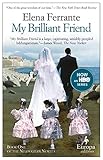
My Brilliant Friend — Elena Ferrante (2011)
The most celebrated Italian novel of the twenty-first century and the first of the four Neapolitan Novels — Elena and Lila growing up in poverty on the outskirts of Naples, their friendship as the defining relationship of both their lives, and the way that female intelligence navigates a world designed to contain it. Ferrante’s realism is absolute: there is no redemption, no consoling narrative, only the truth of what these women’s lives were and are. The four novels together — My Brilliant Friend, The Story of a New Name, Those Who Leave and Those Who Stay, The Story of the Lost Child — constitute one of the great fictional achievements of recent decades.
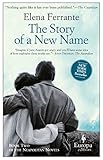
The Story of a New Name — Elena Ferrante (2012)
The second Neapolitan Novel — Lila’s marriage and its immediate dissolution, Elena’s departure for university in Pisa, and the way the friendship continues to shape both women’s lives even as they move in different directions. The most emotionally intense volume of the series; the scenes of Lila’s marriage are the most disturbing account of domestic violence in contemporary literary fiction.
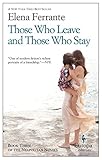
Those Who Leave and Those Who Stay — Elena Ferrante (2013)
The third volume — covering the political turbulence of the 1970s, Lila’s work in a sausage factory and her involvement in the Italian labour movement, and Elena’s career as a published novelist. The most explicitly political volume.
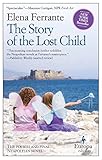
The Story of the Lost Child — Elena Ferrante (2014)
The final volume — both women return to Naples, their relationship circles back to intimacy and conflict, and the novel ends with a disappearance that retroactively reframes everything that has preceded it.
The Erudite Classic
The Name of the Rose — Umberto Eco (1980)
The most widely read Italian novel of the late twentieth century — a medieval detective story set in a monastery, in which William of Baskerville investigates a series of deaths among the monks. Eco’s novel is simultaneously a gripping thriller and a philosophical meditation on knowledge, censorship, and the relationship between forbidden texts and power. Eco was a semiotician and medievalist before he was a novelist; the result is the most erudite popular novel in Italian literature, and one that rewards multiple readings as the layers of reference and argument become visible.
The Ferrante Phenomenon
The contemporary global rediscovery of Italian fiction is inseparable from the extraordinary success of Elena Ferrante’s Neapolitan Novels, which dominate this list for good reason. Beginning with My Brilliant Friend, the four-book sequence became a worldwide literary event, translated into dozens of languages, adapted for prestige television, and credited with reviving international interest in Italian literature more broadly. What accounts for the phenomenon is the novels’ rare combination of unsparing realism and propulsive narrative force: Ferrante chronicles the lifelong friendship of Elena and Lila against the violent, claustrophobic backdrop of a poor Naples neighbourhood with a psychological honesty that refuses every consolation. There is no redemptive arc, no softening of how poverty, patriarchy, and class constrain female lives, and yet the books are devoured like thrillers. The mystery of the author’s identity — “Elena Ferrante” is a pseudonym whose holder has never been definitively identified, by deliberate choice — became part of the cultural conversation, but the deeper fascination is the work itself, which many critics regard as one of the major fictional achievements of the twenty-first century in any language. For readers new to Italian literature, the Neapolitan Novels are both the obvious entry point and a complete world unto themselves.
Two Faces of the Italian Novel
Set side by side, Ferrante and Eco reveal the striking range of the modern Italian novel, the two poles between which much of the tradition oscillates. Ferrante represents the realist, emotional, intimate mode — fiction rooted in the body, the family, the neighbourhood, and the inner lives of ordinary people, written in prose of deceptive plainness that conceals enormous control. Eco represents the erudite, playful, intellectual mode — fiction as a game of ideas, dense with historical and philosophical reference, in which a murder mystery becomes an occasion to meditate on knowledge, censorship, and the power of texts. This polarity has deep roots in Italian letters, and the twentieth century is full of writers exploring the intellectual end of the spectrum: Italo Calvino, whose If on a winter’s night a traveler and Invisible Cities are masterpieces of postmodern invention; Primo Levi, whose memoirs of Auschwitz combine a chemist’s precision with profound moral inquiry; Giuseppe Tomasi di Lampedusa, whose single novel The Leopard is the great elegy for the Sicilian aristocracy. The Italian novel developed later than its French and English counterparts, but in the modern era it has produced fiction of the first rank at both the intimate and the cerebral extremes, and the contrast between Ferrante and Eco is the clearest possible introduction to that range.
From Dante to the Present
Readers who come to Italian literature through these contemporary novels should be aware of the immense classical tradition standing behind them, because Italian is in a real sense the language Dante invented. Before the modern novel, Italy produced the foundational works that established Italian as a literary language and shaped all of Western letters: Dante’s Divine Comedy, the supreme poem of the medieval world and arguably the greatest single work in any European vernacular; Petrarch’s sonnets, which gave Europe the love-poetry form that would dominate for centuries; and Boccaccio’s Decameron, the collection of tales that helped invent European prose fiction. This classical foundation is not merely historical background — it actively informs the modern works on this list, most obviously in Eco, whose entire novel is steeped in medieval thought and whose scholarly career was devoted to exactly this inheritance. Readers who fall in love with Italian fiction through Ferrante and Eco have, in effect, two directions to travel: forward into the rich contemporary scene of Calvino, Levi, Lampedusa, and beyond, or backward into the medieval and Renaissance masterworks that made Italian a literary language in the first place. Few national traditions offer so deep a well in both directions, and the books here are an ideal threshold to it.
Reading Order
New to Italian literature: My Brilliant Friend → The Story of a New Name → The Name of the Rose.
The Neapolitan Novels in full: My Brilliant Friend → The Story of a New Name → Those Who Leave and Those Who Stay → The Story of the Lost Child.
Historical fiction: The Name of the Rose → My Brilliant Friend.
Frequently Asked Questions
What is the best Italian novel to start with?
My Brilliant Friend (2011) by Elena Ferrante is the best starting point for contemporary Italian literature — the first volume of the Neapolitan Novels, following Elena and Lila from childhood in a poor Naples neighbourhood through to old age, it is the most powerful recent Italian fiction and one of the most celebrated novels of the twenty-first century. The Name of the Rose (1980) by Umberto Eco is the best starting point for those who prefer to begin with an established classic — a medieval detective story set in a monastery, simultaneously a gripping thriller and an erudite meditation on knowledge, power, and the Middle Ages.
What is My Brilliant Friend about?
My Brilliant Friend (2011) by Elena Ferrante follows Elena Greco and Lila Cerullo, two girls growing up in a poor neighbourhood on the outskirts of Naples in the 1950s. Elena is quieter, more conventional, and leaves the neighbourhood through education; Lila is brilliant, uncontrollable, and stays. The novel — and the three that follow it — traces their friendship across decades: the way each woman's life defines itself against and through the other, the violence and limitation of their environment, and the way that female ambition and intelligence are shaped and suppressed by the social structures of postwar Italy.
What are the Neapolitan Novels in order?
The four novels are: My Brilliant Friend (2011), The Story of a New Name (2012), Those Who Leave and Those Who Stay (2013), and The Story of the Lost Child (2014). They should be read in order — each continues directly from where the previous one ended, and the novels form a single long work spanning more than fifty years of Elena and Lila's lives. All four have been published in English translation by Ann Goldstein.
What is The Name of the Rose about?
The Name of the Rose (1980) by Umberto Eco is set in a northern Italian monastery in 1327 — a series of mysterious deaths among the monks, and the investigation conducted by the Franciscan friar William of Baskerville (a deliberate echo of Sherlock Holmes) and his novice Adso. The novel is simultaneously a medieval detective story, a philosophical meditation on knowledge and power (the monastery's library holds forbidden texts; the question of who should have access to knowledge is the novel's central concern), and a scholarly reconstruction of medieval intellectual life. The most erudite popular novel in Italian literature.