Best Environmental Fiction: Novels About Nature and Climate
The best environmental fiction — from The Overstory and Bewilderment to Flight Behavior and The Ministry for the Future. Novels about nature, ecology, and climate change.
By Natalie Osei
Environmental fiction — climate fiction, or cli-fi as it is sometimes called — has emerged as one of the most important subgenres of the twenty-first century, as the literary novel begins to reckon seriously with ecological collapse. The novels below range from accessible realistic fiction (Kingsolver) to speculative policy (Robinson) to Pulitzer-winning literary fiction (Powers) — different approaches to the same central question: how do we live with what we are doing to the planet?
The Literary Masterwork
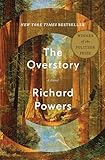
The Overstory — Richard Powers (2018)
The Pulitzer Prize-winning novel about trees — and the most ambitious literary argument for the moral standing of non-human life. Nine Americans, in separate stories that gradually intersect, have their lives shaped by trees: an activist who chains herself to a redwood, a game designer who discovers that trees communicate, a soldier who is saved by a chestnut tree. Powers’s novel is demanding (it asks readers to restructure their understanding of which lives matter) and formally beautiful — the structure mirrors a tree’s form (roots, trunk, crown) — and it is the most important environmental novel since Silent Spring.
Accessible Environmental Fiction
Flight Behavior — Barbara Kingsolver (2012)
The most accessible climate novel — a story about Monarch butterflies and a woman in rural Appalachia who encounters them, narrated with Kingsolver’s characteristic warmth and her scientist’s precision about the ecological crisis her novel is illustrating. Dellarobia Turnbow is one of the most fully realised characters in recent American fiction: a woman of intelligence and ambition trapped by circumstance, finding an unexpected path through the arrival of the butterflies and the scientist who comes to study them.
Bewilderment — Richard Powers (2021)
Powers’s smaller and more personal environmental novel — a father’s attempt to help his son without conventional medication, and what that attempt reveals about the relationship between human consciousness and the ecological systems that support it. The novel’s argument: the attention we give to the inner life of one child is the same attention we need to give to the planet, and the lack of that attention is killing both.
Speculative Environmental Fiction
The Ministry for the Future — Kim Stanley Robinson (2020)
The most ambitious climate fiction novel — a near-future account of how the world might respond to catastrophic climate events, written as a work of speculative policy and institutional design. A new UN body (the Ministry for the Future) attempts to enforce the Paris Agreement; Robinson imagines the specific mechanisms that might actually work: carbon quantitative easing, rewilding, the conversion of agriculture. Less a novel than a policy argument in fictional form, but the most comprehensive account available of what serious climate action might look like.
Oryx and Crake — Margaret Atwood (2003)
Atwood’s speculative fiction about genetic engineering and ecological collapse — a world in which corporations have replaced governments, most of the natural world has been destroyed, and Crake has engineered a pandemic to replace humanity with a genetically improved successor species. The most darkly comic of the environmental novels, and the one that best captures the specific combination of technological optimism and ecological nihilism that has characterised the twenty-first century so far.
The Problem of Writing the Unimaginable
Environmental fiction faces a challenge unlike that of any other subject, and the books on this list are best understood as different solutions to it. The problem is one of scale and form. Climate change unfolds across timescales and geographies so vast that they resist the traditional novel’s machinery of individual character, dramatic incident, and human-scaled conflict. The novelist Amitav Ghosh has influentially argued that the realist novel, built to render the particular and the probable, is almost constitutionally unable to grasp a phenomenon as planetary, gradual, and statistically improbable-seeming as the climate crisis — a failure he calls “the great derangement.” The writers on this list are wrestling with exactly this difficulty, and their varied strategies are the most interesting thing about the emerging genre. Powers, in The Overstory, expands the novel’s timescale and moral scope to encompass the lives of trees, deliberately decentering the human to make non-human life visible as a subject. Robinson, in The Ministry for the Future, partly abandons the conventional novel altogether, mixing fiction with documentary, policy, and economics to capture the systemic and institutional dimensions a character-driven story cannot. Atwood reaches for speculative dystopia, projecting present trends to their catastrophic endpoints. Kingsolver, by contrast, insists the realist novel can still work if it brings the global crisis down to the intimate scale of one woman’s life. Each represents a genuine formal experiment, and together they show a literary tradition straining to invent the forms an unprecedented subject demands.
From Despair to Design
One of the most useful ways to read across this list is to notice where each book falls on the spectrum from warning to blueprint — from dramatizing the catastrophe to imagining the response. The environmental novel has often defaulted to the dystopian and the elegiac, and for understandable reasons: the easiest emotional register for climate fiction is grief and dread, the mourning of a despoiled world and the warning of worse to come. Atwood’s Oryx and Crake exemplifies this darker mode, projecting ecological nihilism and corporate collapse to a chilling endpoint, and such cautionary visions have real value in making consequences viscerally felt. But a striking development in recent environmental fiction, visible on this list, is the turn toward solutions, agency, and even hope — what some have called “solarpunk” or simply constructive climate fiction. Robinson’s The Ministry for the Future is the boldest example, functioning less as a warning than as a detailed thought-experiment in how civilization might actually respond, imagining specific economic, technological, and political mechanisms that could bend the curve. This shift matters because despair, however justified, can be politically paralyzing, while fiction that helps readers imagine a survivable future may do more to enable action. The best environmental novels hold warning and possibility in tension, refusing both false comfort and pure doom, and the movement from despair toward design may be the genre’s most significant recent evolution.
Why Fiction Matters to the Climate Crisis
It is fair to ask what novels can possibly contribute to a crisis that demands policy, technology, and political will, and the answer reveals why environmental fiction has become one of the most significant literary developments of our time. The climate crisis is not only a scientific and political problem but a problem of imagination and feeling. We have known the facts for decades; what has been missing is the capacity to truly internalize them, to feel the reality of a transformed planet and our own implication in it, to care across the vast distances of time and space that the crisis spans. This is precisely the work fiction does. Where a scientific report informs, a novel makes the reader feel, inhabiting the experience of those affected, extending empathy to future generations and to non-human life, rendering the abstract statistic as lived human and ecological reality. Powers can make a reader care about the inner life of a tree; Kingsolver can make the disruption of a butterfly migration feel like a personal grief; Robinson can make the machinery of climate policy genuinely suspenseful. By reshaping how readers perceive their relationship to the natural world and to the future, environmental fiction can shift the underlying values and imaginative frameworks from which political will eventually emerges. The books on this list are not a distraction from the serious work of addressing the crisis; they are part of the serious work, expanding the moral and imaginative resources a civilization needs to confront the defining challenge of its age.
Reading Order
Start accessible: Flight Behavior → Bewilderment → The Overstory.
Speculative: Oryx and Crake → The Ministry for the Future → The Overstory.
Complete: The Overstory → Bewilderment → Flight Behavior → The Ministry for the Future.
Frequently Asked Questions
What is the best novel about climate change?
The Ministry for the Future by Kim Stanley Robinson is the most comprehensive climate fiction novel — a near-future account of how the world responds to catastrophic climate events, written as a work of speculative policy as much as fiction. The Overstory by Richard Powers is the most celebrated literary novel about trees and ecology — a Pulitzer Prize-winning multi-generational narrative that makes the argument for the moral standing of non-human life. Flight Behavior by Barbara Kingsolver is the most accessible climate novel — a Monarch butterfly migration disrupted by climate change, told through the experience of a woman in rural Appalachia.
What is The Overstory about?
The Overstory (2018) by Richard Powers follows nine Americans whose lives become intertwined with trees — a chestnut tree that has survived a blight, a mulberry tree that witnesses three generations of a Chinese-American family, an ancient chestnuts grove in Oregon being clearcut by a logging company. The novel's structure mirrors its argument: it begins with nine separate stories (the roots), brings them together in the middle (the trunk), and separates them again in the ending (the crown). It won the Pulitzer Prize for Fiction and is the most ambitious literary argument for the moral importance of the non-human world.
What is Flight Behavior about?
Flight Behavior (2012) by Barbara Kingsolver follows Dellarobia Turnbow, a woman in rural Appalachia on the verge of an affair who instead encounters millions of Monarch butterflies wintering in the mountains near her home — displaced from their Mexican habitat by climate disruption. A scientist arrives to study the phenomenon; Dellarobia becomes his research assistant and begins to understand both the ecological crisis and her own life differently. Kingsolver uses the butterflies as a way of making climate change personal and specific, felt by characters whose daily lives are shaped by weather and agriculture.
What is Bewilderment about?
Bewilderment (2021) by Richard Powers follows Theo Byrne, an astrobiologist, and his nine-year-old son Robin, who has been diagnosed with a condition that makes emotional regulation impossible. Theo refuses to medicate Robin and instead enrolls him in an experimental neurofeedback treatment in which Robin's brain is trained using the neural patterns of his dead mother. The novel weaves Robin's treatment, Theo's research on exoplanets, and a political crisis threatening funding for the project — an argument that the imagination required to conceive of life on other planets is the same imagination required to care for life on this one.